
How to Identify Chestnut-collared Longspur Feathers
A guide to identifying Chestnut-collared Longspur feathers by the chestnut nape collar, black breeding underparts, and distinctive white-sided tail.
Read the full Chestnut-collared Longspur encyclopedia entry →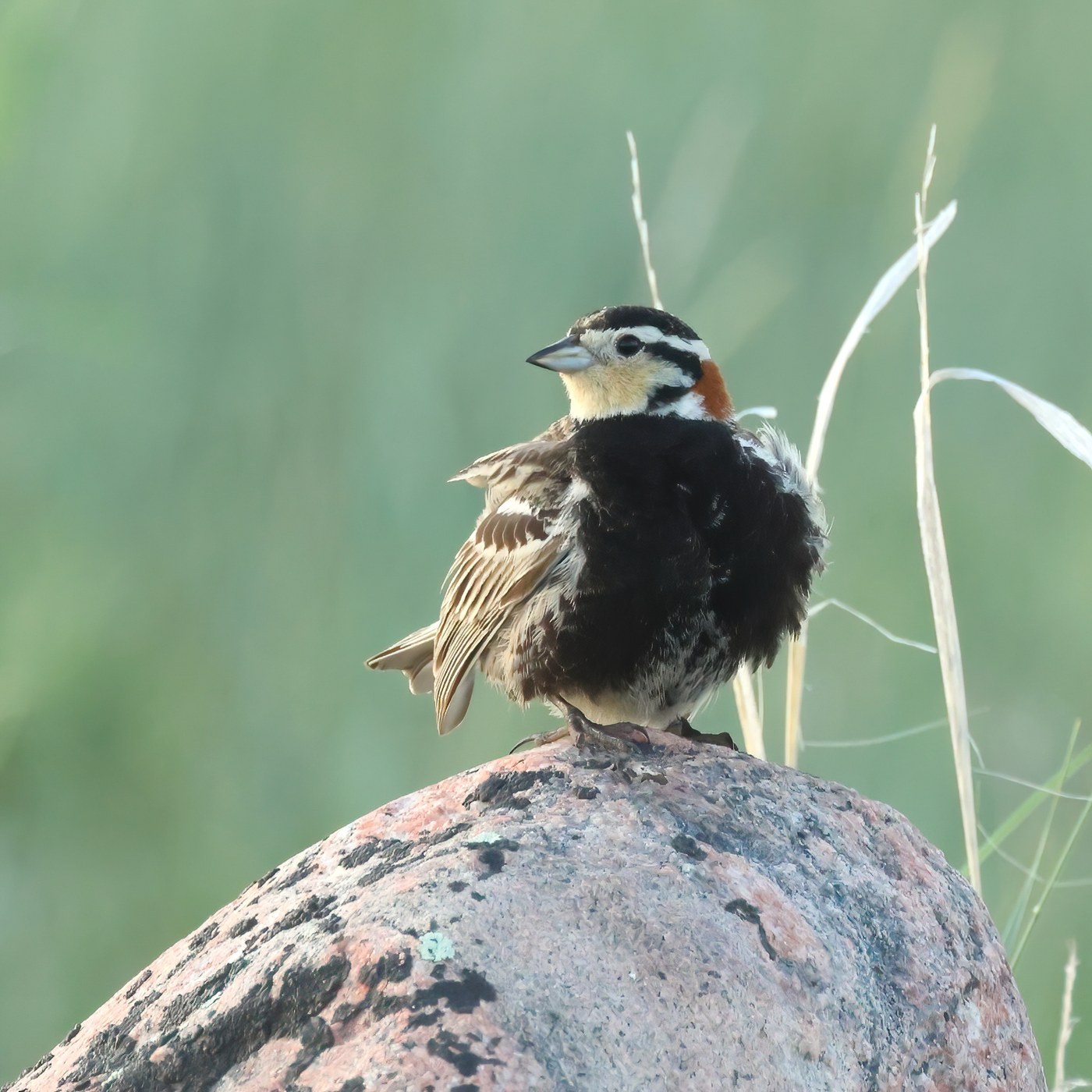
What Chestnut-collared Longspur's Feathers Look Like
Breeding male Chestnut-collared Longspur shows a rich chestnut band across the nape, one of the clearest single diagnostic feathers this bird produces. Below that collar, breast and belly feathers turn solid black in breeding males, framed by a buffy face and black eye stripe. Back feathers are streaked brown, black, and buff — cryptic, sparrow-like camouflage typical of a grassland ground-nester. The tail is the other key diagnostic area: the outer three tail feathers are largely white, contrasting with black central feathers, forming a bold white-sided pattern that flashes in flight and is easy to recognize even from a single detached feather.
Step-by-Step: Is This Feather From a Chestnut-collared Longspur?
- Check the nape/collar area first. A solid chestnut-colored feather from the back of the neck is one of the most diagnostic clues for breeding males.
- Look at breast/belly feathers. Solid black feathers (breeding male) support this species over streaked or pale-bellied grassland birds.
- Examine tail feathers. Outer tail feathers that are mostly white contrasting with black central feathers is a strong longspur-family clue, and the amount of white helps pin down the species (see comparisons below).
- Check the back pattern. Streaked brown-black-buff feathers, camouflaged for open ground, support any longspur species — combine with collar/tail clues to confirm this one.
- Measure size. Small, sparrow-sized feathers fit the profile.
- Consider range and season. Great Plains grassland in breeding season (spring/summer) or Texas/Mexico grassland in winter supports this species.
Similar Species & How to Tell Them Apart
- Lapland Longspur shows a rufous nape too, but its underparts stay more streaked rather than solid black, and it lacks the fully black belly of breeding male Chestnut-collared Longspur.
- McCown's Longspur has a different, more restricted black tail pattern (an inverted-T shape with less overall white) and is grayer and stockier overall with a heavier bill — the tail pattern comparison is the most reliable way to separate the two in hand.
- Overall, the combination of a chestnut nape collar + solid black underparts + mostly-white outer tail feathers is diagnostic for breeding male Chestnut-collared Longspur among North American grassland songbirds.
Where & When You'll Find Them
Chestnut-collared Longspur breeds in shortgrass and mixed-grass prairie across the northern Great Plains of the US and southern Canada, nesting directly on the ground. It's migratory, wintering in grasslands of Texas and Mexico. The post-breeding molt occurs in July and August, after which birds move south — feathers found on breeding-ground prairie in mid-to-late summer, or on wintering grasslands further south in fall and winter, are the best opportunities to encounter this species.
Frequently asked questions
What's the most diagnostic feature of a Chestnut-collared Longspur feather?
A solid chestnut nape/collar feather combined with a mostly-white outer tail feather contrasting against black central tail feathers.
How do I tell this apart from McCown's Longspur?
Compare the tail pattern — McCown's shows a more restricted, inverted-T black tail pattern with less overall white than Chestnut-collared's tail.
Does Lapland Longspur also have a chestnut nape?
Yes, but its underparts remain streaked rather than turning solid black like breeding male Chestnut-collared Longspur.
When does this species molt?
Post-breeding molt in July and August, before migrating south to wintering grasslands.
Where should I search for these feathers?
Shortgrass and mixed-grass prairie of the northern Great Plains in summer, or grasslands of Texas and Mexico in winter.