

Cackling Goose
Branta hutchinsii
The Cackling Goose is a small, compact goose closely resembling the Canada Goose, distinguished mainly by its diminutive size, short neck, and stubby bill.
- Feather type
- Compact goose body and neck feathers
- Colours
- Black head and neck, white cheek patch, brownish-gray body
- Bird size
- Small, ~58-70 cm, notably smaller than Canada Goose
Found a feather like this?
Identify any feather from a photo, free.
Overview
Overview
The Cackling Goose was formerly considered part of the Canada Goose complex but is now recognized as a separate species, distinguished largely by its notably smaller size and more compact proportions rather than by dramatic plumage differences. Both sexes show the same basic pattern of a black head and neck broken by a white cheek patch, paired with a grayish-brown body - essentially a scaled-down version of the Canada Goose's classic markings. Because plumage alone is often insufficient for a confident identification, size, neck length, and bill shape are important supporting features.
Identifying the Feather
Feather Identification
- Overall size: Notably smaller and more compact than the Canada Goose, with a body feather structure that appears denser relative to overall size.
- Neck feathering: A shorter neck with less elongated neck feathering compared to the long, graceful neck of the Canada Goose.
- Head and cheek pattern: The same black head and neck with a white cheek patch as the Canada Goose, meaning plumage color alone is not sufficient to distinguish the two species reliably.
- Body tone: Body feathering can appear slightly more compact and, in some individuals, somewhat grayer or more uniformly toned than in larger Canada Goose subspecies.
- Bill shape context: A short, stubby bill accompanies the smaller overall structure, though this is a bare-part rather than a feather trait.
Plumage & Molt
Plumage Notes
Adults show a black head and neck with a white cheek patch and a grayish-brown body, essentially matching the Canada Goose pattern at a smaller scale. There is little seasonal plumage change beyond the wear and fading typical of many geese between molts. The species undergoes a complete molt after breeding, with a flightless period during wing molt, timed to coincide with the presence of goslings who are also flightless at that stage. Juveniles resemble adults fairly quickly, without the prolonged immature plumage seen in some other waterfowl.
Habitat & Range
Habitat & Range
Cackling Geese breed on arctic and subarctic tundra across parts of North America, nesting on the ground near water. In winter, they move to a variety of habitats including agricultural fields, lakes, and wetlands, often mixing with larger flocks of Canada Geese. The species is strongly migratory, undertaking long-distance movements between tundra breeding grounds and more temperate wintering areas.
Behavior & Field Notes
Behavior & Field Notes
Cackling Geese are highly social, forming large flocks during migration and winter, frequently associating with Canada Geese despite differences in size. They graze on plant material in fields and wetlands and are strong, fast fliers capable of long migratory journeys. Nesting occurs on the ground, usually near tundra ponds or wetlands, with both parents involved in defending the nest and goslings. Calls are higher-pitched and more clipped than the deeper honking of the Canada Goose, an important supplementary identification clue alongside size and structure.
Frequently asked questions
How can I tell a Cackling Goose feather from a Canada Goose feather?
Plumage color and pattern are essentially identical, so overall body size, shorter neck length, and a more compact structure are the most useful clues rather than feather color alone.
Is the Cackling Goose a separate species from the Canada Goose?
Yes, it was split from the Canada Goose complex and is now recognized as its own species, distinguished mainly by smaller size and different vocalizations.
What does a Cackling Goose sound like compared to a Canada Goose?
Its calls are higher-pitched and more clipped than the deeper honking typical of the Canada Goose.
Where do Cackling Geese spend the winter?
In agricultural fields, lakes, and wetlands across temperate regions, often mixed in with larger flocks of Canada Geese.
Cackling Goose guides
In-depth guides for identifying and understanding Cackling Goose.

Other feathers you may enjoy

Mallard
Wing (speculum), body, and tail feathers

Spectacled Eider
Large sea-duck body feathers with distinctive eye-ring patches

Canada Goose
Body and flight feathers
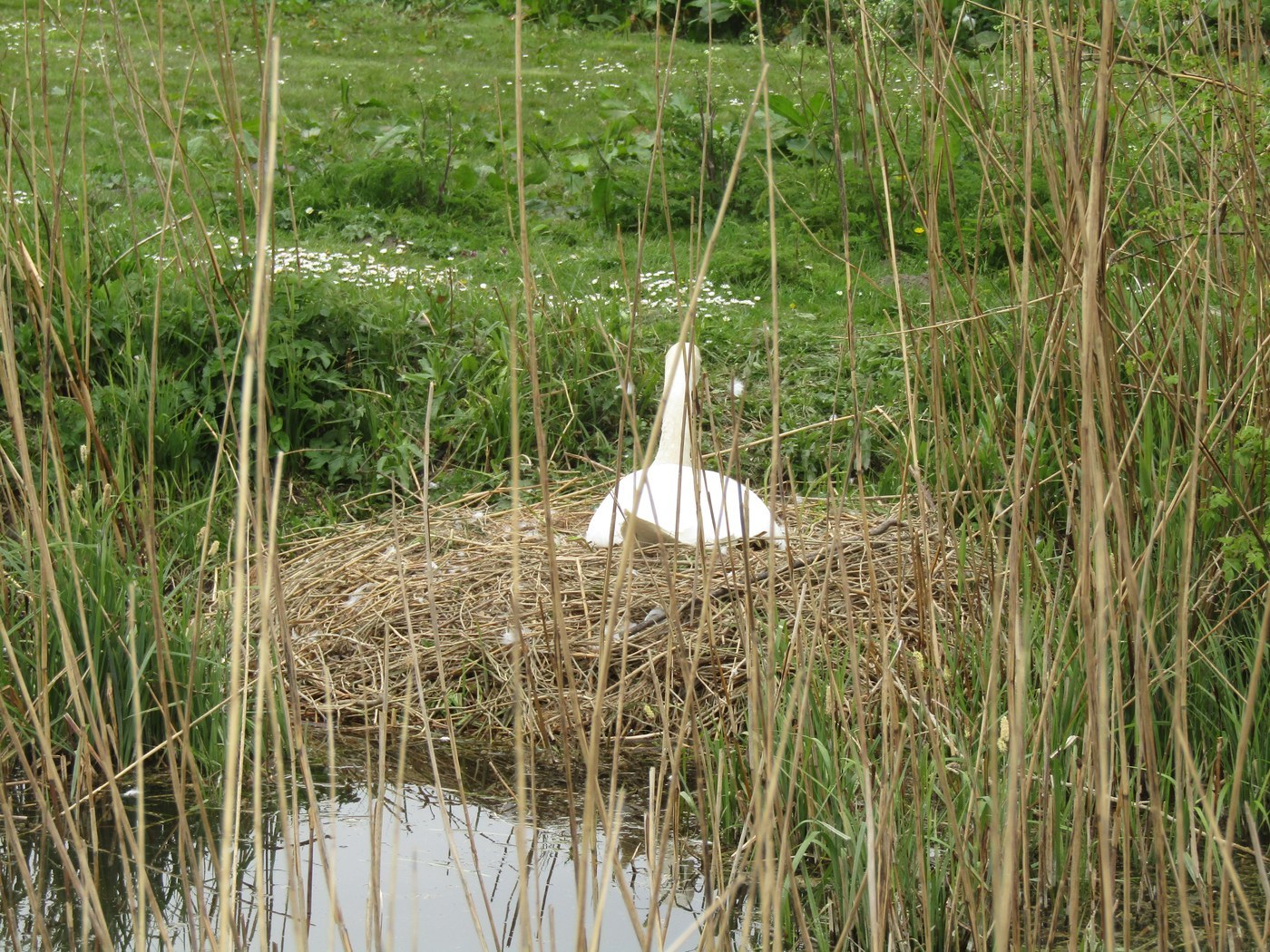
Mute Swan
Body (contour) and flight feathers

Wood Duck
Iridescent crest feathers; ornate scapular and flank feathers; white teardrop facial feathers (female)
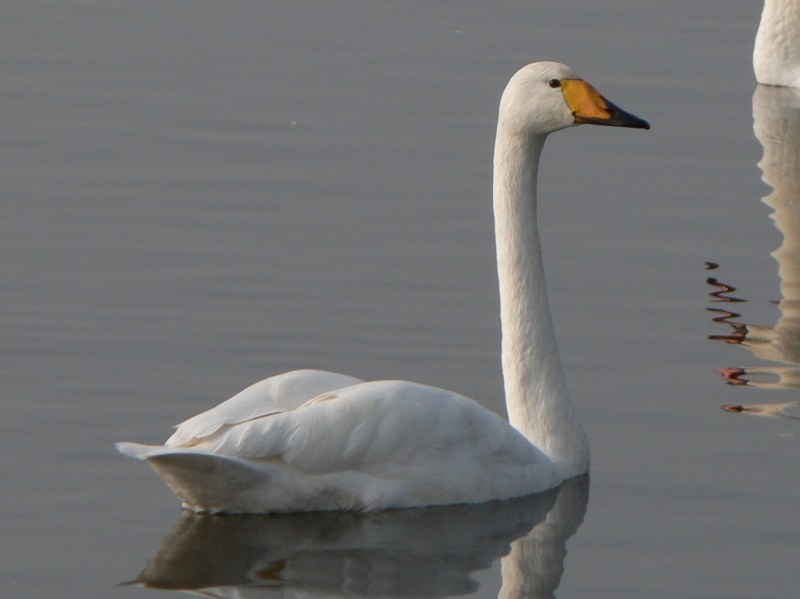
Whooper Swan
Contour and flight feathers

White-winged Scoter
Large sea-duck body feathers with a white wing patch

Ruddy Duck
Stiff tail feathers and compact body plumage

Ross's Goose
Contour and flight feathers

White-cheeked Pintail
Contour and elongated tail feathers

Torrent Duck
Dense, sleek contour feathers; stiff, pointed tail feathers used for bracing against rocks

Tundra Swan
Contour and flight feathers