
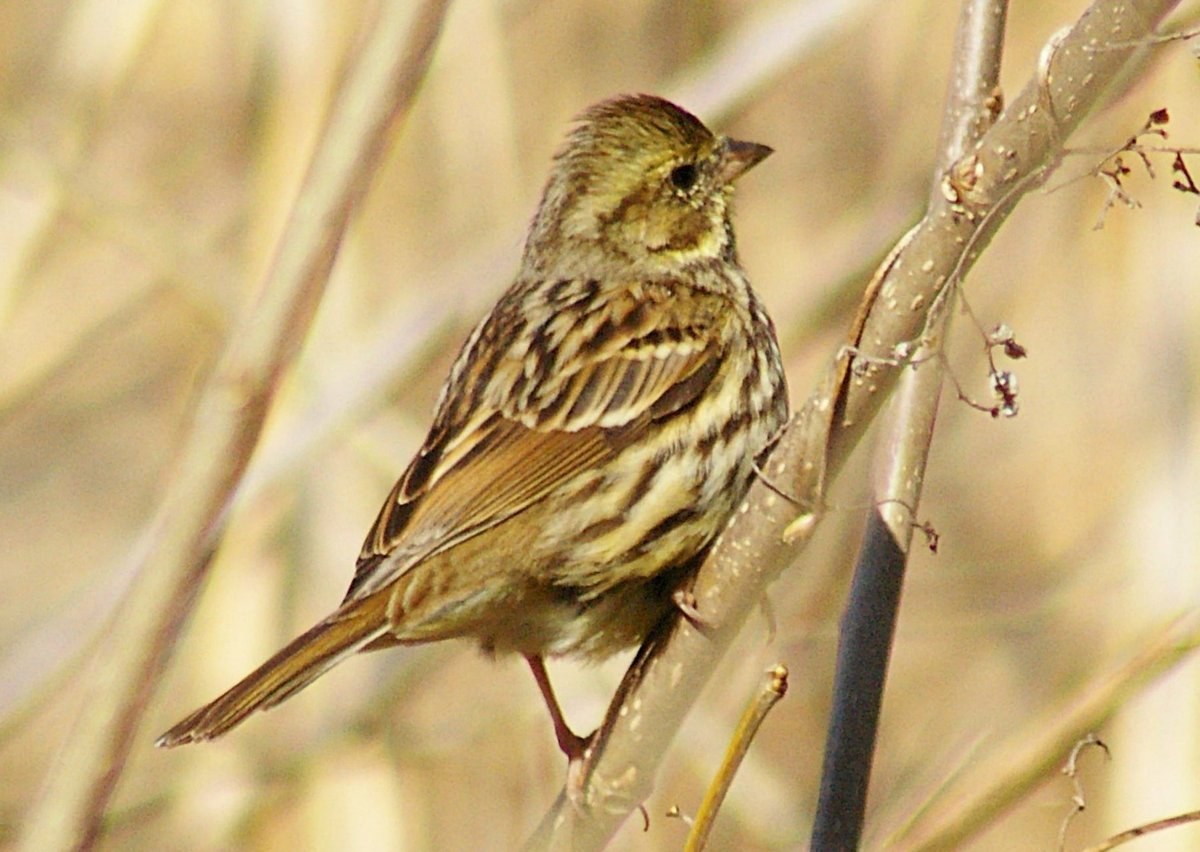
Black-faced Bunting
Emberiza spodocephala
A widespread East Asian bunting with a greenish-grey head, black face mask on males, and yellow-tinged underparts.
- Feather type
- Soft greenish-grey contour feathers
- Colours
- Olive-green, grey, black, and yellow
- Bird size
- Sparrow-sized, ~14-15 cm
Found a feather like this?
Identify any feather from a photo, free.
Overview
Overview
The Black-faced Bunting breeds across a broad swath of East Asia and Siberia, wintering from southern China and Japan south into Southeast Asia. It is a familiar bunting of scrub, reedbeds, and cultivated land during the non-breeding season.
Its subtle olive and grey tones, brightened by a yellowish wash below, distinguish it from browner buntings sharing its range.
Identifying the Feather
Feather Identification
- Face and head: greenish-grey overall, with breeding males showing a blackish mask around the eye and lores.
- Underparts: pale yellow-green wash, strongest on the belly.
- Upperparts: olive-brown, streaked with darker centers to the feathers.
- Bill: pale pinkish, contrasting with the darker face.
The combination of a grey-green head and yellow-washed underparts, without strong chestnut tones, separates this species from many other East Asian buntings.
Plumage & Molt
Plumage Notes
Breeding males have the most contrast, with a solid greenish-grey hood, blackish face mask, and clean yellow-olive underparts. Females and winter males are considerably duller, with a buffy supercilium and less defined facial pattern, and streaking on the crown replacing the solid grey hood.
Juveniles are streaked overall and lack the yellow wash of adults. A complete post-breeding molt refreshes plumage, with some individuals showing partial molt into brighter head feathers before spring.
Habitat & Range
Habitat & Range
This bunting breeds from Siberia through Mongolia, China, Korea, and Japan, typically in forest edge, scrub, and riparian vegetation. It winters from southern Japan and southern China into parts of Southeast Asia.
Wintering birds frequent reedbeds, scrub, and farmland, often in loose flocks, making it one of the more commonly encountered wintering buntings in the region.
Behavior & Field Notes
Behavior & Field Notes
Black-faced Buntings forage on the ground and in low vegetation for seeds and insects, frequently in mixed flocks with other buntings and sparrows during winter.
The nest is a grass cup placed low in shrubs or on the ground. The song is a simple, somewhat mechanical series of notes. Observers should note the greenish-grey head tone and yellow underparts wash as key identification points, especially on duller winter individuals.
Frequently asked questions
How do I tell a Black-faced Bunting from other grey-headed buntings?
Look for the greenish-grey hood combined with a yellow-olive wash on the underparts; the black face mask is most obvious on breeding males.
What does a female Black-faced Bunting look like?
Females are duller and more streaked than males, with a buffy supercilium and reduced facial contrast, but retain a hint of the yellow-green underparts wash.
Where does this species spend the winter?
Wintering birds occur from southern Japan and southern China south into parts of Southeast Asia, favoring reedbeds, scrub, and farmland.
Is the Black-faced Bunting social outside the breeding season?
Yes, it often joins loose winter flocks with other buntings and sparrows while foraging on the ground.
Black-faced Bunting guides
In-depth guides for identifying and understanding Black-faced Bunting.
Other feathers you may enjoy

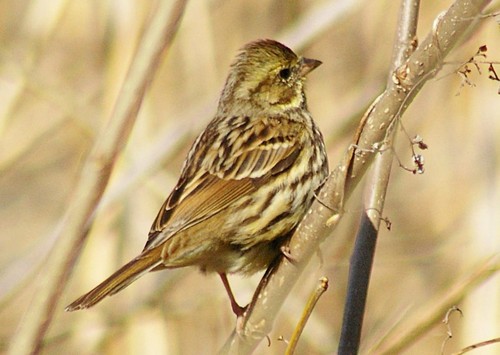
Yellow-breasted Bunting
Contour and flight feathers, chestnut-and-yellow breeding pattern
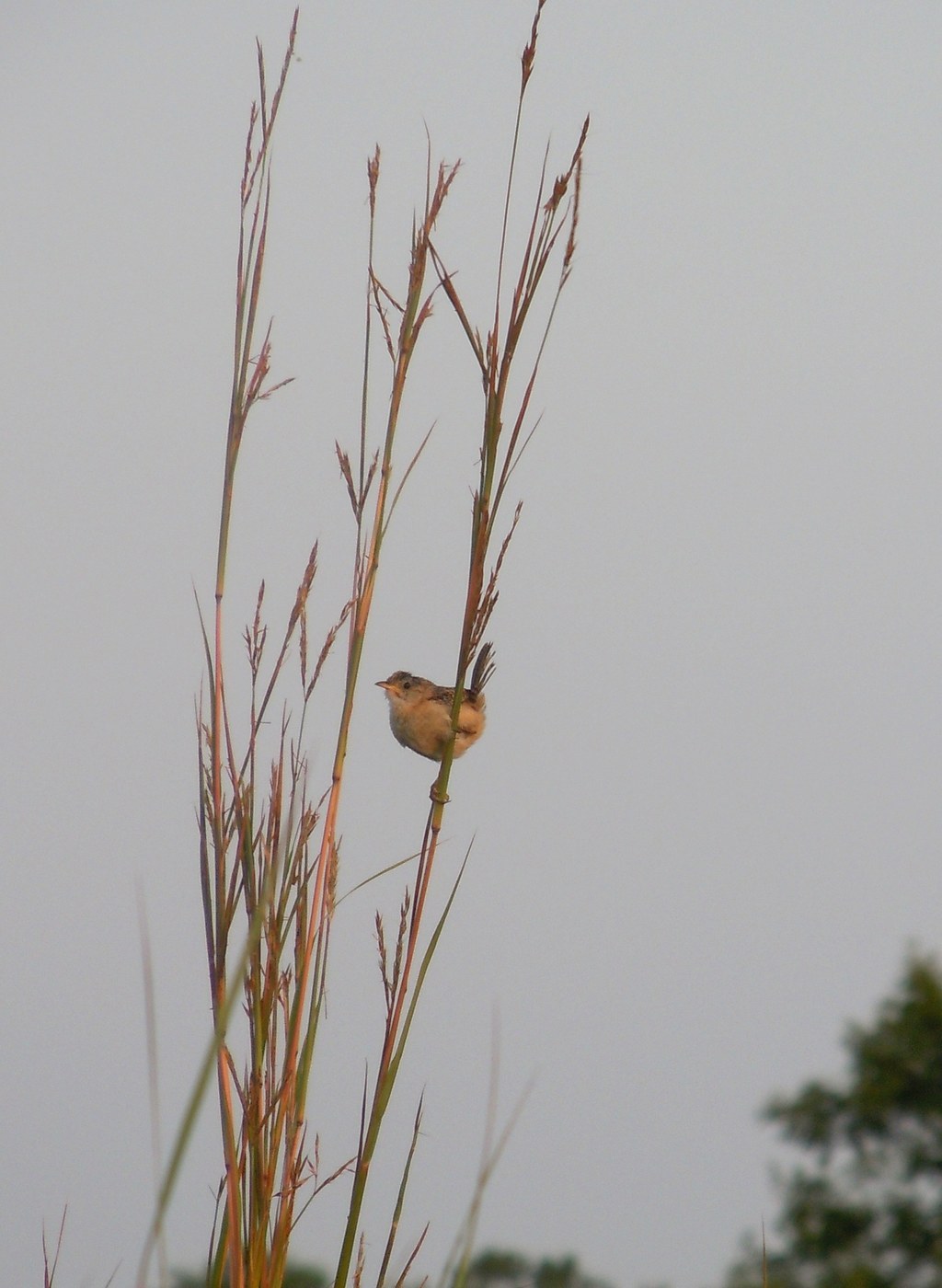
Sedge Wren
Tiny streaked crown and back feathers

Yellow-winged Cacique
Glossy black body feathers, yellow wing patch, shaggy crest

Yellow Warbler
Small contour and flight feathers
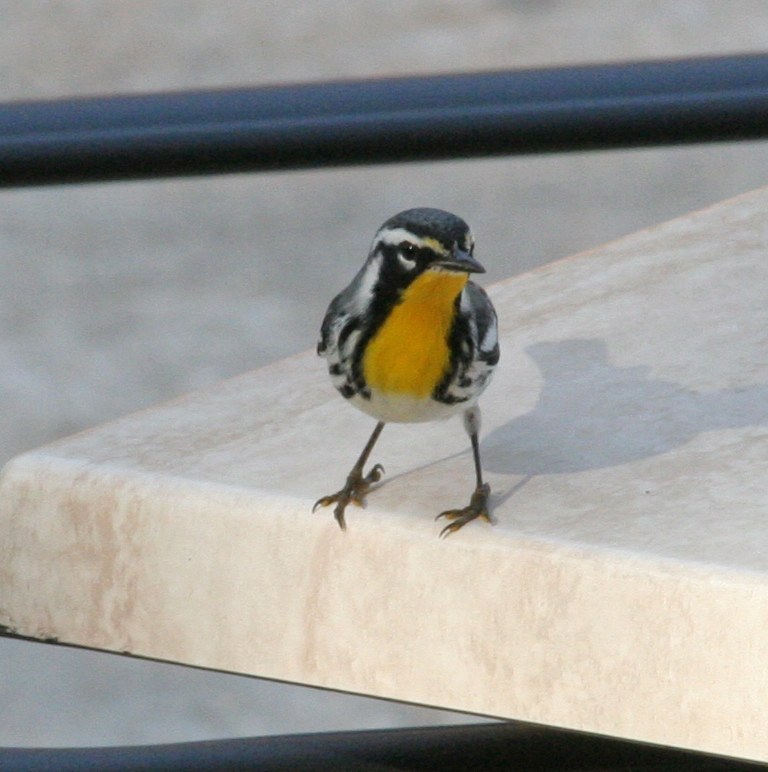
Yellow-throated Warbler
Small contour and flight feathers
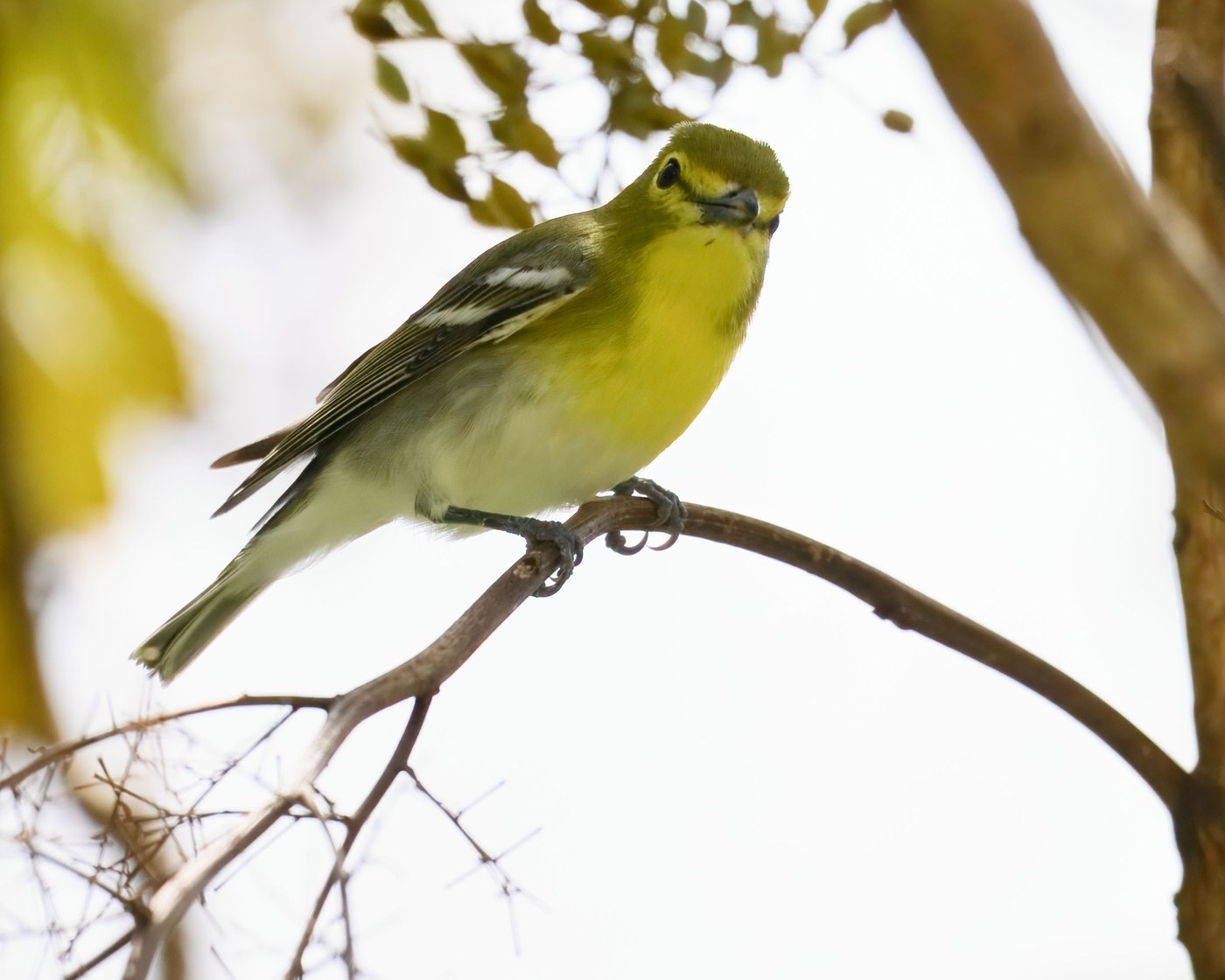
Yellow-throated Vireo
Bright yellow throat and spectacle feathers; olive-green back feathers; two white wing-bar feathers

Yellow-rumped Warbler
Small contour and flight feathers
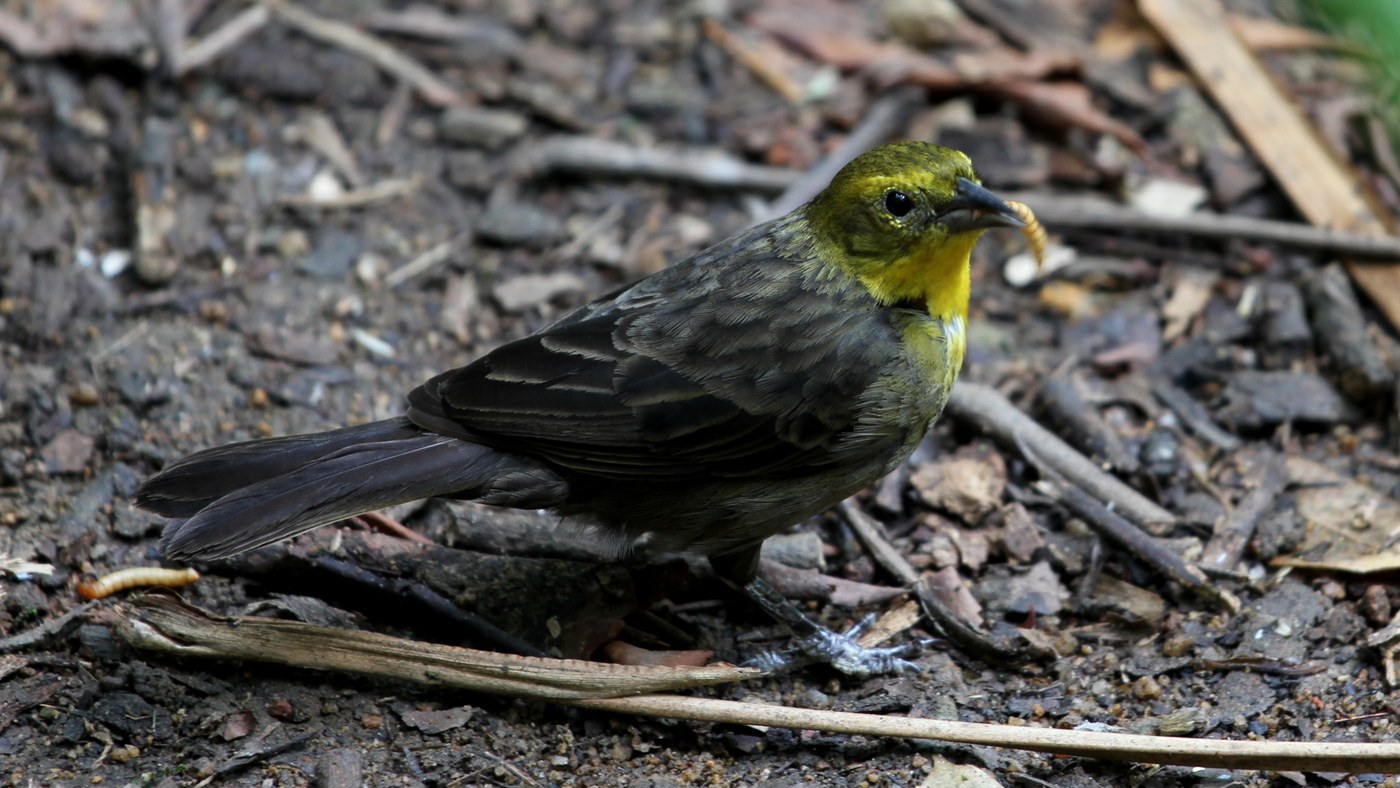
Yellow-hooded Blackbird
Contrasting hood and body feathers
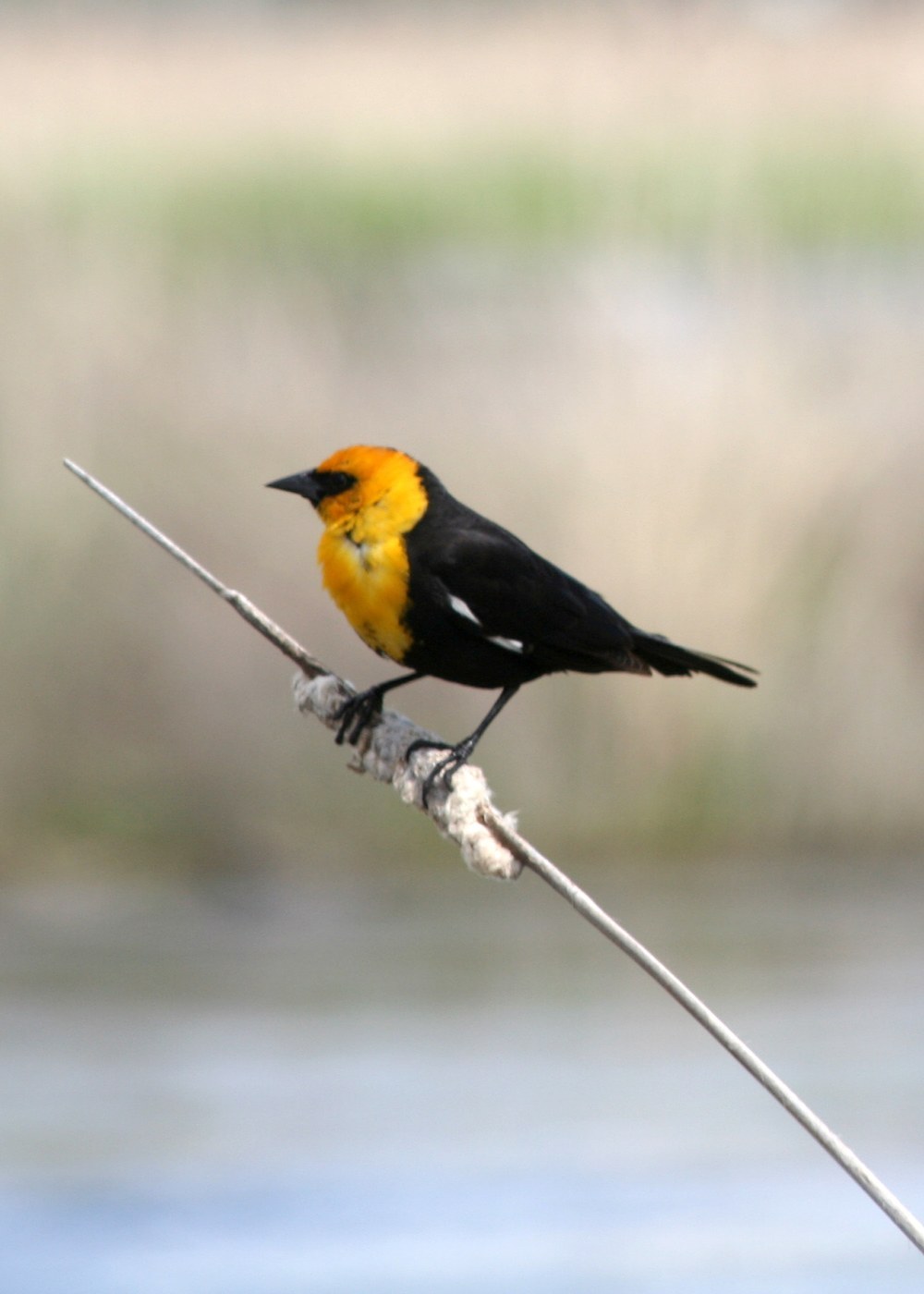
Yellow-headed Blackbird
Glossy black body plumage with a bright yellow head and breast

Yellow-eyed Junco
Contour and flight feathers

Yellow-fronted Canary
Small, smooth body plumage

Yellow-breasted Greenfinch
Compact, smooth body plumage