
Tui
Prosthemadera novaeseelandiae
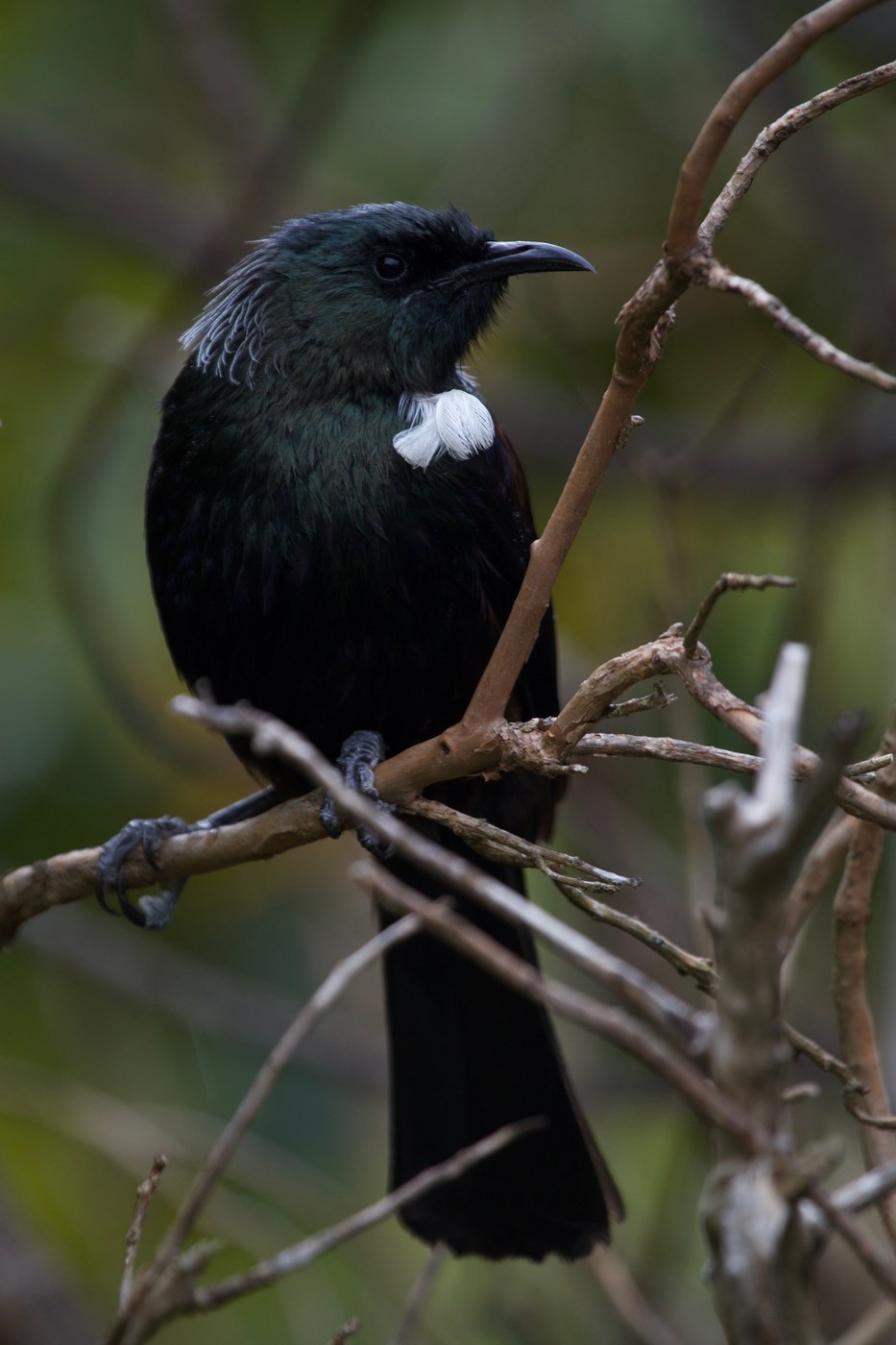
The Tui is a New Zealand honeyeater whose plumage looks black at a distance but shimmers with iridescent green, blue, and bronze up close, set off by two curled white throat tufts.
- Feather type
- Glossy, iridescent contour feathers; distinctive curled white throat tufts
- Colours
- Iridescent dark green-blue-bronze overall, white throat tufts, thin white nape band
- Bird size
- Starling-to-jay-sized, ~30 cm
Found a feather like this?
Identify any feather from a photo, free.
Overview
The Tui is a common and vocal honeyeater found throughout New Zealand, easily recognized by its glossy, multicolored iridescent plumage and the pair of small, curled white feather tufts at its throat. It is a familiar sight and sound in native forest as well as suburban gardens where nectar-bearing plants grow.
Identifying the Feather
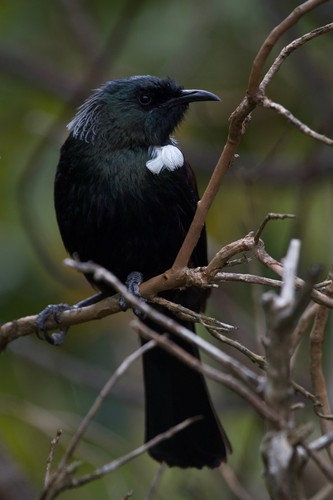
At a distance the Tui appears entirely black, but its contour feathers show strong iridescence across green, blue, and bronze tones under good light, particularly on the head, back, and upper breast. A thin band of fine, filamentous white feathers crosses the nape, and two small tufts of curled white feathers project from the throat, a feature unique among New Zealand birds and immediately diagnostic even from a single throat feather. Flight feathers are broad and dark with little iridescence. Compared to the Bellbird, another New Zealand honeyeater, the Tui is larger, darker overall, and shows the distinctive white throat tufts that the Bellbird lacks.
Plumage & Molt
Sexes are similar in plumage pattern, though males average larger with a slightly longer bill. Juveniles are duller and show less iridescence, with smaller or less developed throat tufts. Molt renews the iridescent feathering, with brightness varying somewhat by feather freshness and viewing light.
Habitat & Range
Tui occupy native forest, scrub, and increasingly well-vegetated urban and suburban areas across New Zealand, wherever flowering and fruiting plants provide food. The species is largely non-migratory, though some populations make seasonal movements tracking nectar availability.
Behavior & Field Notes
This species feeds primarily on nectar, along with fruit and invertebrates, and plays an important role in pollination of native flowering plants. It builds open cup nests in trees or dense shrubs. Its voice is loud and highly varied, combining musical notes with harsh, mechanical-sounding clicks and coughs, often given from a prominent perch. Tui are frequently seen chasing other birds from favored nectar sources, reflecting territorial feeding behavior.
Frequently asked questions
What feather feature is unique to the Tui?
The pair of small, curled white feather tufts at the throat, a feature not shared by other New Zealand birds.
Does the Tui really look black?
At a distance it can appear black, but its feathers show strong green, blue, and bronze iridescence in good light.
How does it differ from the Bellbird?
The Tui is larger and darker overall with distinctive white throat tufts, which the Bellbird lacks.
What does it feed on?
Mainly nectar, supplemented with fruit and invertebrates.
Tui guides
In-depth guides for identifying and understanding Tui.
Tui identified by the community
Real feathers identified with Feather Identifier.

Other feathers you may enjoy

Yellow-breasted Bunting
Contour and flight feathers, chestnut-and-yellow breeding pattern
Sedge Wren
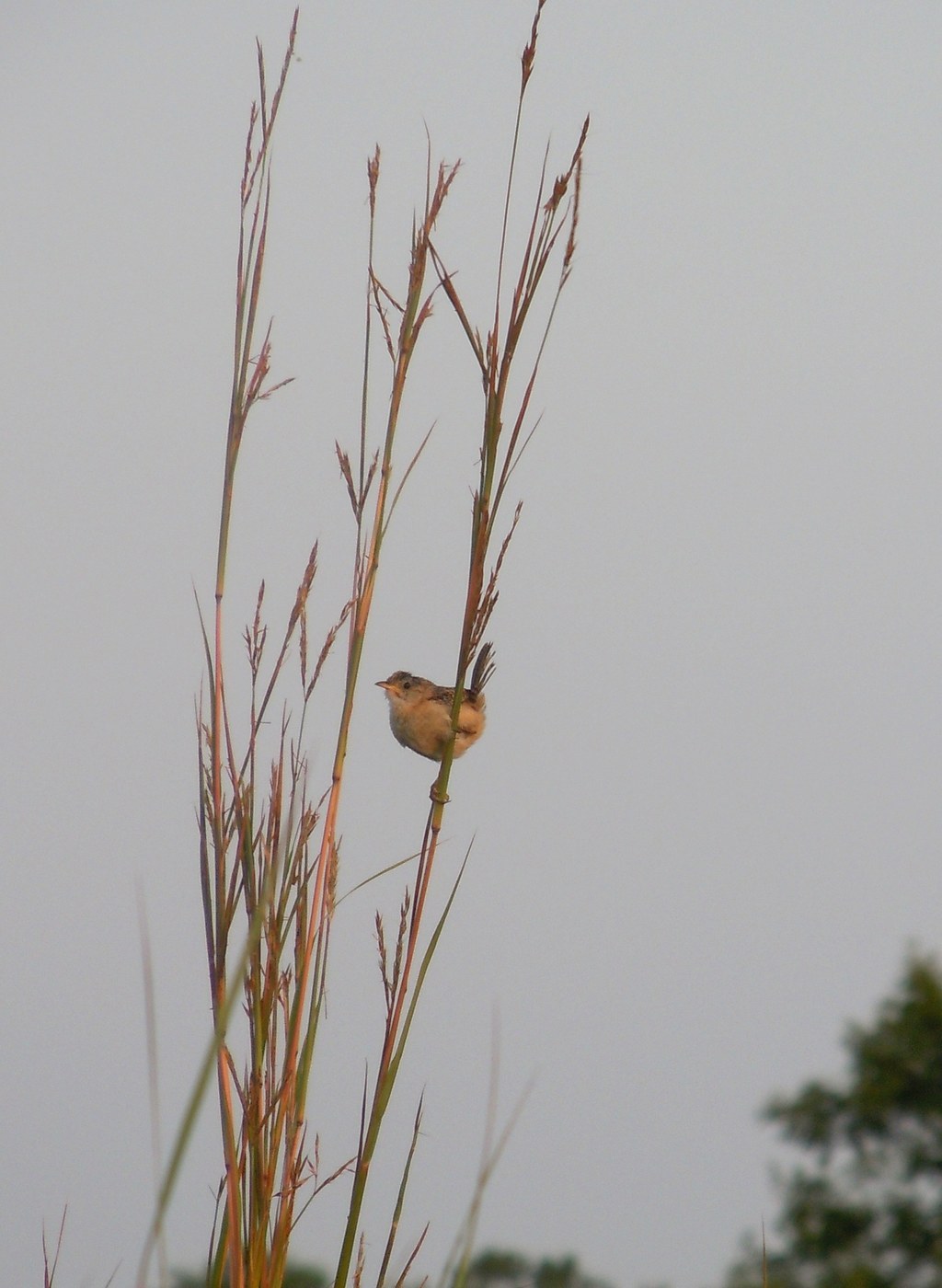
Tiny streaked crown and back feathers

Yellow-winged Cacique
Glossy black body feathers, yellow wing patch, shaggy crest

Yellow Warbler
Small contour and flight feathers
Yellow-throated Warbler
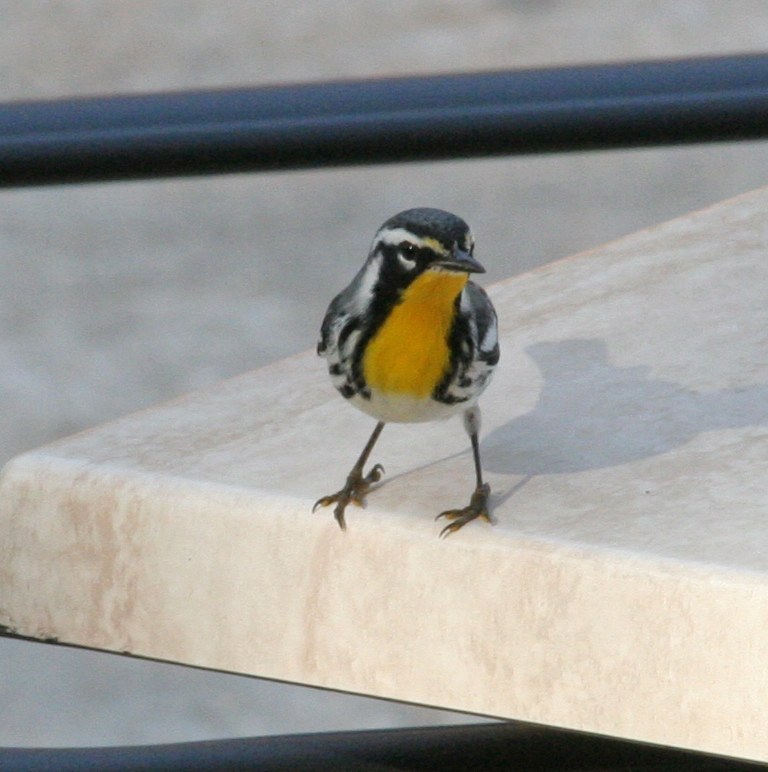
Small contour and flight feathers
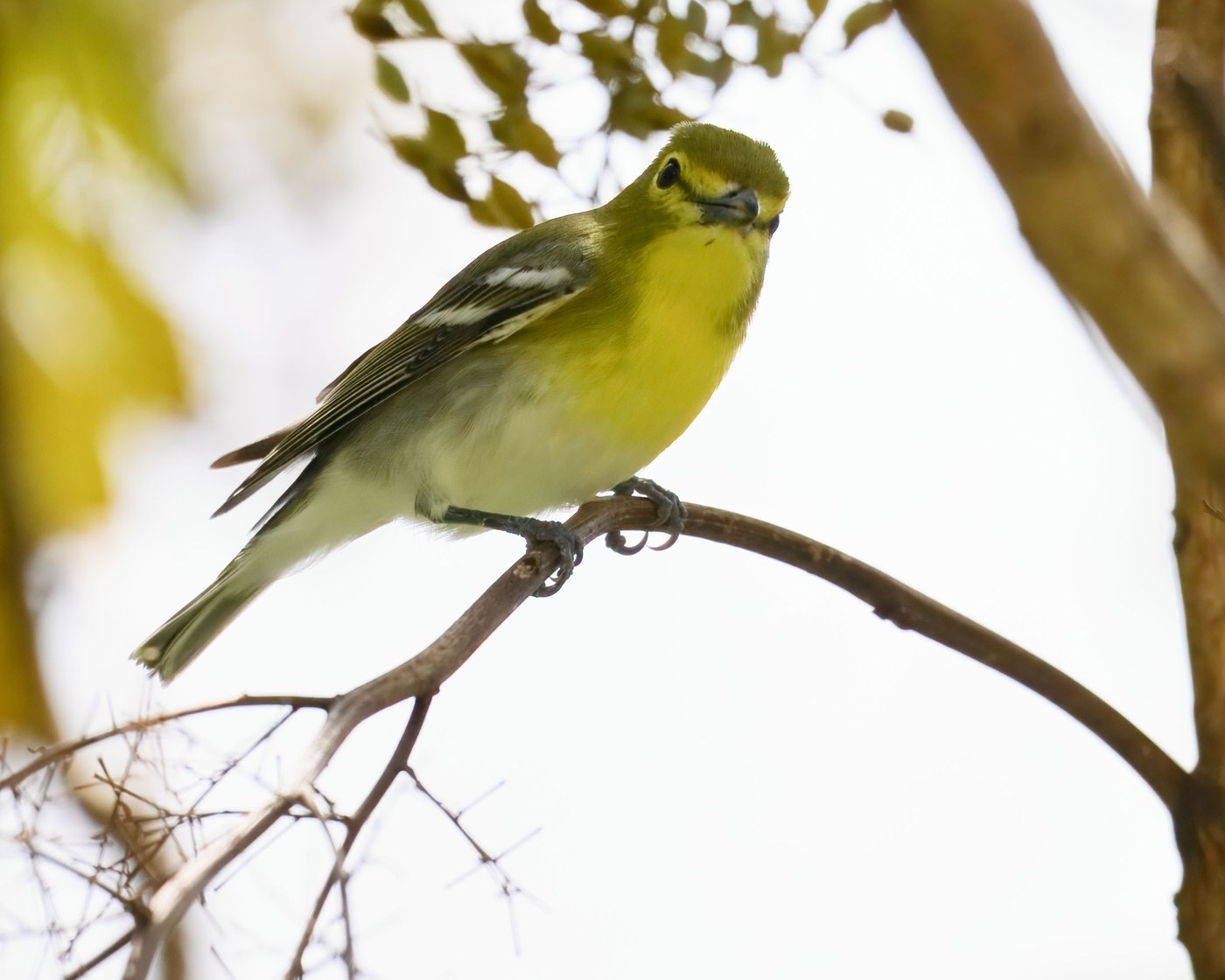
Yellow-throated Vireo
Bright yellow throat and spectacle feathers; olive-green back feathers; two white wing-bar feathers

Yellow-rumped Warbler
Small contour and flight feathers
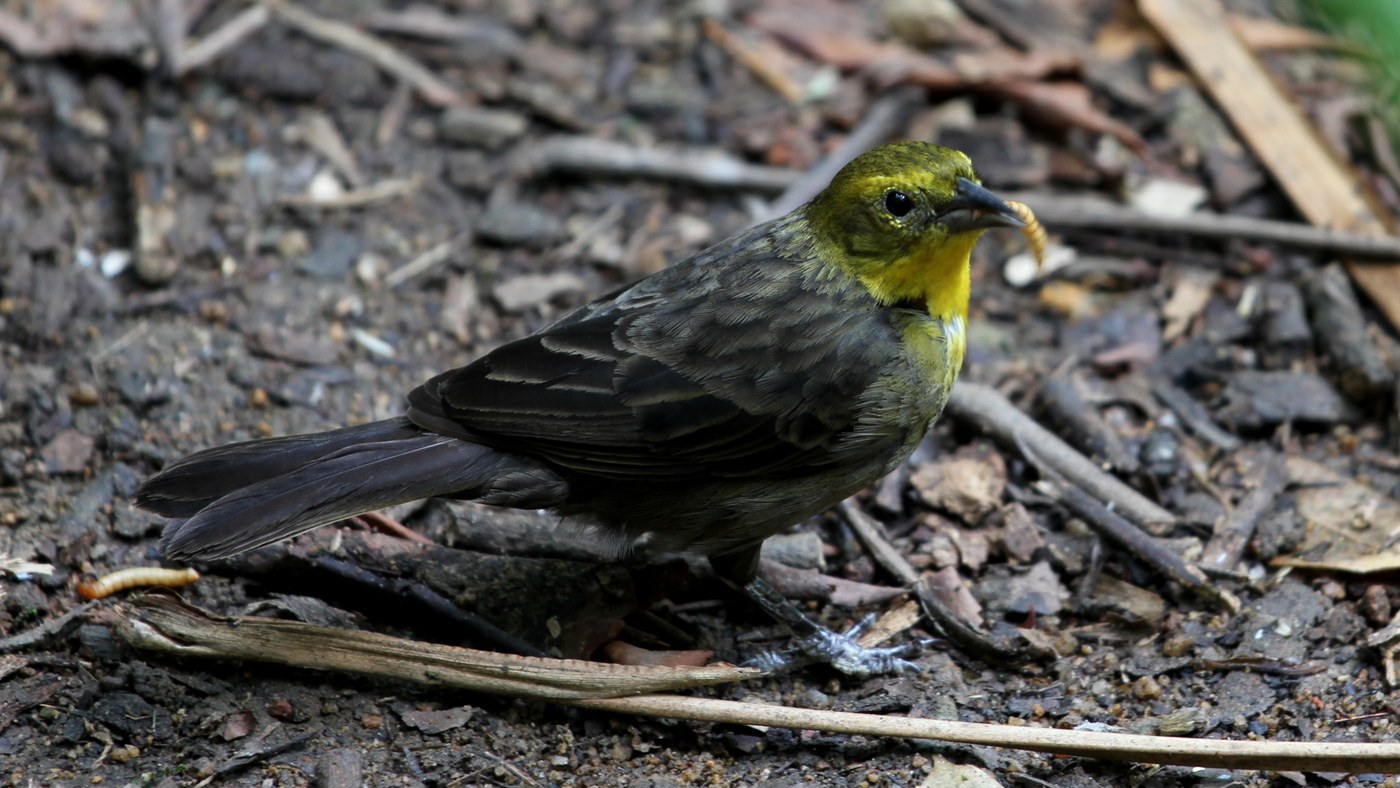
Yellow-hooded Blackbird
Contrasting hood and body feathers
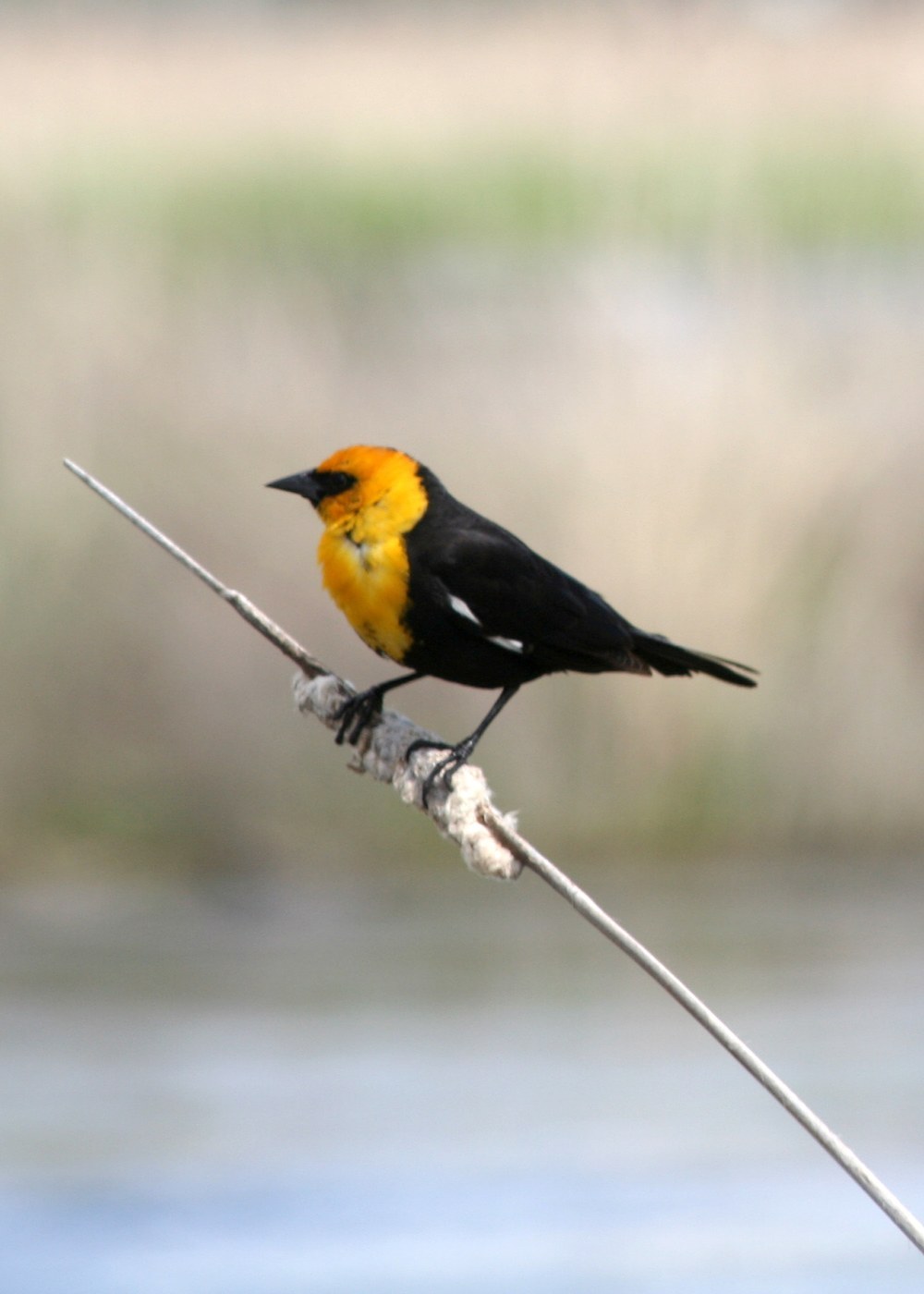
Yellow-headed Blackbird
Glossy black body plumage with a bright yellow head and breast

Yellow-eyed Junco
Contour and flight feathers

Yellow-fronted Canary
Small, smooth body plumage

Yellow-breasted Greenfinch
Compact, smooth body plumage