
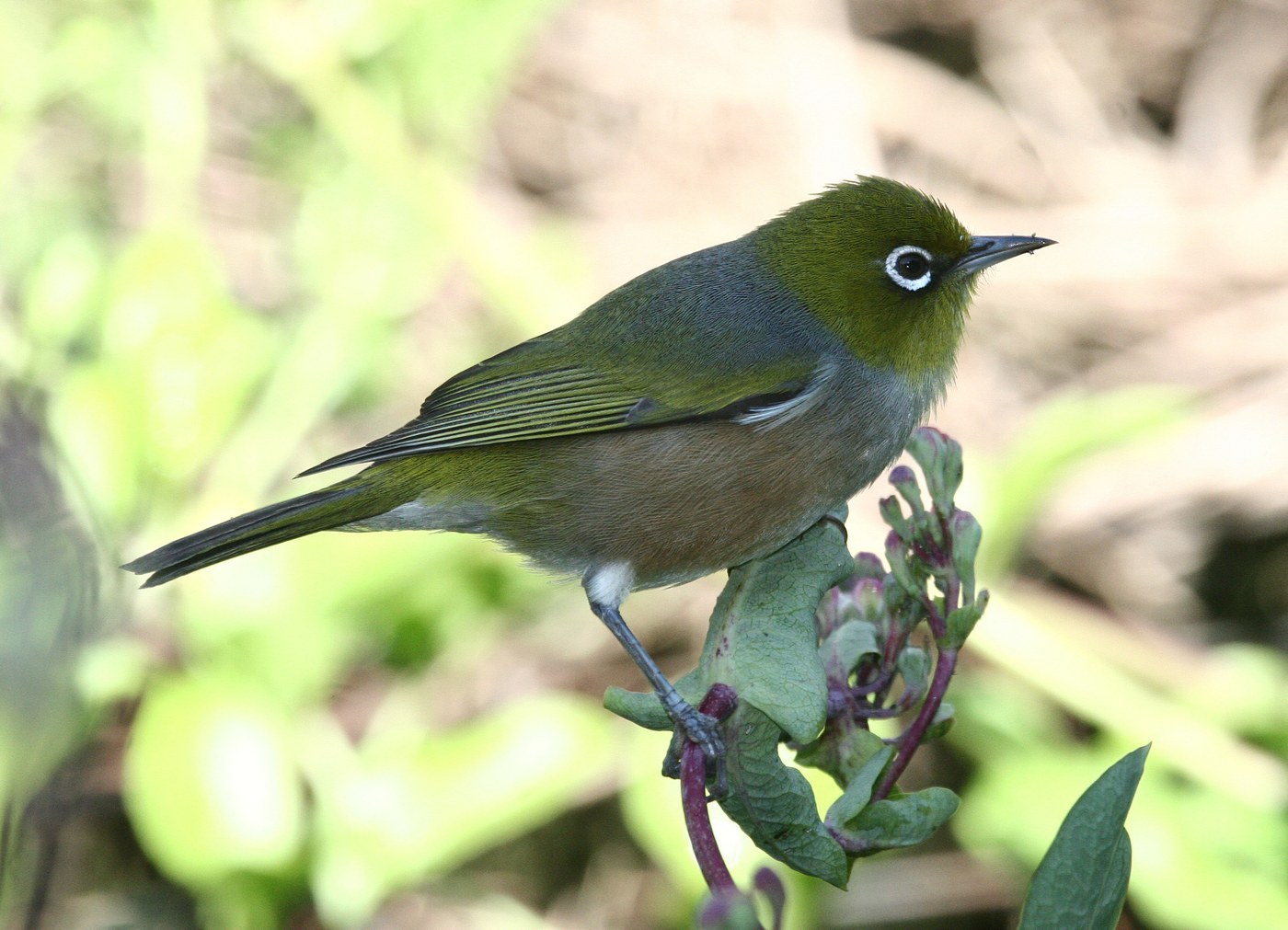
Silvereye
Zosterops lateralis
The Silvereye is a tiny olive-green songbird with a bold white eye-ring, common in gardens, scrub, and forest edges across Australia and New Zealand.
- Feather type
- Small, soft contour feathers with a short, fine bill
- Colours
- Olive-green upperparts, grey back, and a bold white eye-ring
- Bird size
- Tiny, ~12 cm
Found a feather like this?
Identify any feather from a photo, free.
Overview
Overview
The Silvereye is a small, active honeyeater-like songbird belonging to the white-eye family, easily recognised by the neat ring of white feathers around each eye. It is widespread and adaptable, found from native forest to suburban gardens and orchards.
- Family: Zosteropidae (white-eyes)
- Distribution: Australia, Tasmania, New Zealand, and various Pacific islands
- Notable trait: prominent white eye-ring on an otherwise plain small bird
Identifying the Feather
Feather Identification
Body feathers are olive-green on the head and back, with a grey wash across the mantle in many populations, and a short, fine, slightly downcurved bill suited to both nectar and small fruit. The flanks vary geographically from buff to warm chestnut to plain grey, a useful clue to subspecies or origin. The white eye-ring is formed of small, dense feathers and is the most reliable identification feature.
- Overall tone: olive-green above, pale below, variable flank colour
- Key mark: bold white eye-ring
- Compare with: other small olive songbirds lacking the white eye-ring, such as young honeyeaters
Plumage & Molt
Plumage
Sexes are similar in appearance. Juveniles lack the crisp white eye-ring, which develops with the first post-juvenile moult, and are duller overall. Some populations show seasonal movement with associated subtle plumage wear, but pattern remains consistent through the year.
Habitat & Range
Habitat & Range
Silvereyes occupy a very wide range of habitats, including native forest, coastal scrub, farmland shelterbelts, orchards, and suburban gardens. Some populations, especially in southeastern Australia and New Zealand, are migratory, moving in flocks over considerable distances outside the breeding season.
Behavior & Field Notes
Behavior & Field Notes
This species forages actively in foliage for insects, and takes nectar and soft fruit, often in small flocks outside the breeding season. Its call is a soft, plaintive 'peee' contact note, and its song is a subdued, warbling series of notes. Nests are small, neat cups suspended in a fork of a shrub or tree.
- Diet: insects, nectar, and soft fruit
- Voice: soft plaintive contact calls and a quiet warbling song
- Field note: often seen in active, mixed flocks moving quickly through foliage in orchards and gardens
Frequently asked questions
What is the best way to identify a Silvereye?
Look for a small olive-green bird with a distinctive bold white ring around the eye.
Do Silvereyes migrate?
Some populations, particularly in southeastern Australia and New Zealand, migrate in flocks, while others are more sedentary.
Why are Silvereyes sometimes called Waxeyes?
The name refers to the waxy-looking white feathers forming the ring around the eye.
What do Silvereyes eat?
They eat a mix of insects, nectar, and soft fruit, adapting their diet to what is seasonally available.
Silvereye guides
In-depth guides for identifying and understanding Silvereye.
Other feathers you may enjoy

Yellow-breasted Bunting
Contour and flight feathers, chestnut-and-yellow breeding pattern

Sedge Wren
Tiny streaked crown and back feathers

Yellow-winged Cacique
Glossy black body feathers, yellow wing patch, shaggy crest

Yellow Warbler
Small contour and flight feathers

Yellow-throated Warbler
Small contour and flight feathers

Yellow-throated Vireo
Bright yellow throat and spectacle feathers; olive-green back feathers; two white wing-bar feathers

Yellow-rumped Warbler
Small contour and flight feathers

Yellow-hooded Blackbird
Contrasting hood and body feathers

Yellow-headed Blackbird
Glossy black body plumage with a bright yellow head and breast

Yellow-eyed Junco
Contour and flight feathers

Yellow-fronted Canary
Small, smooth body plumage

Yellow-breasted Greenfinch
Compact, smooth body plumage