
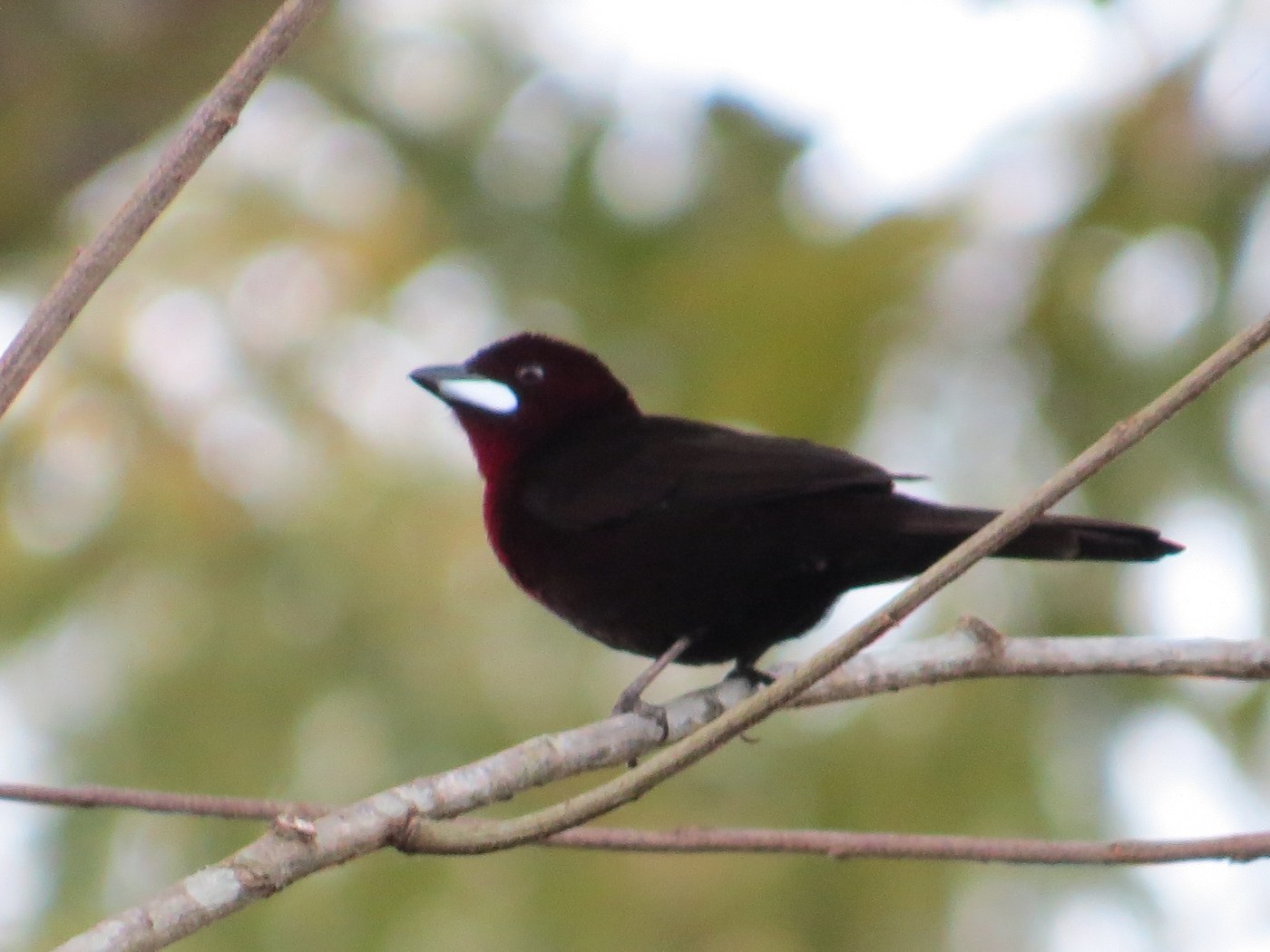
Silver-beaked Tanager
Ramphocelus carbo
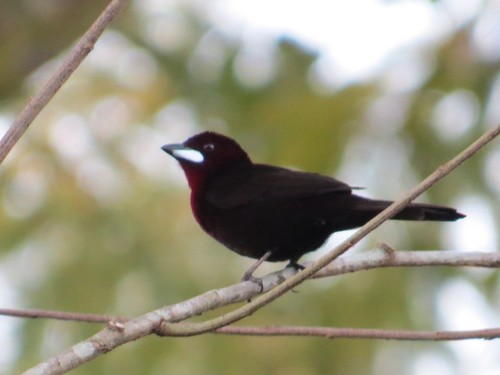
A richly colored tanager of the Amazon basin, the male Silver-beaked Tanager shows deep velvety maroon-red plumage set off by a strikingly pale, silvery lower bill.
- Feather type
- Dense, velvety contour feathers, deep maroon-red with a contrasting pale bill base
- Colours
- Deep velvety maroon-red to blackish in males with a silvery-white lower mandible
- Bird size
- ~18 cm
Found a feather like this?
Identify any feather from a photo, free.
Overview
The Silver-beaked Tanager is a common songbird of forest edge, riverine thickets, and secondary growth across much of Amazonian South America. Males show a deep, velvety maroon-red to blackish plumage that can appear almost glowing in certain light, paired with a distinctive pale, silvery-white lower mandible that contrasts sharply against the dark plumage and gives the species its common name. Females are duller, showing a more subdued reddish-brown plumage without the male's deep velvety sheen.
Identifying the Feather
Adult male body feathers show a deep, velvety maroon-red tone, particularly rich and almost glowing on the throat and breast, with somewhat blacker tones on the wings, back, and tail. The lower mandible of the bill is pale silvery-white, sharply contrasting with the dark plumage and the darker upper mandible, a diagnostic feature for the species. Females show a duller reddish-brown body plumage lacking the velvety intensity of the male, with a less contrasting, more muted bill pattern.
Plumage & Molt
Adult males retain their deep maroon-red, velvety plumage with the pale bill year-round, with the richest, most saturated color typically shown on fresh feathers after molt. Females maintain their duller reddish-brown plumage consistently through the year. Immatures generally resemble females before males acquire the deeper adult coloration through molt.
Habitat & Range
Silver-beaked Tanagers inhabit forest edge, riverine thickets, secondary growth, and scrubby clearings across the Amazon basin and adjacent regions of South America. The species is a year-round resident throughout its range, favoring disturbed or edge habitats over deep forest interior.
Behavior & Field Notes
This species forages for fruit and insects in low to mid-level vegetation at forest edge and in clearings, often in pairs or small groups. The voice includes simple, sharp calls and a modest warbled song. Nests are cup-shaped, placed in dense vegetation for cover. Silver-beaked Tanagers are often conspicuous at forest edges and clearings, where the male's deep maroon-red plumage and pale bill make for a distinctive combination once seen well.
Frequently asked questions
What is the most distinctive feature of the Silver-beaked Tanager?
Its deep, velvety maroon-red plumage combined with a strikingly pale, silvery-white lower mandible.
How do female Silver-beaked Tanagers differ from males?
Females are duller reddish-brown overall, lacking the male's deep velvety sheen and strongly contrasting pale bill.
Where is the Silver-beaked Tanager found?
It inhabits forest edge, riverine thickets, and secondary growth across the Amazon basin and nearby regions of South America.
Is the Silver-beaked Tanager migratory?
No, it is a year-round resident throughout its South American range.
Silver-beaked Tanager guides
In-depth guides for identifying and understanding Silver-beaked Tanager.
Other feathers you may enjoy

Yellow-breasted Bunting
Contour and flight feathers, chestnut-and-yellow breeding pattern
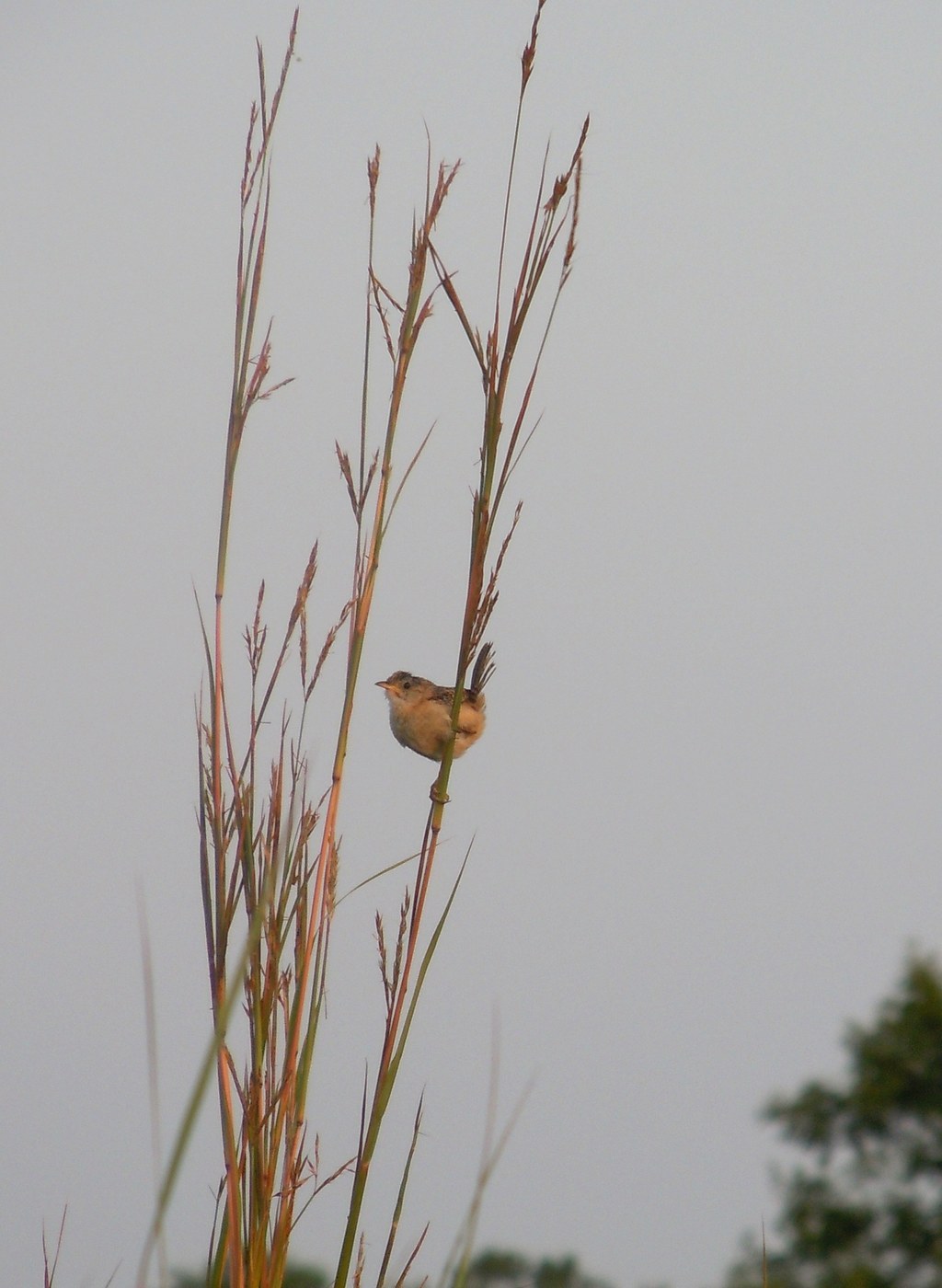
Sedge Wren
Tiny streaked crown and back feathers

Yellow-winged Cacique
Glossy black body feathers, yellow wing patch, shaggy crest

Yellow Warbler
Small contour and flight feathers
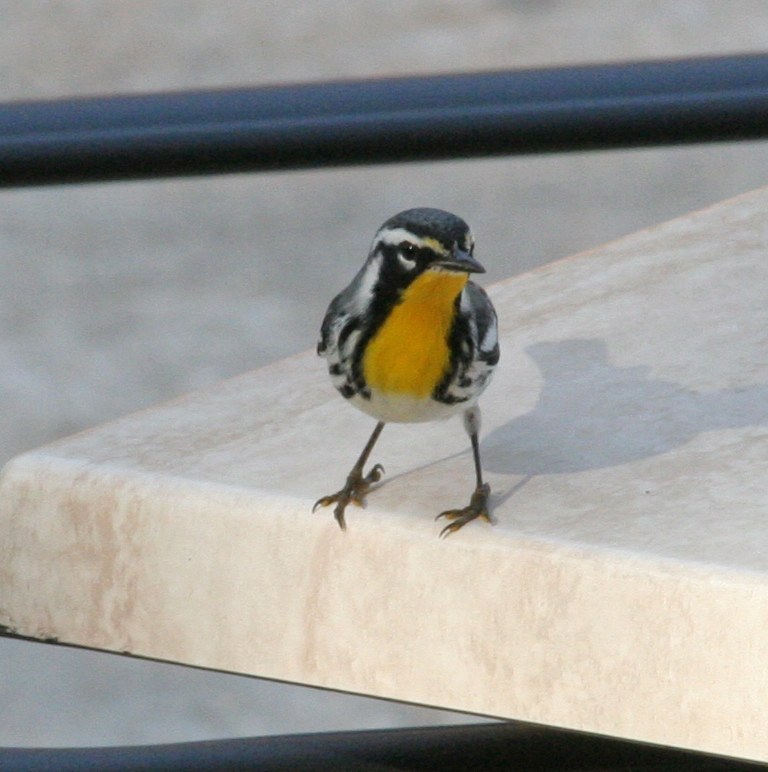
Yellow-throated Warbler
Small contour and flight feathers
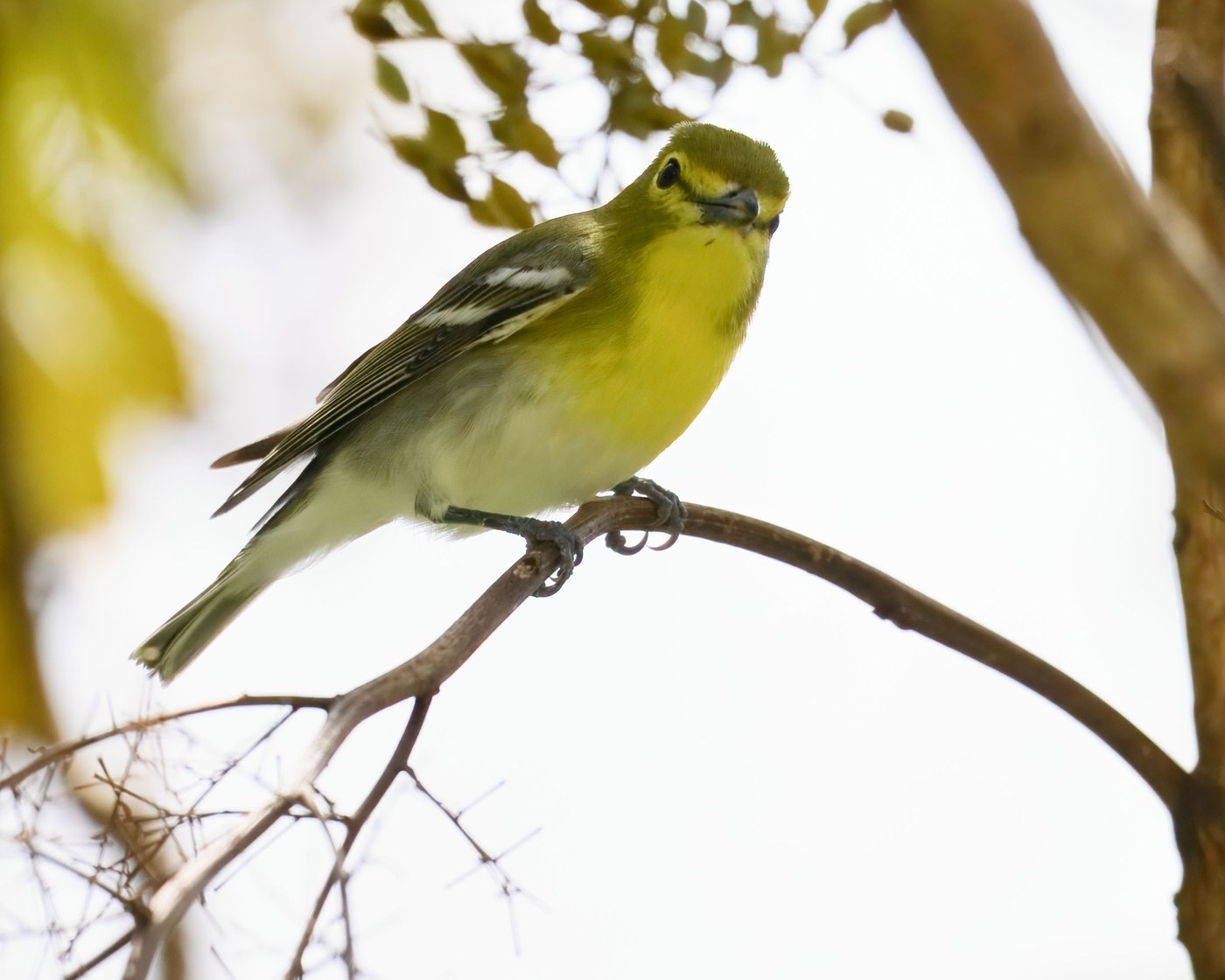
Yellow-throated Vireo
Bright yellow throat and spectacle feathers; olive-green back feathers; two white wing-bar feathers

Yellow-rumped Warbler
Small contour and flight feathers
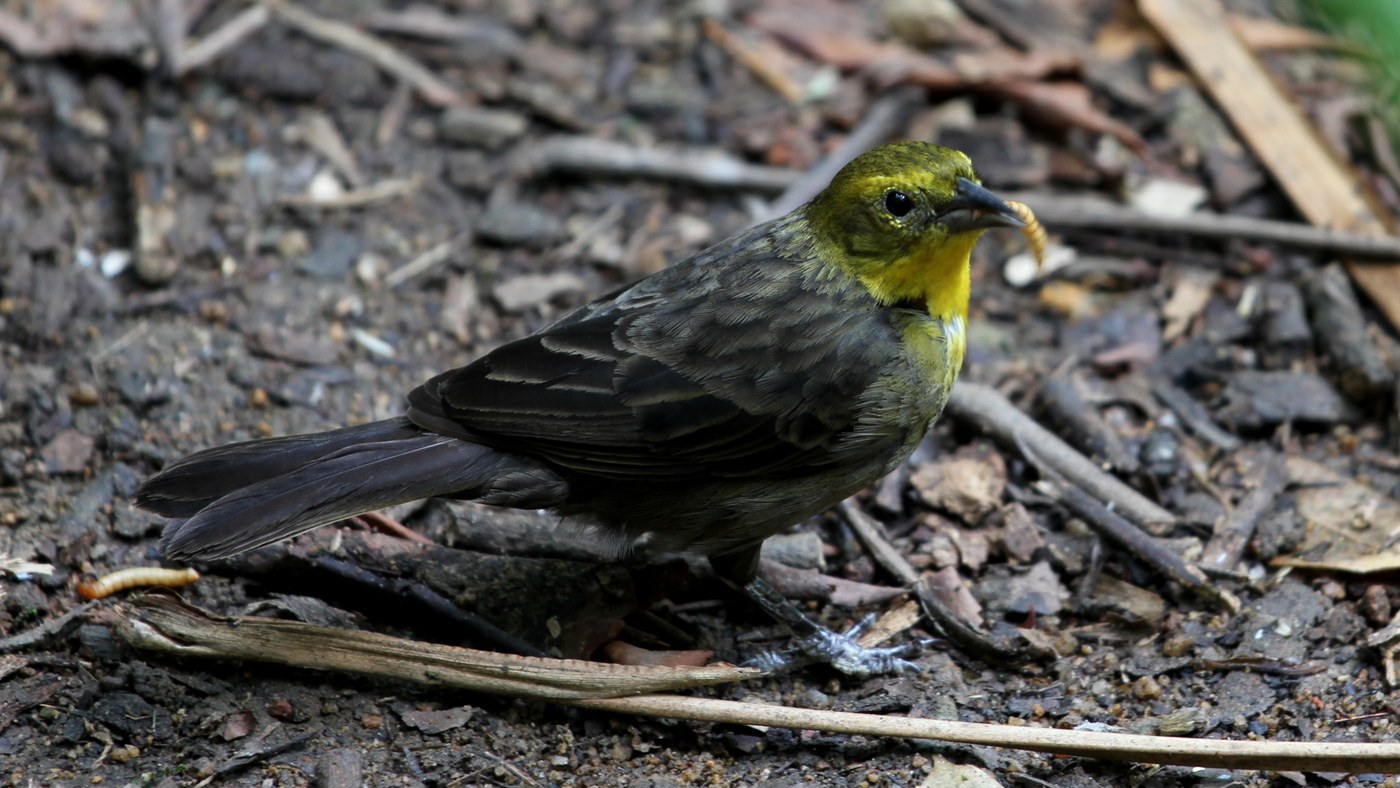
Yellow-hooded Blackbird
Contrasting hood and body feathers
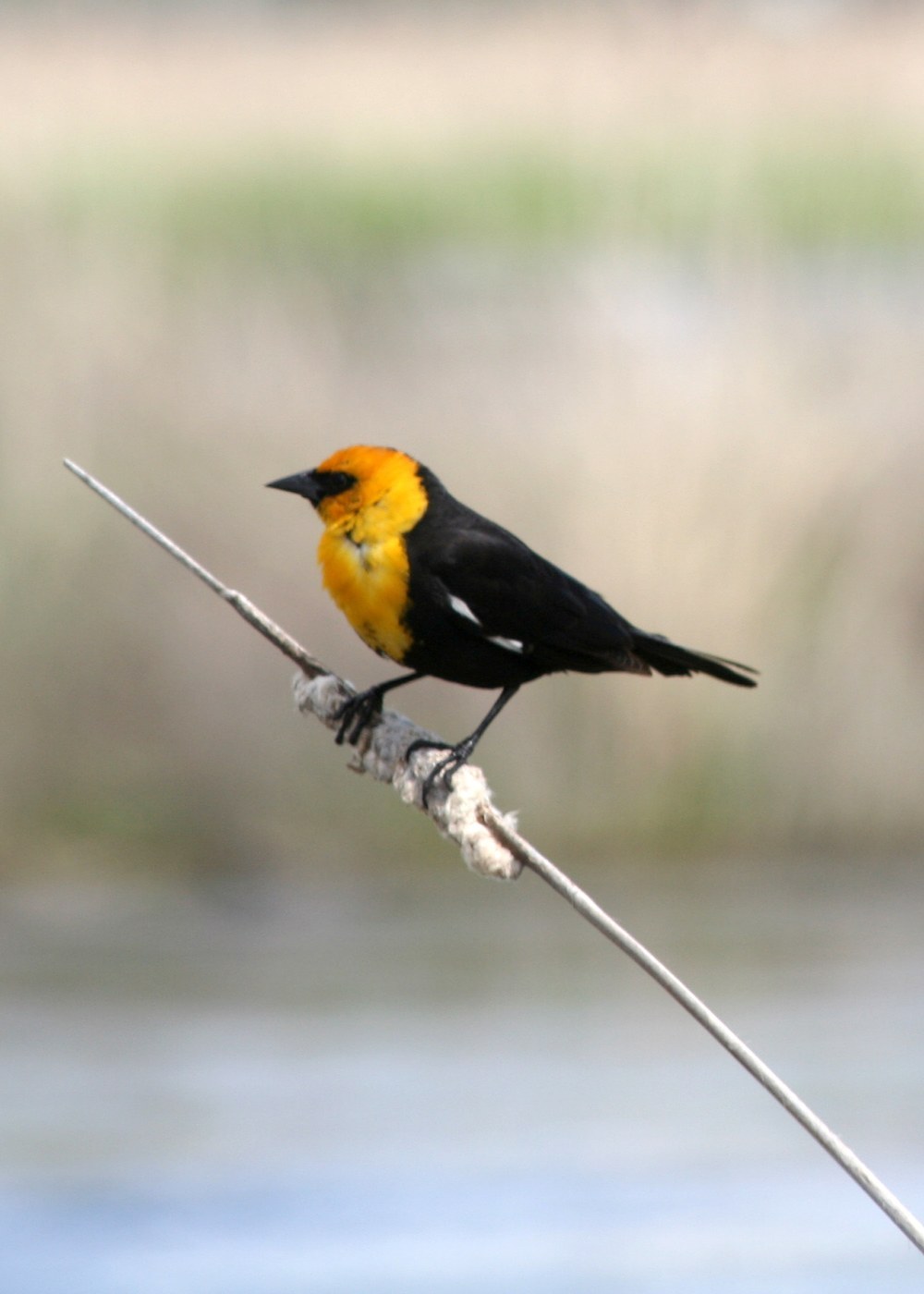
Yellow-headed Blackbird
Glossy black body plumage with a bright yellow head and breast

Yellow-eyed Junco
Contour and flight feathers

Yellow-fronted Canary
Small, smooth body plumage

Yellow-breasted Greenfinch
Compact, smooth body plumage