
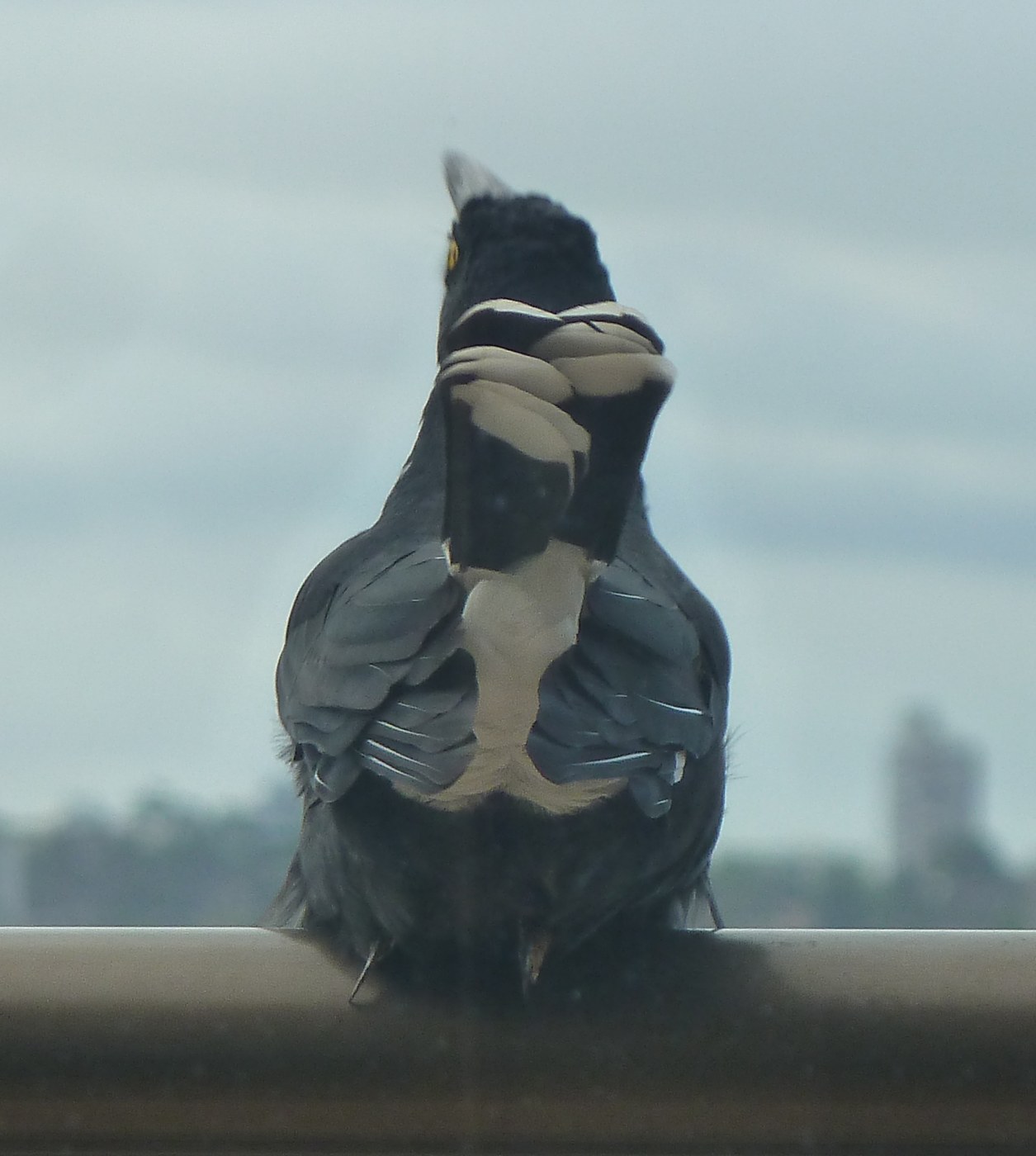
Pied Currawong
Strepera graculina
A large, mostly black Australian songbird, the Pied Currawong is marked by white patches on the wings and tail tip, and a bright yellow eye that stands out against its dark plumage.
- Feather type
- Sturdy, glossy contour feathers; white wing and tail patches
- Colours
- Black overall, with white wing patches, white tail tip, and pale eye
- Bird size
- Crow-sized, ~44-48 cm
Found a feather like this?
Identify any feather from a photo, free.
Overview
The Pied Currawong is a large songbird found across forest, woodland, and increasingly urban areas of eastern Australia, often seen in flocks especially outside the breeding season. Its plumage is predominantly black, relieved by clean white patches on the wings and tail tip, giving it a pied appearance in flight.
Identifying the Feather
Body feathers are glossy black overall, with a distinct white patch formed by the primary coverts and base of the primaries visible on the folded and open wing, and a broad white tip across the tail feathers. The undertail coverts also show white, adding to the pied pattern when the tail is fanned. A pale yellow iris contrasts against the black facial feathering, a useful feature for close-range identification. The bill is heavy and slightly hooked. This combination of white wing patch, white tail tip, and pale eye readily distinguishes the species from all-black relatives such as ravens, which lack the white markings and have dark eyes.
Plumage & Molt
Sexes look similar in plumage, with only subtle size differences between males and females. Juveniles are duller and browner overall with less crisp white patches, gradually acquiring the fully glossy black adult plumage with maturity. Molt is regular and does not create pronounced seasonal changes.
Habitat & Range
Pied Currawongs occupy forest, woodland, and increasingly parks and gardens in urban and suburban areas across eastern Australia. Some populations undertake seasonal altitudinal movements, moving from higher-elevation breeding areas to lowland areas in winter, while others are more sedentary.
Behavior & Field Notes
This species has a varied diet including fruit, invertebrates, and small vertebrates or eggs, sometimes taken opportunistically at nests of other birds. It builds a large stick nest in trees. Its call is a loud, ringing, often two- or three-note whistled phrase, from which its common name is derived. Pied Currawongs can form large, mobile flocks outside the breeding season, particularly during seasonal movements.
Frequently asked questions
How can you tell a Pied Currawong from a raven by feathers?
The Pied Currawong shows distinct white patches on the wings and tail tip and has a pale yellow eye, features absent in all-black ravens with dark eyes.
Does the Pied Currawong migrate?
Some populations make seasonal altitudinal movements from higher elevations to lowland areas in winter, while others remain more sedentary.
What does its call sound like?
A loud, ringing whistled phrase, often given in two or three notes, which inspired its common name.
What does it eat?
A varied diet of fruit, invertebrates, and small vertebrates or eggs, sometimes taken opportunistically.
Pied Currawong guides
In-depth guides for identifying and understanding Pied Currawong.
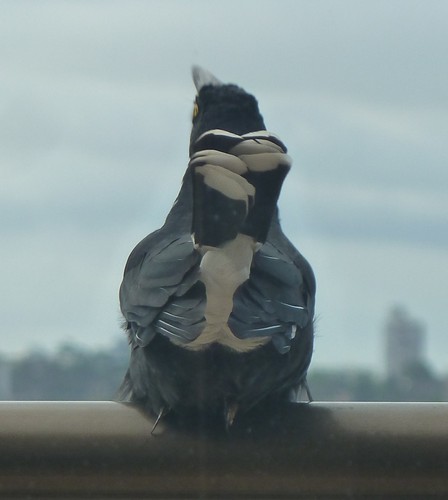
Pied Currawong identified by the community
Real feathers identified with Feather Identifier.

Other feathers you may enjoy

Yellow-breasted Bunting
Contour and flight feathers, chestnut-and-yellow breeding pattern

Sedge Wren
Tiny streaked crown and back feathers

Yellow-winged Cacique
Glossy black body feathers, yellow wing patch, shaggy crest

Yellow Warbler
Small contour and flight feathers

Yellow-throated Warbler
Small contour and flight feathers

Yellow-throated Vireo
Bright yellow throat and spectacle feathers; olive-green back feathers; two white wing-bar feathers

Yellow-rumped Warbler
Small contour and flight feathers

Yellow-hooded Blackbird
Contrasting hood and body feathers

Yellow-headed Blackbird
Glossy black body plumage with a bright yellow head and breast

Yellow-eyed Junco
Contour and flight feathers

Yellow-fronted Canary
Small, smooth body plumage

Yellow-breasted Greenfinch
Compact, smooth body plumage