
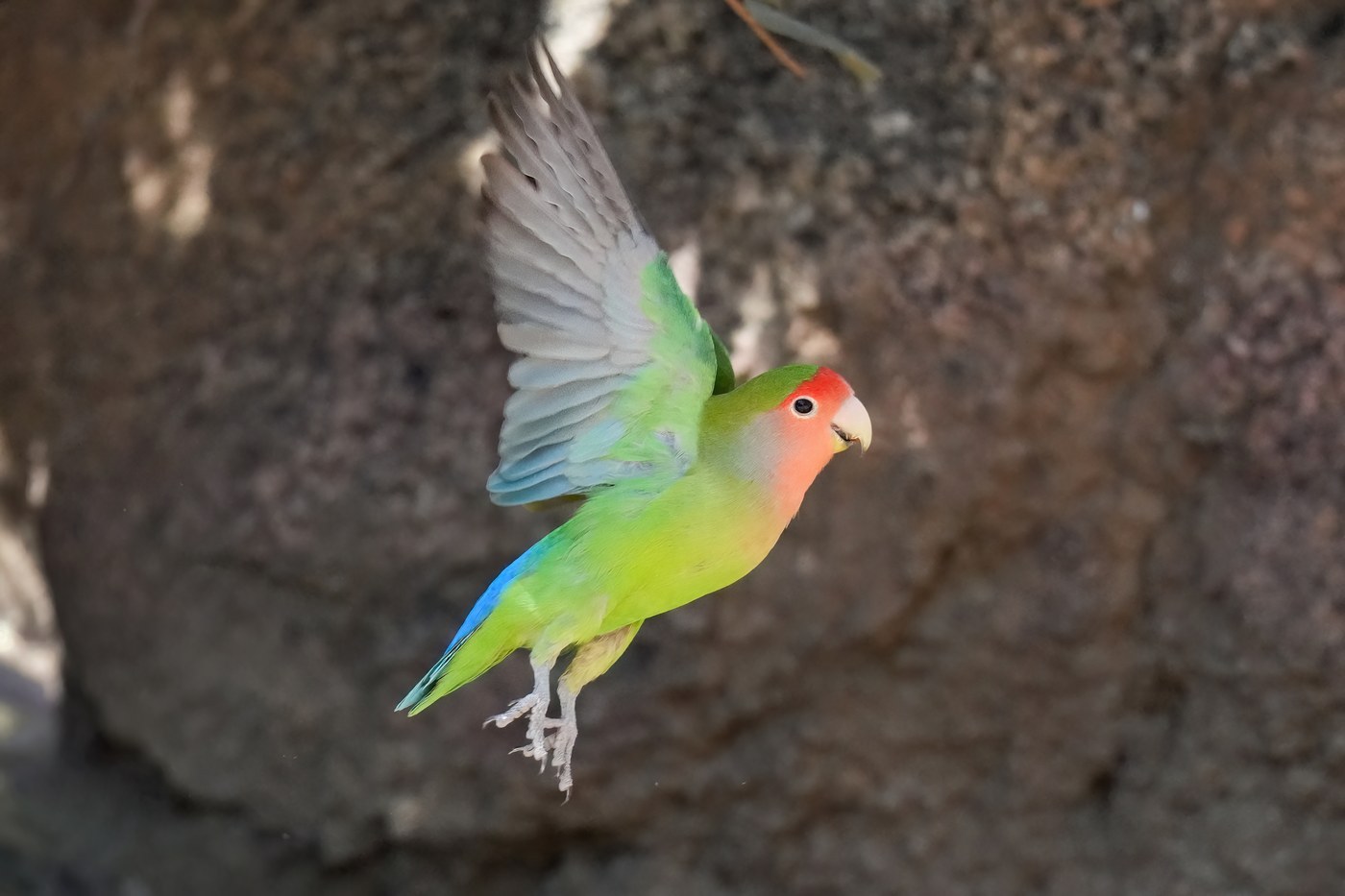
Peach-faced Lovebird
Agapornis roseicollis
A small green parrot with a soft peach-pink face and throat and a bright blue rump patch, native to southwestern Africa.
- Feather type
- Small compact flight feathers, short rounded tail
- Colours
- Green body with a peach-pink face and throat and a blue rump
- Bird size
- Very small, ~15 cm
Found a feather like this?
Identify any feather from a photo, free.
Overview
Overview
The Peach-faced Lovebird, also called the Rosy-faced Lovebird, is a small, compact parrot native to the arid regions of southwestern Africa. It is one of the most widely recognized lovebird species, known for its soft peach-pink facial coloring against a green body.
Despite its small size, its bright color pattern and stocky build make it easy to identify among the small parrot species sharing its range.
Identifying the Feather
Feather Identification
- Body feathers: Bright green over most of the body, denser and more compact than the feathers of larger parrots.
- Face and throat: Soft peach to salmon-pink feathers cover the face, forehead, and throat, fading gradually into the green of the crown and chest.
- Rump: A patch of bright blue feathers on the lower back and rump, visible in flight or when the wing is folded.
- Shaft and texture: Small, fine rachis typical of lovebirds, with a compact, tightly overlapping feather structure suited to their small body size.
- Compared to similar species: The peach face combined with a blue rump separates this species from Fischer's Lovebird, which has an orange-red face and lacks the same peach tone, and from the Yellow-collared Lovebird, which has a dark head rather than a peach face.
Plumage & Molt
Plumage Notes
Sexes look similar, both showing the peach face and green body, though males may show slightly brighter facial coloring in some populations. Juveniles have duller, more orange-tinged facial feathers that brighten with the first molt.
Molt occurs gradually through the year.
Habitat & Range
Habitat & Range
This species is native to arid regions of Namibia, Botswana, and parts of Angola and South Africa, typically near rocky outcrops and water sources in savanna habitat. It has also established feral populations in some other regions due to escaped or released birds.
It is generally resident, though local movements occur in response to water availability in its arid habitat.
Behavior & Field Notes
Behavior & Field Notes
Peach-faced Lovebirds are highly social, often seen in flocks foraging for seeds and grass on the ground or in low vegetation. They are known for strong pair bonds, often sitting close together and preening one another.
They nest in crevices of cliffs, buildings, or the base of large communal weaver nests, and are notable among lovebirds for carrying nesting material tucked into their rump feathers. Their calls are high-pitched chattering notes, typical of small lovebird species.
Frequently asked questions
What color is a Peach-faced Lovebird's face?
A soft peach to salmon-pink covers the face, forehead, and throat, fading into the green of the crown and chest.
How is the Peach-faced Lovebird different from Fischer's Lovebird?
The Peach-faced Lovebird has a softer peach-pink face, while Fischer's Lovebird shows a brighter orange-red face and lacks the peach tone.
Does the Peach-faced Lovebird have a blue rump?
Yes, it shows a patch of bright blue feathers on the lower back and rump.
Where does the Peach-faced Lovebird live?
It is native to arid savanna regions of southwestern Africa, including Namibia, Botswana, and parts of Angola and South Africa.
Peach-faced Lovebird guides
In-depth guides for identifying and understanding Peach-faced Lovebird.
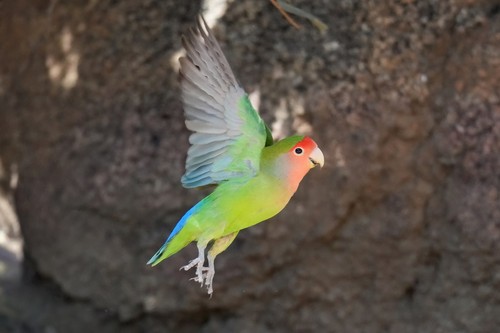
Peach-faced Lovebird identified by the community
Real feathers identified with Feather Identifier.


Other feathers you may enjoy
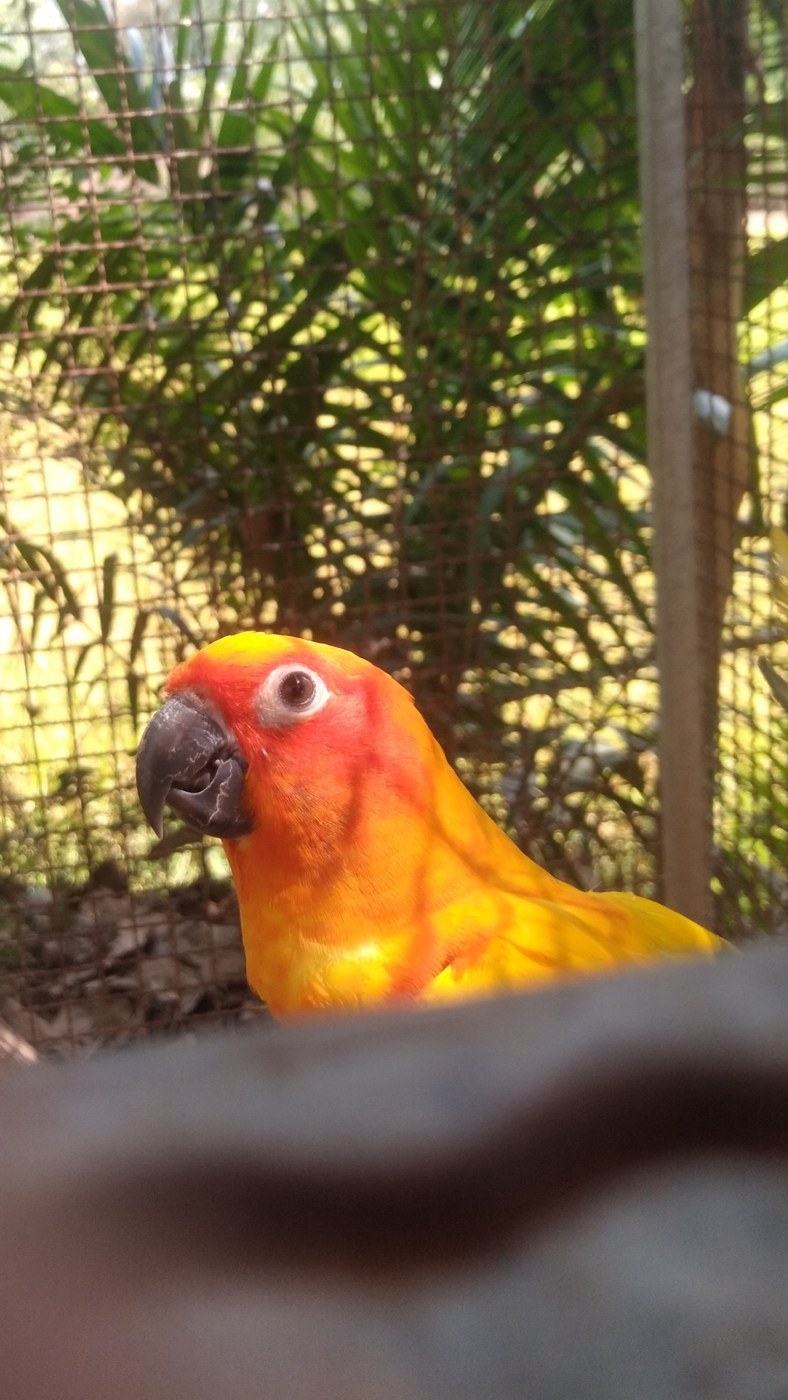
Sun Parakeet
Bright, dense body contour feathers; medium pointed tail feathers

Yellow-naped Amazon
Broad rounded contour feathers with sturdy flight feathers
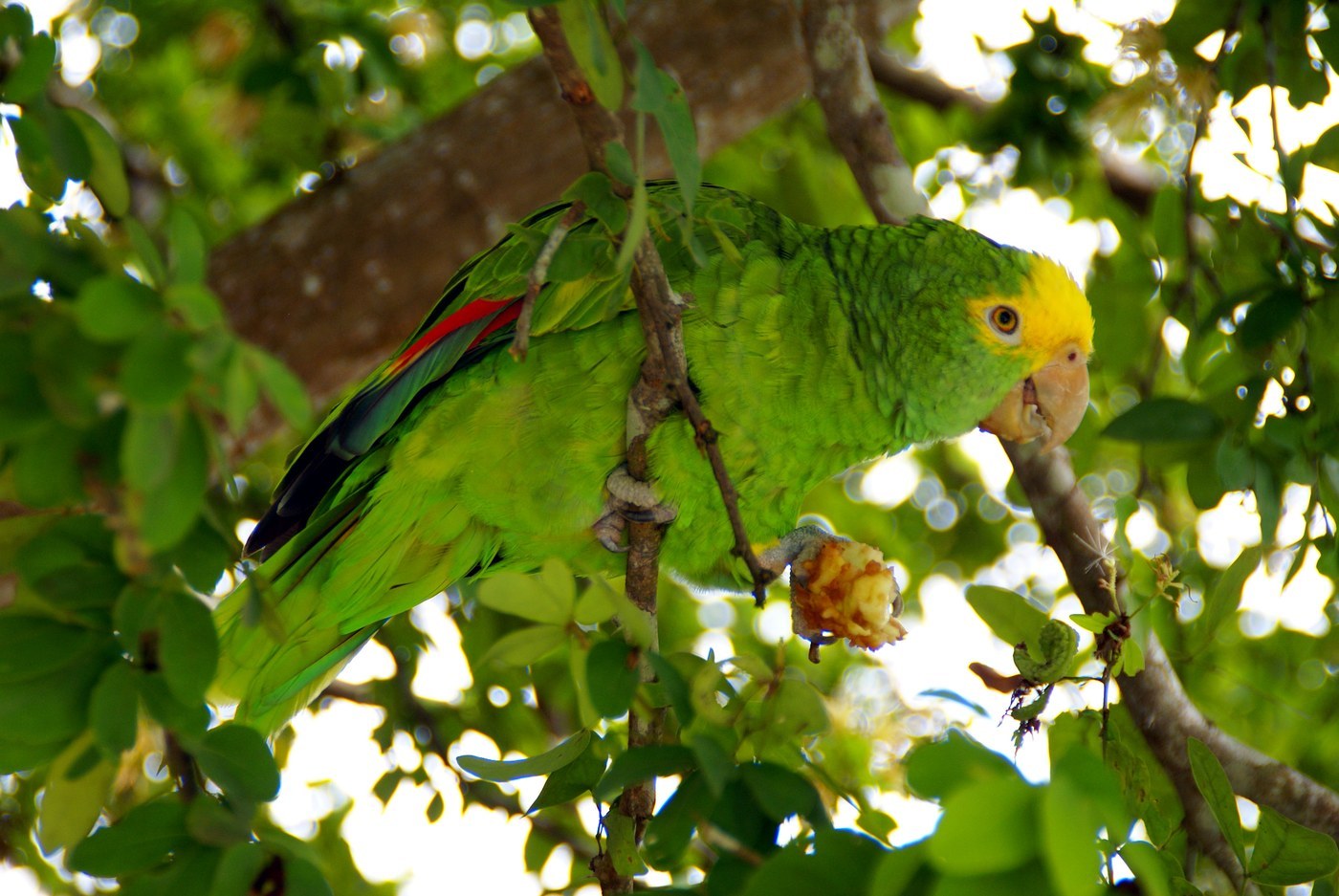
Yellow-headed Amazon
Dense, rounded body contour feathers; broad flight feathers
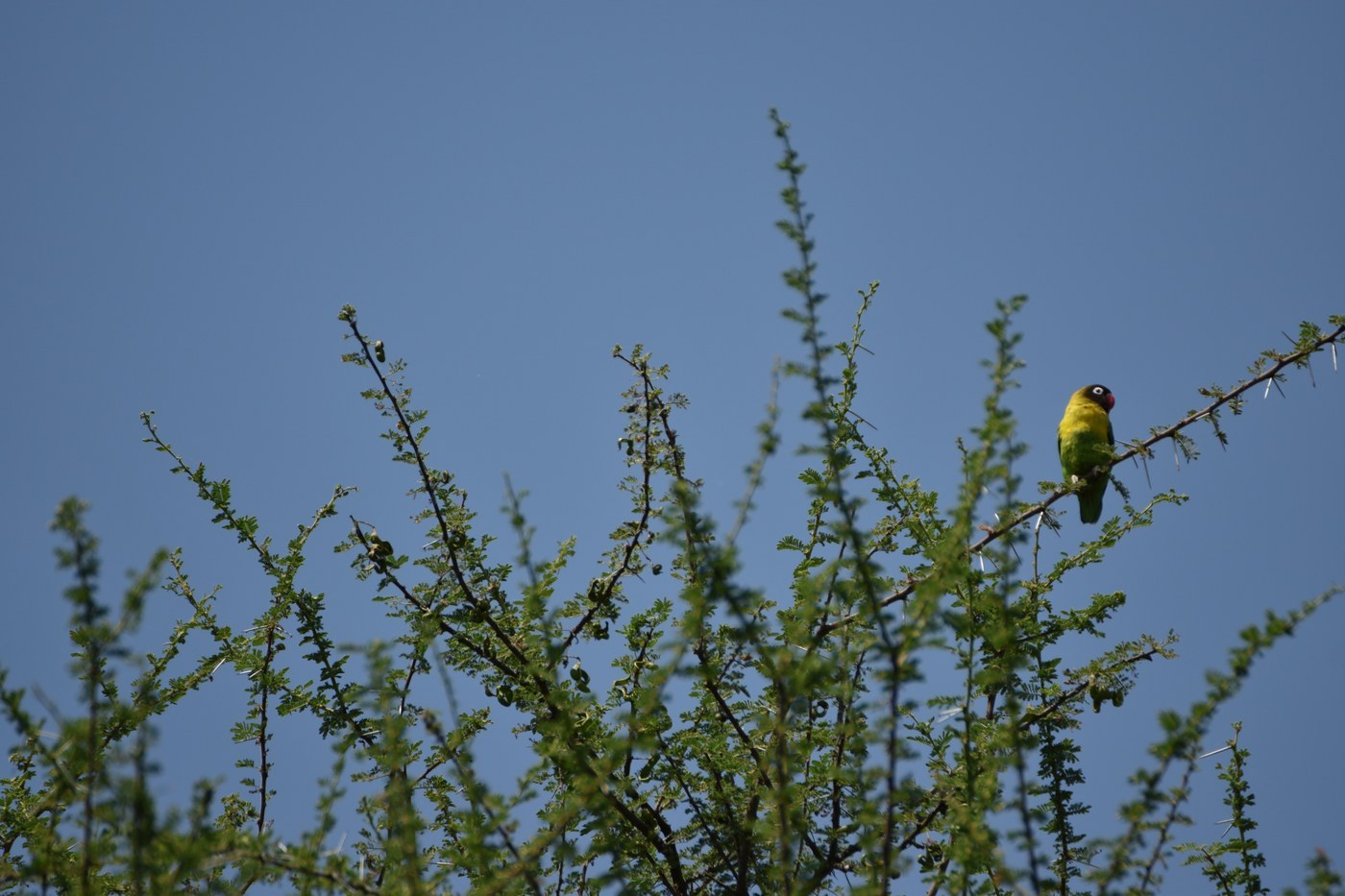
Yellow-collared Lovebird
Small compact flight feathers, short rounded tail

White-eyed Conure
Medium contour and long, graduated tail feathers

Yellow-tailed Black Cockatoo
Large, sturdy contour and flight feathers; short crest

Scarlet-chested Parrot
Small contour and flight feathers

Timneh Parrot
Broad flight feathers, scalloped body feathers with pale edges
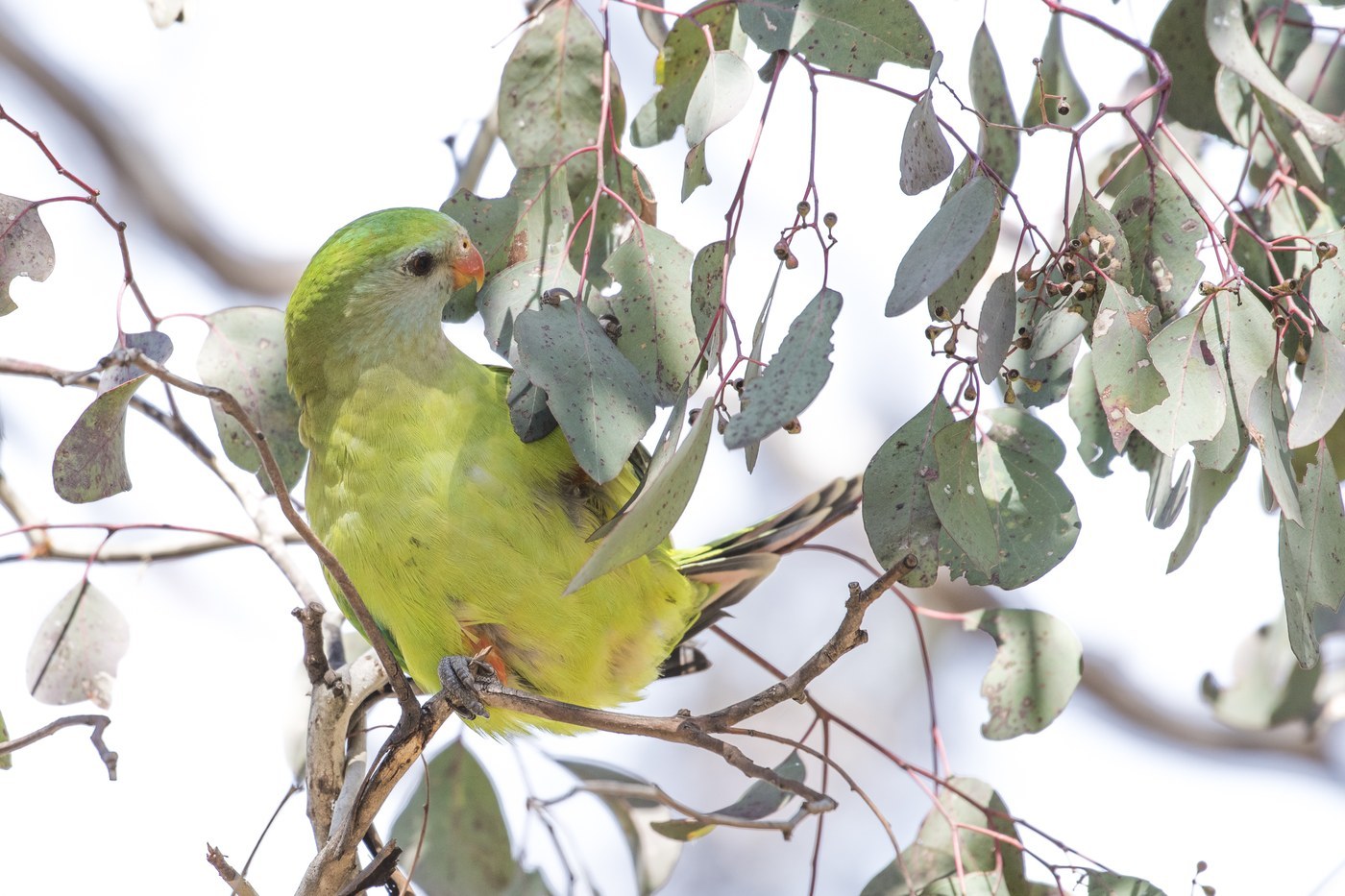
Superb Parrot
Sleek contour feathers with a long tapering tail

Red-shouldered Macaw
Compact body contour feathers; medium flight and tail feathers
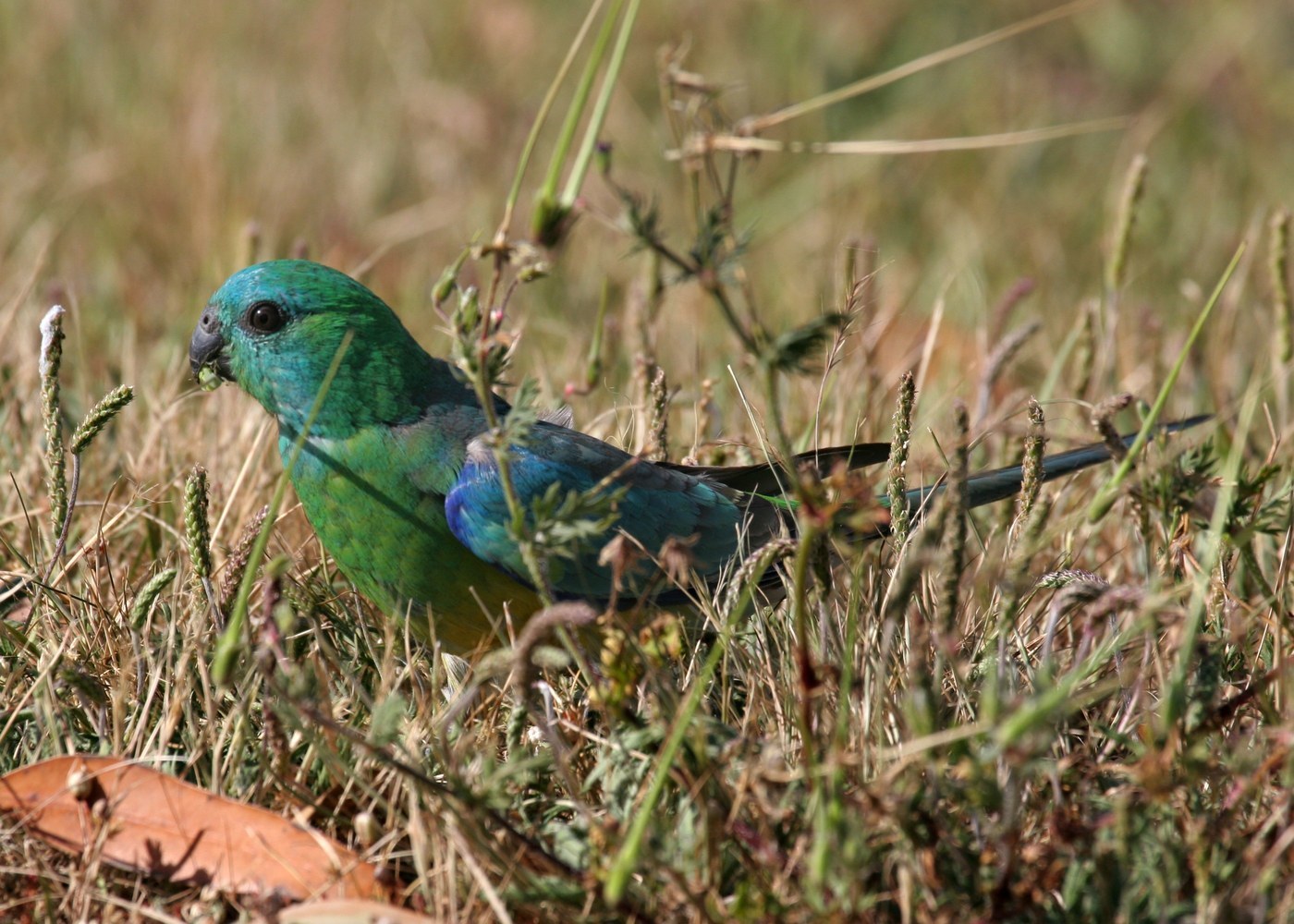
Red-rumped Parrot
Sleek contour feathers with a bright rump patch in males

White-capped Pionus
Compact contour feathers and short, squared tail feathers