

Northern Hawk-Owl
Surnia ulula
A falcon-like, day-hunting owl of the boreal forest, with a long tail, pointed wings, and boldly barred underparts, often seen perched conspicuously atop treetops scanning for prey.
- Feather type
- Long tapered flight feathers; long barred tail feathers
- Colours
- Dark brown-grey barred underparts with a white, black-bordered facial disc
- Bird size
- Medium, ~36-42 cm
Found a feather like this?
Identify any feather from a photo, free.
Overview
The Northern Hawk-Owl is an unusual owl that behaves and even flies much like a diurnal raptor - hunting by day, perching prominently atop spruce trees, and flying with quick, direct wingbeats rather than the buoyant flight typical of most owls.
It is found across the boreal forest belt of North America and Eurasia, favoring open forest edges, burned areas, and bogs where it can watch for prey from an exposed perch.
Its long tail and pointed wing shape give it a falcon- or hawk-like silhouette in flight, unusual among owls, complementing its boldly barred underparts and distinctive white facial disc bordered in black.
Identifying the Feather
Recognizing the feathers
- Flight feathers are relatively long and more tapered/pointed than in most owls, an adaptation for faster, more direct flight in open habitat.
- Tail feathers are notably long, contributing to the bird's falcon-like silhouette, with dark barring throughout.
- Underside body feathers show bold, regular dark barring on a whitish ground, different from the streaked or spotted patterns of most northern owls.
- Facial disc feathers are white with a thick black border, a striking, well-defined pattern.
Similar species
- The combination of long, pointed wings, a long barred tail, and boldly barred (not streaked or spotted) underparts, along with a strongly black-bordered white facial disc, readily separates this species from Boreal, Saw-whet, and Great Grey Owls of the same boreal forest habitat.
Plumage & Molt
Plumage
Adults show dark brown-grey upperparts and boldly barred whitish underparts, with a distinctive white facial disc bordered in thick black, and yellow eyes. Sexes look alike.
Juveniles are downier and more diffusely marked before molting into the barred adult pattern.
Molt occurs gradually over the short boreal summer.
Habitat & Range
Habitat & range
Found across the boreal forest belt of North America (Alaska and Canada) and Eurasia (Scandinavia through Siberia), favoring open forest, forest edge, burned areas, and bogs with scattered high perches.
Mostly non-migratory, though northern populations occasionally move south irregularly ('irruptions') in years of low prey abundance.
Behavior & Field Notes
Behavior & field notes
Active by day, it hunts small mammals and birds from a prominent perch atop a tall tree, dropping onto prey below - a hunting style resembling many diurnal raptors rather than typical nocturnal owls.
Its call is a rapid trill, quite different from the hoots of most owls, given especially during the breeding season.
A long, barred flight or tail feather with a falcon-like pointed shape, or a white, black-bordered facial disc feather, found in open boreal forest or forest edge, is a strong indicator of this species.
Frequently asked questions
Why does this owl's flight feather look more pointed than other owls'?
It reflects the species' unusually fast, direct flight style and diurnal, hawk-like hunting behavior, unlike the broader, rounder wings of most nocturnal owls.
Is this owl active at night or during the day?
Primarily during the day, unlike most owl species.
What is distinctive about its facial disc?
It is white with a thick black border, giving a striking, well-defined appearance.
Does this species migrate?
It is mostly non-migratory, though it can irrupt south in years of low prey abundance.
Northern Hawk-Owl guides
In-depth guides for identifying and understanding Northern Hawk-Owl.

Other feathers you may enjoy

Tawny Owl
Wing (flight) and body (contour) feathers
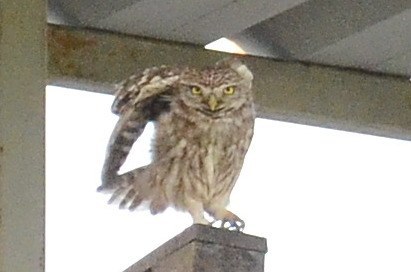
Little Owl
Wing and body feathers

Balsas Screech-Owl
Small ear-tuft feathers; soft, finely vermiculated body feathers

Blakiston's Fish Owl
Massive flight feathers with looser structure; shaggy body plumage; prominent ear-tuft feathers

Barn Owl
Wing and facial-disc feathers
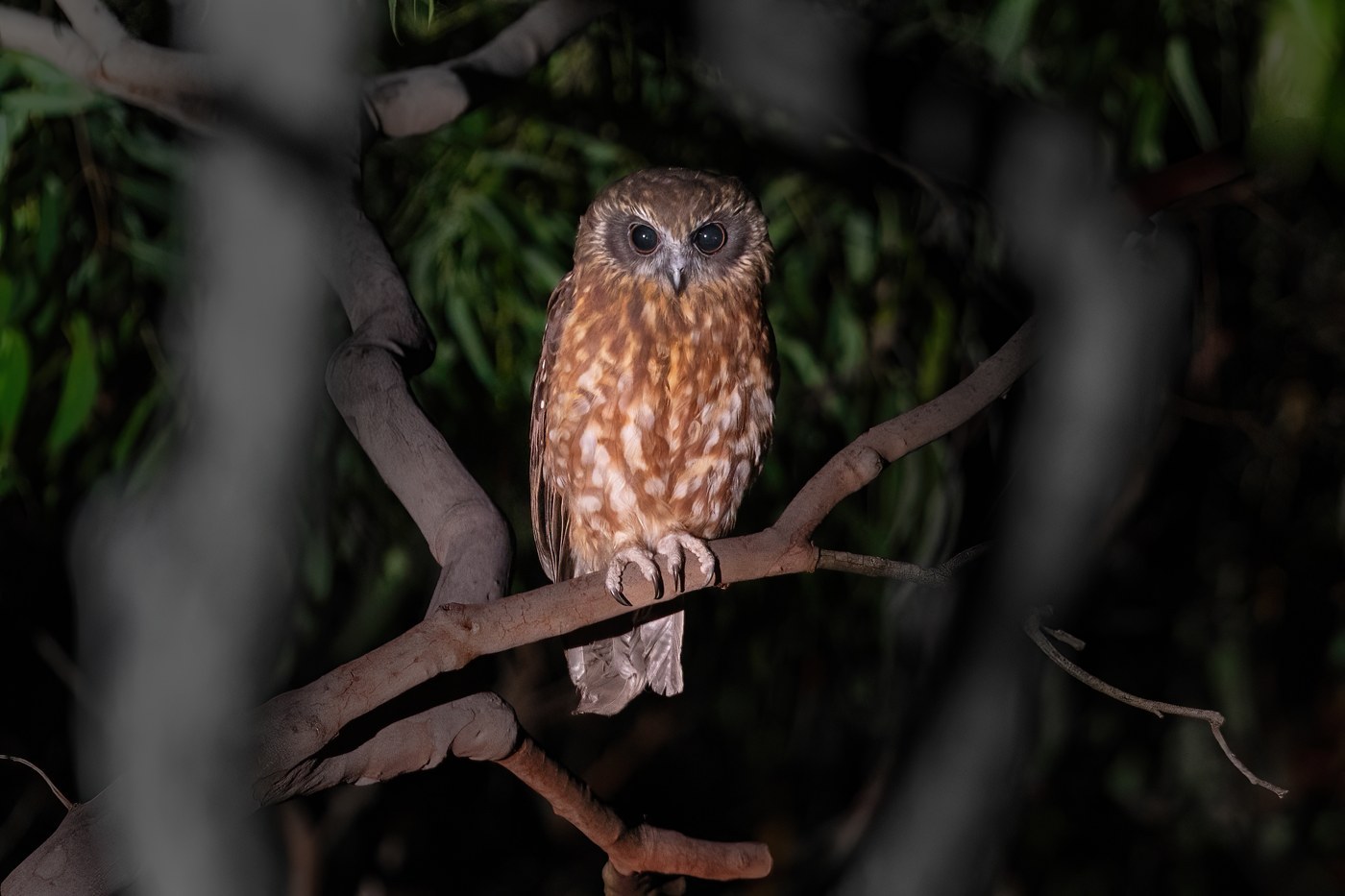
Southern Boobook
Rounded flight feathers; banded tail; spotted body plumage

Sooty Owl
Broad soft-edged flight feathers; heart-shaped facial disc feathers; finely speckled body plumage

Short-eared Owl
Broad soft-fringed flight feathers; streaked body feathers; tiny, rarely visible ear tufts

Stygian Owl
Dark, mottled flight and body feathers with long, closely-set ear tufts
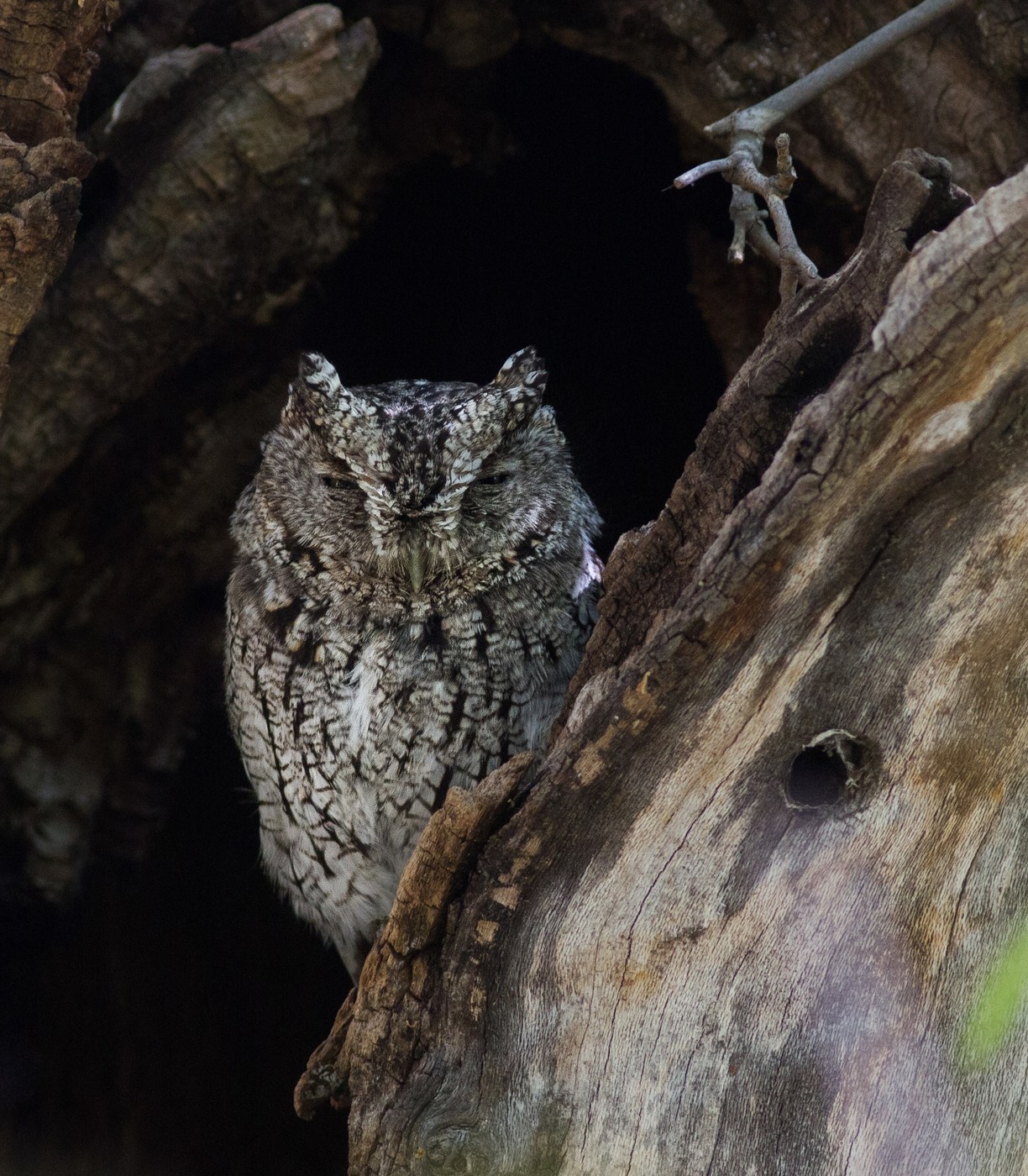
Whiskered Screech-Owl
Small soft-fringed flight feathers; finely mottled body feathers; short ear tufts
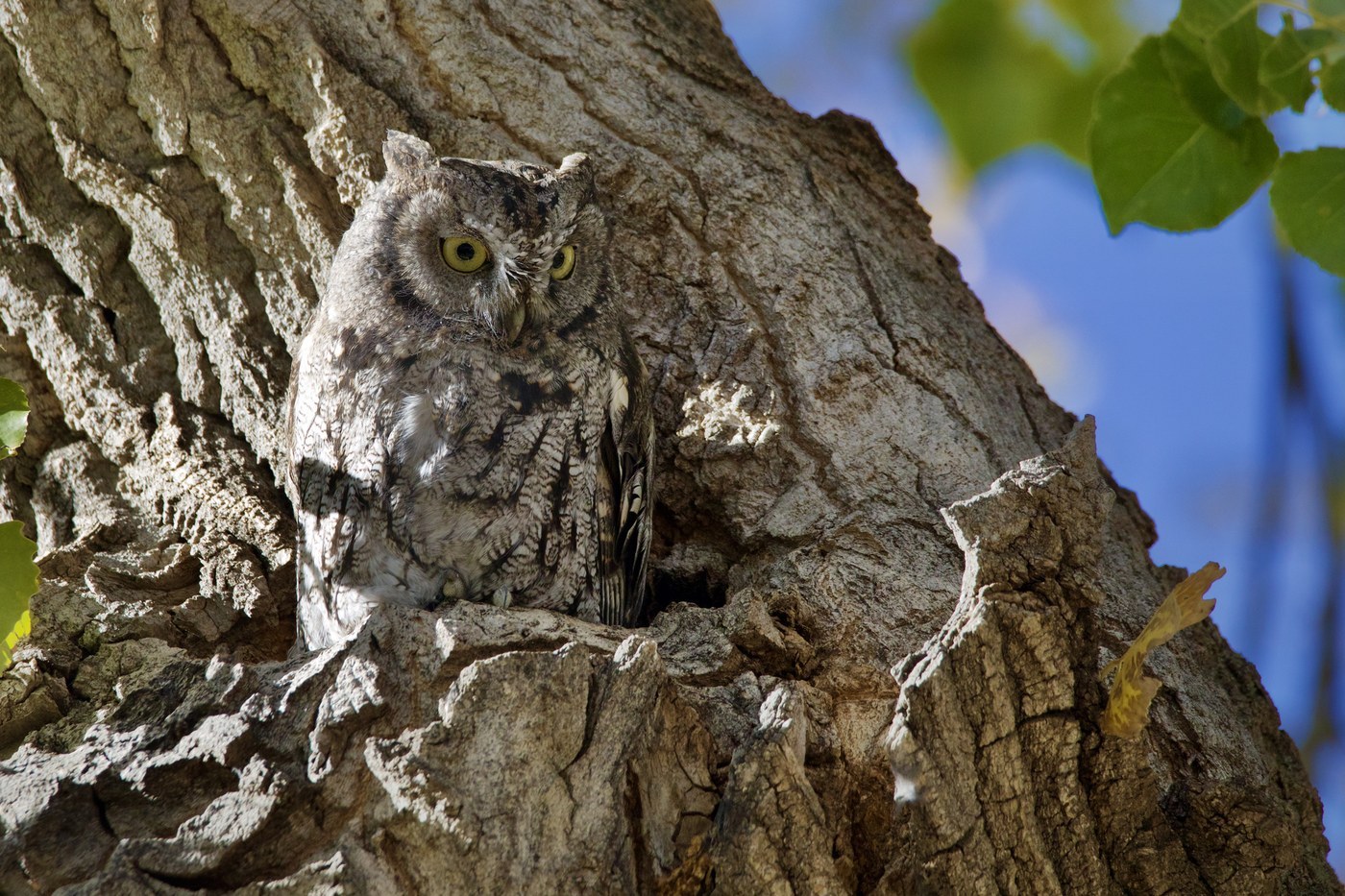
Western Screech-Owl
Small soft-fringed flight feathers; cryptic mottled/streaked body feathers; short ear tufts

White-faced Scops Owl
Small to medium flight feathers with a distinctive whitish facial disc and long ear-tuft plumes