
Mexican Chickadee
Poecile sclateri
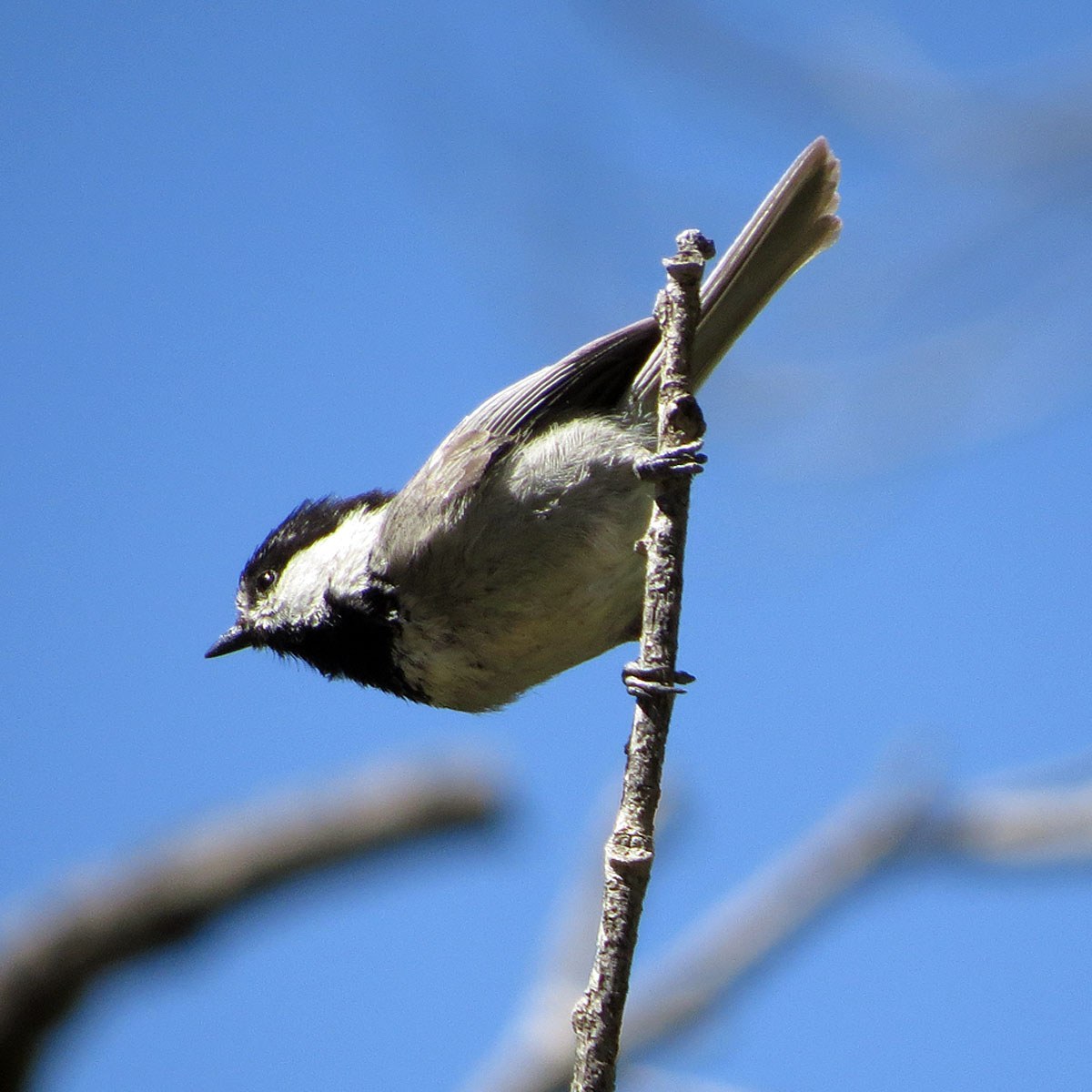
The Mexican Chickadee is a mountain specialist found in high-elevation pine forests, notable for its extensive black bib that extends further down the chest than in most other chickadees.
- Feather type
- Soft chickadee body plumage with a black bib and cap
- Colours
- Black cap and throat, gray back, gray-white underparts
- Bird size
- Small chickadee, ~13 cm
Found a feather like this?
Identify any feather from a photo, free.
Overview
Overview
The Mexican Chickadee is a small songbird restricted to high mountain forests of Mexico and the extreme southwestern United States. It closely resembles other black-capped chickadees but is set apart by a larger black throat patch and gray (rather than white) flanks.
- Only reaches the U.S. in a few isolated mountain ranges of Arizona and New Mexico
- Prefers high-elevation pine and pine-oak forest
- Non-migratory, tied to montane conifers year-round
Identifying the Feather
Feather Identification
Mexican Chickadee feathers share the classic chickadee structure of soft, loosely webbed contour feathers.
- Cap feathers: Solid black, extending down onto an unusually large black bib on the throat and upper chest
- Back feathers: Plain gray, unmarked
- Flank feathers: Pale gray, lacking the buffy or rusty wash seen in some relatives
- Cheek feathers: White, forming a bold contrast with the black cap and bib
- The larger black bib is the best feature separating shed Mexican Chickadee feathers from similar Black-capped or Mountain Chickadee feathers
Plumage & Molt
Plumage, Sex & Age Differences
Sexes are alike, both showing a black cap, an extensive black throat patch, white cheeks, and gray upperparts and flanks. Juveniles are duller with a less crisply defined bib. A single complete molt occurs after the breeding season, and there is no separate seasonal plumage.
Habitat & Range
Habitat & Range
This species inhabits high-elevation pine, fir, and pine-oak forests, primarily in the Sierra Madre Occidental and other mountain ranges of Mexico, reaching just into the United States in a handful of ranges in southeastern Arizona and southwestern New Mexico. It is a non-migratory resident, staying within montane conifer belts throughout the year and shifting only slightly in elevation with the seasons.
Behavior & Field Notes
Behavior, Voice & Field Notes
Mexican Chickadees forage in flocks through high pine and fir canopy, gleaning insects and seeds from needles and cones. Their calls include a hoarse, buzzy chickadee-type note, distinct from the whistled songs of some lowland relatives. They nest in tree cavities and often join mixed-species foraging flocks with nuthatches and warblers in the montane forest.
Frequently asked questions
What feather feature best identifies a Mexican Chickadee?
Its unusually large black throat bib, larger than that of most other chickadee species.
Where do Mexican Chickadees live?
In high-elevation pine and pine-oak forests of Mexico's mountains, reaching a few ranges in southeastern Arizona and southwestern New Mexico.
Do Mexican Chickadee feathers show rusty flanks like some other chickadees?
No, their flanks are plain gray rather than buffy or rusty.
Are Mexican Chickadees migratory?
No, they are year-round residents of montane conifer forest.
Mexican Chickadee guides
In-depth guides for identifying and understanding Mexican Chickadee.
Other feathers you may enjoy

Yellow-breasted Bunting
Contour and flight feathers, chestnut-and-yellow breeding pattern

Sedge Wren
Tiny streaked crown and back feathers

Yellow-winged Cacique
Glossy black body feathers, yellow wing patch, shaggy crest

Yellow Warbler
Small contour and flight feathers

Yellow-throated Warbler
Small contour and flight feathers

Yellow-throated Vireo
Bright yellow throat and spectacle feathers; olive-green back feathers; two white wing-bar feathers

Yellow-rumped Warbler
Small contour and flight feathers

Yellow-hooded Blackbird
Contrasting hood and body feathers

Yellow-headed Blackbird
Glossy black body plumage with a bright yellow head and breast

Yellow-eyed Junco
Contour and flight feathers

Yellow-fronted Canary
Small, smooth body plumage

Yellow-breasted Greenfinch
Compact, smooth body plumage