

Long-eared Owl
Asio otus
A slender, well-camouflaged owl best known for its long, closely set ear tufts and richly streaked orange-brown plumage, roosting communally in dense conifer stands.
- Feather type
- Slender soft-fringed flight feathers; streaked body feathers; long close-set ear tufts
- Colours
- Mottled orange-buff and brown with bold vertical streaking
- Bird size
- Medium, ~31-40 cm
Found a feather like this?
Identify any feather from a photo, free.
Overview
The Long-eared Owl is a slim, cryptically patterned owl found across much of North America, Europe, and Asia, favoring dense conifer or shrub groves for daytime roosting, often adjacent to open fields or grassland where it hunts at night.
Its most distinctive feature is a pair of long, closely spaced ear tufts held upright, giving it a cat-like facial expression - a trait shared in general form with the Short-eared Owl but held more prominently and closer together here.
Its slender body and richly streaked orange-buff and brown plumage provide excellent camouflage against tree bark and dense foliage when roosting by day, and it often gathers in small communal winter roosts.
Identifying the Feather
Recognizing the feathers
- Body feathers show a mottled orange-buff and brown ground with bold vertical (lengthwise) streaking throughout the underparts.
- Ear-tuft feathers are notably long and held close together, more prominent and closer-set than the shorter, often-hidden tufts of the Short-eared Owl.
- Flight feathers are relatively slender for the owl's size, with soft fringed edges.
- Facial disc feathers are orange-buff, framing orange eyes.
Similar species
- Longer, more prominent and closely spaced ear tufts and a slimmer overall body shape separate this species from the Short-eared Owl, whose ear tufts are tiny and rarely visible, and whose plumage is generally paler and less richly streaked.
Plumage & Molt
Plumage
Adults show mottled orange-buff and brown upperparts and boldly streaked orange-buff underparts, with long, close-set ear tufts and orange eyes. Sexes look similar, with subtle differences in overall tone.
Juveniles are downier with a distinctive dark facial patch before fledging, gradually acquiring the adult streaked plumage.
Molt occurs over summer and early fall.
Habitat & Range
Habitat & range
Widespread across North America, Europe, and Asia, roosting by day in dense conifer groves, shelterbelts, or thickets, typically adjacent to open grassland, farmland, or shrub-steppe used for nocturnal hunting.
Northern populations are migratory, often moving south to form communal winter roosts of several to dozens of birds, while southern populations may be largely resident.
Behavior & Field Notes
Behavior & field notes
Hunts small mammals over open ground at night, using acute hearing to locate prey in low light or complete darkness.
Its call is a low, repeated hoot given mainly during the breeding season; outside the breeding season it is largely silent and reliant on camouflage while roosting.
A slender, richly streaked orange-buff body feather, or a long, closely paired ear-tuft feather, found near dense conifer roosts adjacent to open fields, is a strong indicator of this species.
Frequently asked questions
How can I tell a Long-eared Owl feather from a Short-eared Owl feather?
Long-eared Owl feathers and ear tufts are longer, more prominent, and more closely spaced, and the body streaking tends to be bolder and richer in tone.
Does this owl roost alone?
Not always - in winter it often forms small communal roosts with other individuals in dense cover.
What is distinctive about its ear tufts?
They are notably long and held close together above the head, giving a cat-like appearance.
Is this species migratory?
Northern populations migrate south for winter, while some southern populations are largely resident.
Long-eared Owl guides
In-depth guides for identifying and understanding Long-eared Owl.

Other feathers you may enjoy

Tawny Owl
Wing (flight) and body (contour) feathers
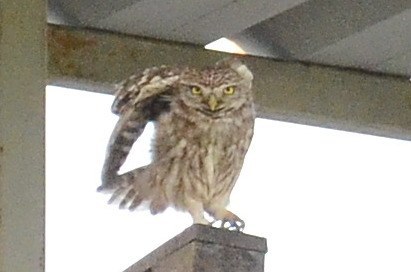
Little Owl
Wing and body feathers

Balsas Screech-Owl
Small ear-tuft feathers; soft, finely vermiculated body feathers

Blakiston's Fish Owl
Massive flight feathers with looser structure; shaggy body plumage; prominent ear-tuft feathers

Barn Owl
Wing and facial-disc feathers
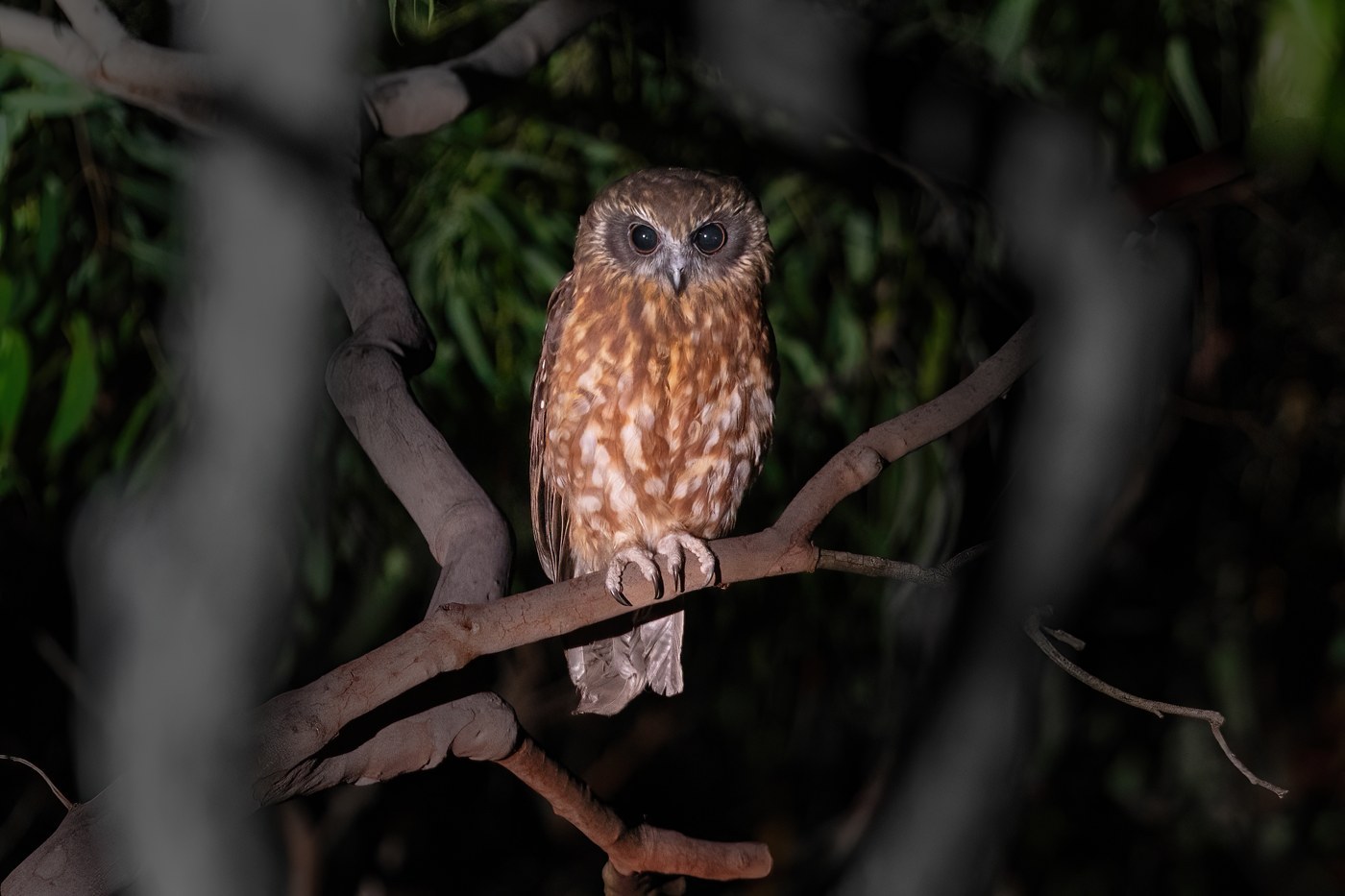
Southern Boobook
Rounded flight feathers; banded tail; spotted body plumage

Sooty Owl
Broad soft-edged flight feathers; heart-shaped facial disc feathers; finely speckled body plumage

Short-eared Owl
Broad soft-fringed flight feathers; streaked body feathers; tiny, rarely visible ear tufts

Stygian Owl
Dark, mottled flight and body feathers with long, closely-set ear tufts
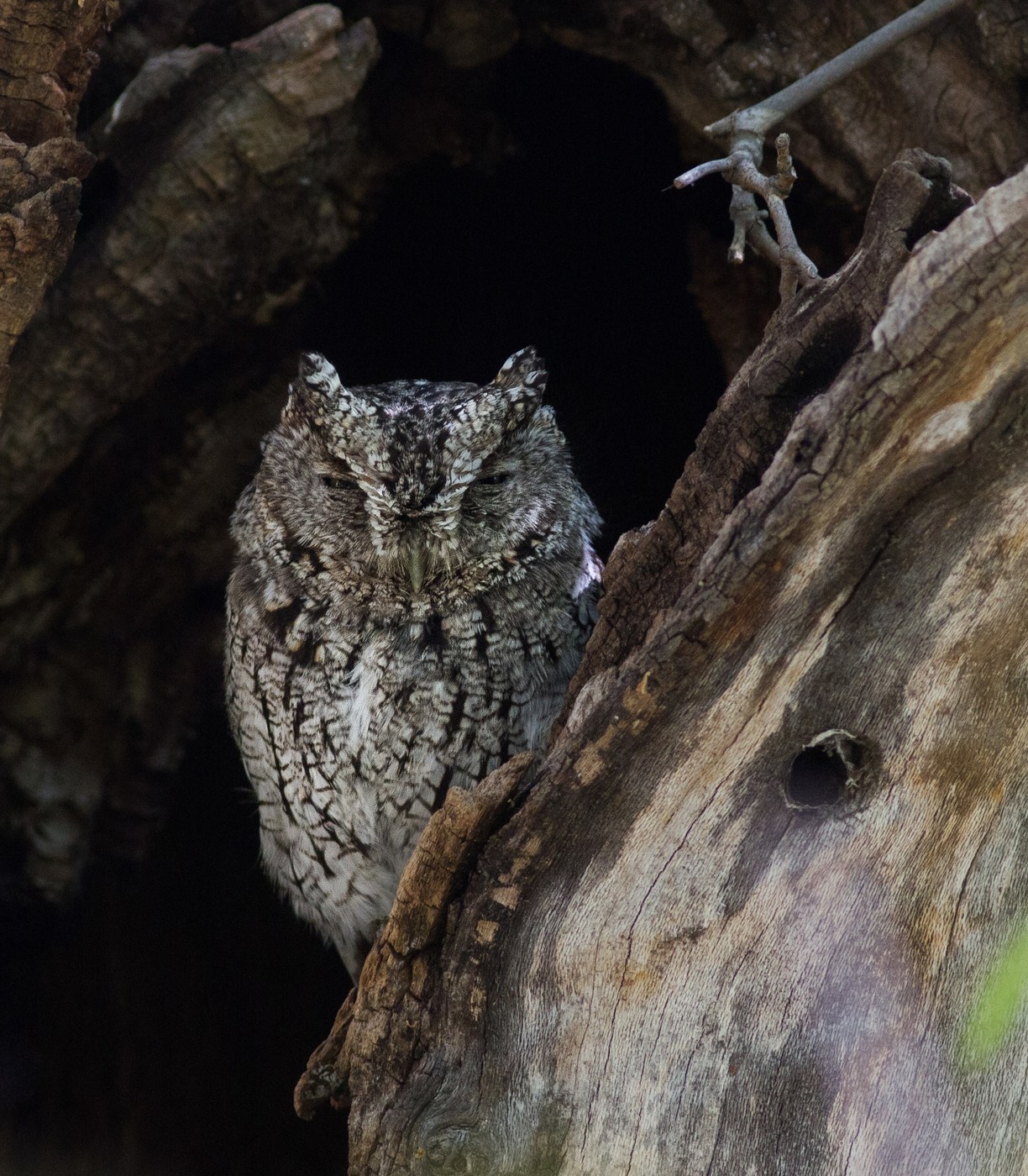
Whiskered Screech-Owl
Small soft-fringed flight feathers; finely mottled body feathers; short ear tufts
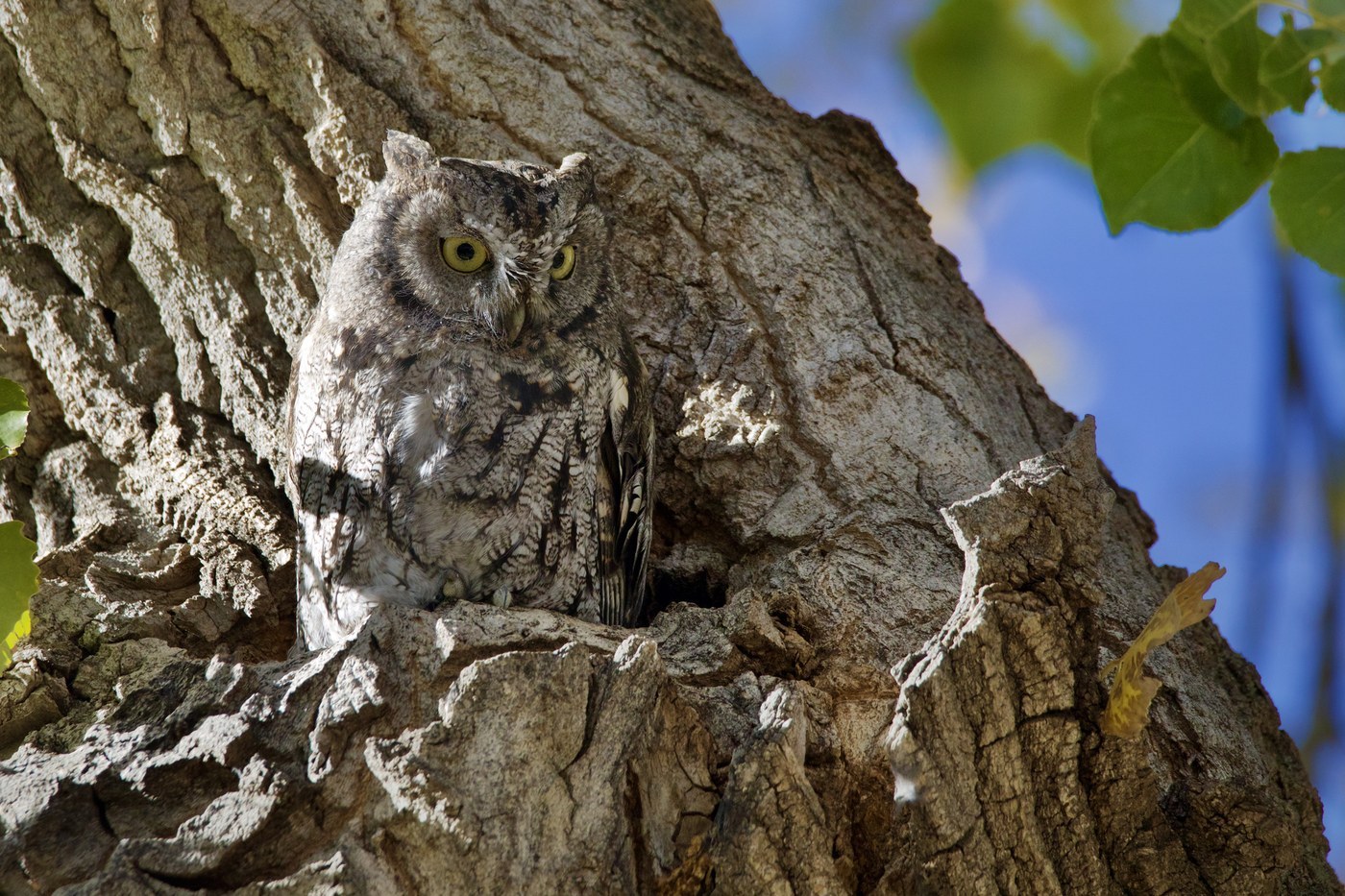
Western Screech-Owl
Small soft-fringed flight feathers; cryptic mottled/streaked body feathers; short ear tufts

White-faced Scops Owl
Small to medium flight feathers with a distinctive whitish facial disc and long ear-tuft plumes