
Jungle Myna
Acridotheres fuscus
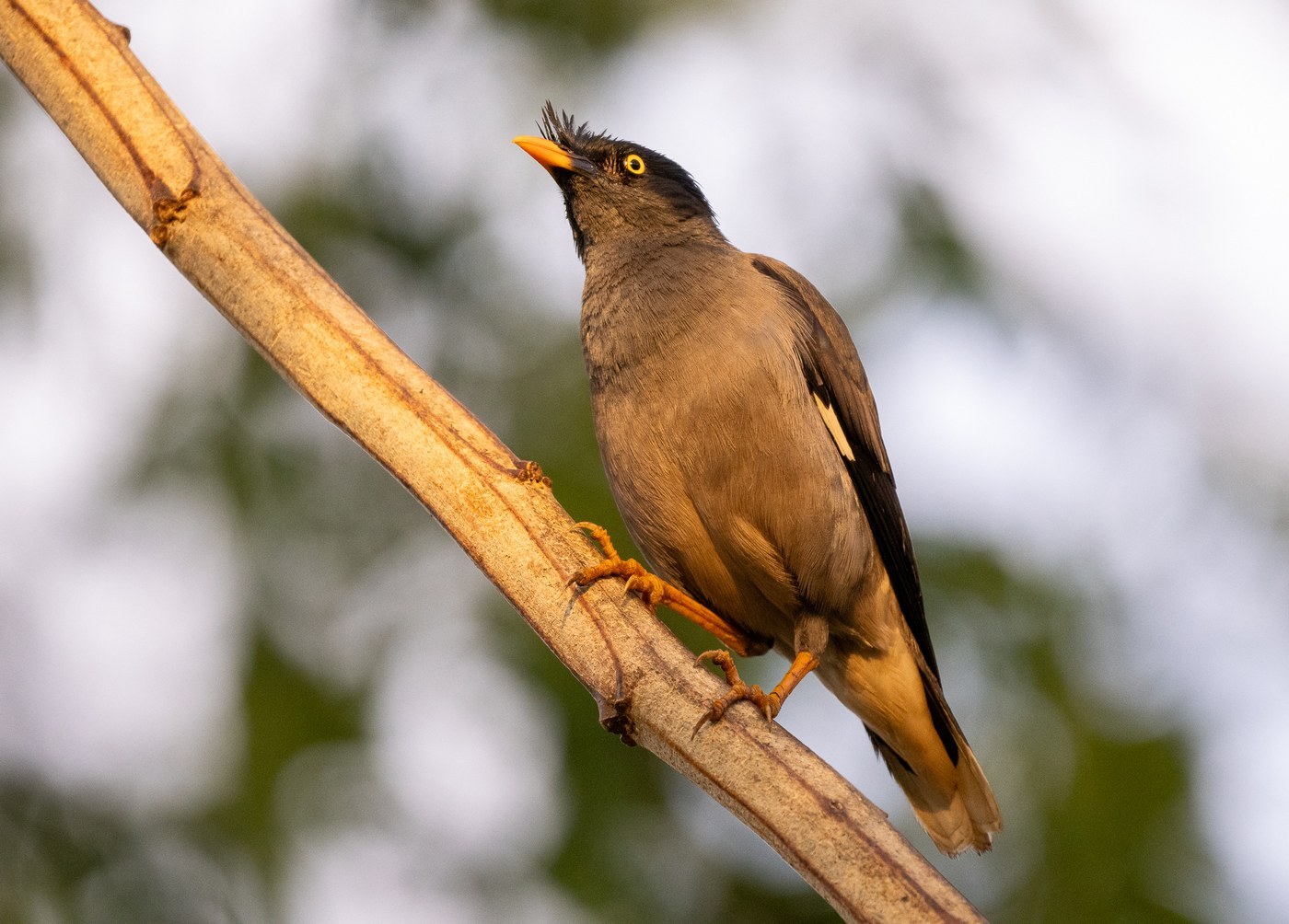
A slate-gray South Asian myna distinguished by a small tuft of feathers at the base of the bill, along with the bold white wing patch shared with related mynas.
- Feather type
- Firm body feathers; forehead tuft; bold white flight patch
- Colours
- Slate-gray overall with a white wing patch and pale tail tip
- Bird size
- Robin-sized, ~23 cm
Found a feather like this?
Identify any feather from a photo, free.
Overview
The Jungle Myna is a widespread songbird of South and Southeast Asia, closely related to the Common Myna but generally grayer overall and marked by a distinctive small tuft of feathers projecting from the forehead above the bill. It is a common bird of open country, cultivated land, and forest edges.
Identifying the Feather
Flight feathers: gray-brown with a bold white patch at the base of the primaries, similar in placement to the Common Myna's wing flash. Tail feathers: gray-brown with a whitish tip. Body feathers: overall slate-gray rather than warm brown, with a small tuft of elongated feathers at the base of the forehead pointing forward, a bluish-based yellow bill, and orange-yellow legs. This forehead feather tuft is the most reliable feature separating Jungle Myna feathers and field appearance from the very similar Common Myna, which lacks the tuft and shows warmer brown body tones.
Plumage & Molt
Sexes look alike. Adults are slate-gray overall with a small forward-pointing tuft of feathers on the forehead, a white wing patch, a whitish tail tip, and a bicolored bill (yellow with a bluish base). Juveniles are duller grayish-brown with a reduced or absent forehead tuft, developing the full adult tuft and coloration as they mature. There is no strong seasonal plumage variation.
Habitat & Range
Jungle Mynas are found across South and parts of Southeast Asia, favoring open country, cultivated fields, grassland, and forest edge habitats, often near water. The species is generally resident, with only local movements in response to food availability.
Behavior & Field Notes
This myna forages on the ground and in low vegetation, taking insects, other invertebrates, and fruit, often in the company of livestock or other mynas. It nests in cavities, including tree hollows and building crevices, sometimes in loose colonies. Calls include a range of chattering, gurgling, and whistled notes similar to other mynas, often given from a perch or in flight among a foraging flock.
Frequently asked questions
How can I tell Jungle Myna feathers from Common Myna feathers?
Jungle Myna plumage is overall slate-gray rather than warm brown, and the species shows a small forward-pointing tuft of feathers on the forehead that the Common Myna lacks.
What is the purpose of the forehead feather tuft?
Its exact function is unclear, but it serves as a reliable field mark distinguishing this species from closely related mynas that lack the tuft.
Do juveniles show the forehead tuft?
The tuft is typically reduced or absent in juveniles and develops more fully as the bird matures into adult plumage.
What habitat is most associated with this species?
Open country, cultivated fields, and forest edge habitats across South and parts of Southeast Asia, often near water.
Jungle Myna guides
In-depth guides for identifying and understanding Jungle Myna.
Other feathers you may enjoy

Yellow-breasted Bunting
Contour and flight feathers, chestnut-and-yellow breeding pattern

Sedge Wren
Tiny streaked crown and back feathers

Yellow-winged Cacique
Glossy black body feathers, yellow wing patch, shaggy crest

Yellow Warbler
Small contour and flight feathers

Yellow-throated Warbler
Small contour and flight feathers

Yellow-throated Vireo
Bright yellow throat and spectacle feathers; olive-green back feathers; two white wing-bar feathers

Yellow-rumped Warbler
Small contour and flight feathers

Yellow-hooded Blackbird
Contrasting hood and body feathers

Yellow-headed Blackbird
Glossy black body plumage with a bright yellow head and breast

Yellow-eyed Junco
Contour and flight feathers

Yellow-fronted Canary
Small, smooth body plumage

Yellow-breasted Greenfinch
Compact, smooth body plumage