
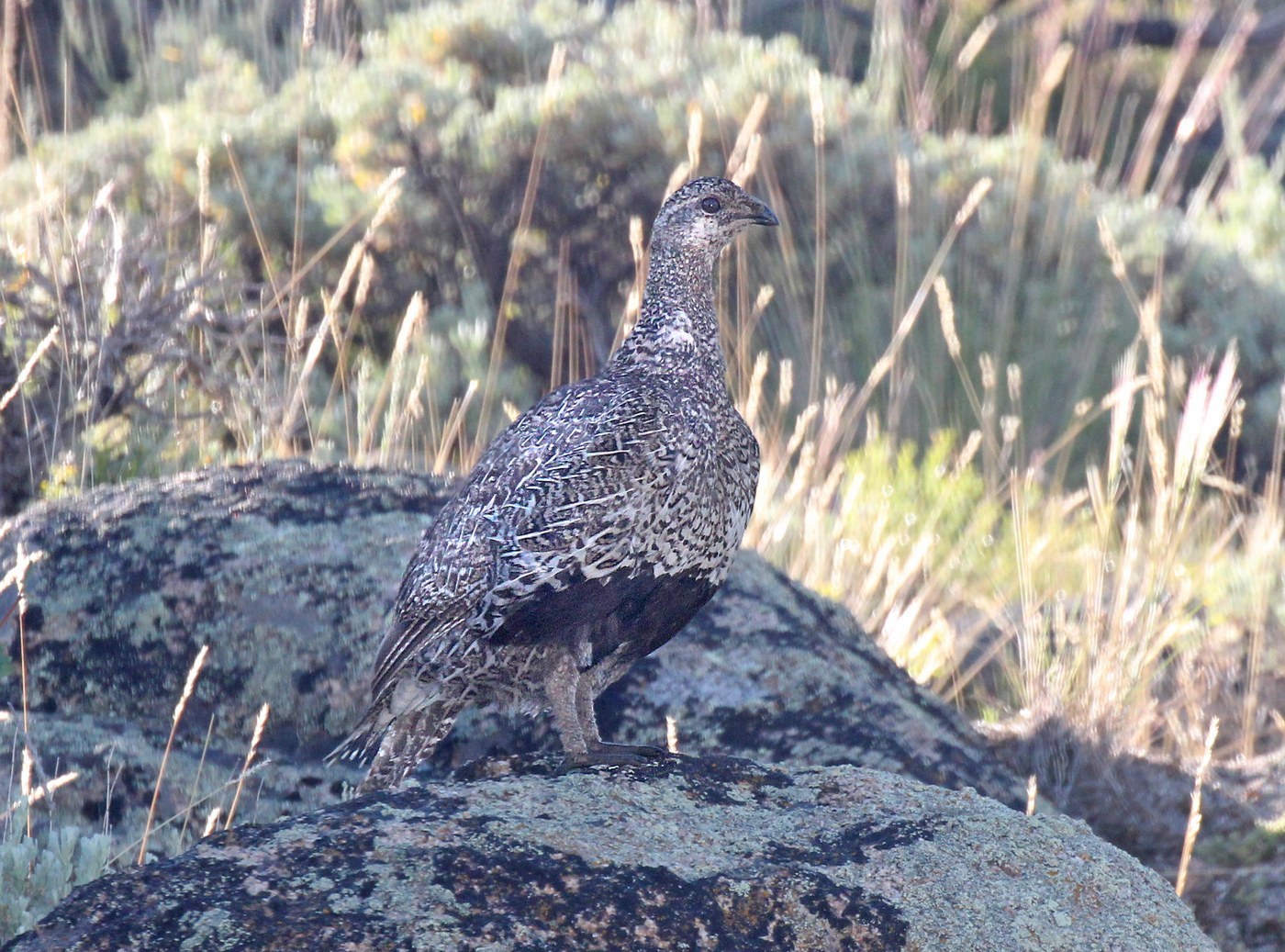
Gunnison Sage-Grouse
Centrocercus minimus
A small, geographically restricted sage-grouse of the Gunnison Basin, distinguished from its larger relative by finer plumage detail and an elaborate courtship display.
- Feather type
- Mottled, finely vermiculated body feathers with spiky, pointed tail feathers
- Colours
- Mottled gray-brown-black with a white belly patch
- Bird size
- Small grouse, ~48-53 cm (male)
Found a feather like this?
Identify any feather from a photo, free.
Overview
Overview
The Gunnison Sage-Grouse is a sagebrush-obligate grouse confined to a small area of southwestern Colorado and adjacent Utah. It was only recognized as distinct from the more widespread Greater Sage-Grouse in the late 1990s, based on differences in size, plumage detail, and male display behavior. Males gather on traditional display grounds called leks each spring, inflating yellow-green air sacs on the breast while fanning a spiky, pointed tail.
Identifying the Feather
Feather Identification
- Body feathers: finely mottled gray, brown, and black with dense vermiculation, giving a soft, camouflaged texture against sagebrush
- Tail feathers: narrow, stiff, and pointed with fine dark barring; the array forms a spiked fan during display, distinct from the smoother lyre or fan shapes of other grouse
- Belly: a solid blackish patch bordered by white flank feathers
- Vs. Greater Sage-Grouse: overall smaller with more filamentous, longer neck plumes (filoplumes) in displaying males and a comparatively more intricate banding pattern on the tail feathers
- Underwing/flight feathers: dark brownish-gray with little contrast, typical of ground-dwelling grouse built for short, explosive flushes rather than sustained flight
Plumage & Molt
Plumage Notes
Males and females share the same cryptic mottled gray-brown pattern, but males are larger and show a solid black belly patch, a black throat, and elongated dark filoplumes projecting from the back of the neck that are especially prominent during lek displays. Females are smaller and more uniformly mottled, lacking the ornamental neck plumes. Juveniles resemble adult females. There is a single annual molt cycle typical of grouse, with body feathers replaced after the breeding season.
Habitat & Range
Habitat & Range
This species depends almost entirely on sagebrush shrublands for food, cover, and nesting, occupying a small range centered on the Gunnison Basin of Colorado with a few satellite populations nearby. It is a year-round resident that does not migrate long distances, though it may shift between winter and summer sagebrush stands at different elevations.
Behavior & Field Notes
Behavior & Field Notes
Males perform elaborate strutting displays on communal leks at dawn, inflating breast air sacs and producing popping and swishing sounds while fanning the spiked tail. Diet consists mainly of sagebrush leaves supplemented by forbs and insects, especially for chicks. Nests are shallow scrapes on the ground concealed under sagebrush. The species is generally silent outside of the lek season aside from soft clucking contact calls, and its cryptic plumage makes it easily overlooked when not displaying.
Frequently asked questions
How can you tell a Gunnison Sage-Grouse feather from a Greater Sage-Grouse feather?
The two are very similar, but Gunnison Sage-Grouse feathers tend to be finer in pattern and come from a visibly smaller bird overall; range is often the most reliable clue since the two species barely overlap.
What does the black belly patch feather look like?
It is a solid, unbarred blackish feather found on the lower belly of males, contrasting with the finely mottled gray-brown feathers elsewhere on the body.
Why are the tail feathers pointed rather than rounded?
The stiff, spiked tail feathers are adapted for the fanned strutting display males perform on leks, and their narrow shape distinguishes sage-grouse from broader-tailed grouse species.
Do males and females look different?
Males are larger with a black throat, black belly patch, and long neck filoplumes, while females show a more uniform, subdued mottled pattern without these ornamental features.
Gunnison Sage-Grouse guides
In-depth guides for identifying and understanding Gunnison Sage-Grouse.

Other feathers you may enjoy

Ring-necked Pheasant
Body (contour), tail, and wing feathers

Bornean Peacock-pheasant
Contour and tail feathers with iridescent ocelli

Crested Argus
Extremely elongated, ocellated (eyespot-patterned) tail feathers among the longest of any bird; tall, erectile crest

Grey Partridge
Body and flank feathers

Willow Ptarmigan
Larger, stockier body feathers with warmer rufous tones in summer; tail feathers black year-round

Wild Turkey
Broad, iridescent body feathers and large flight and tail feathers

Bulwer's Pheasant
Contour feathers and elongated white tail feathers
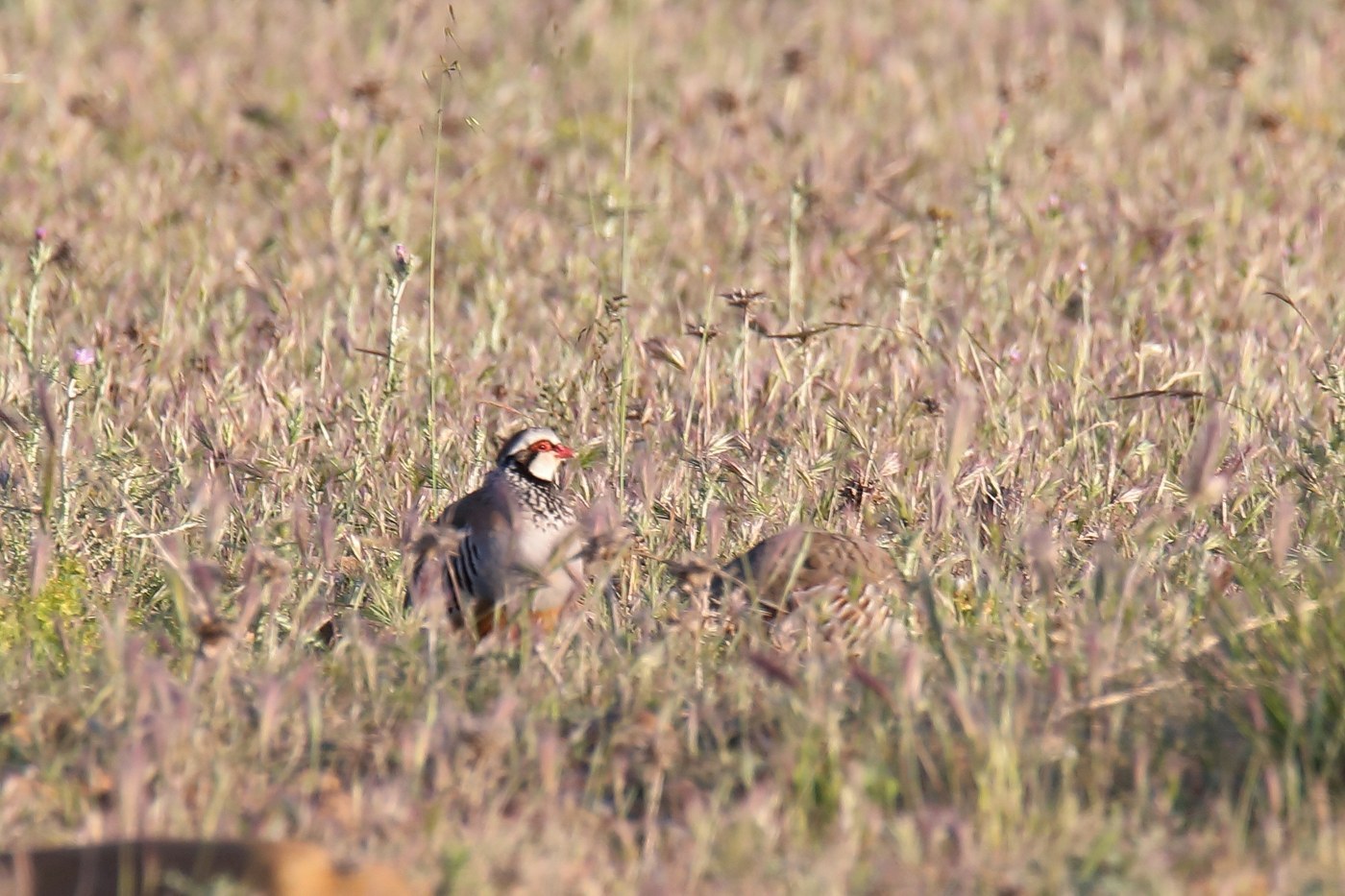
Red-legged Partridge
Flank, body, and flight feathers

White-tailed Ptarmigan
Small body feathers with a tail that stays pure white year-round, unlike other ptarmigan

Edwards's Pheasant
Contour and tail feathers

Sooty Grouse
Dense, plain contour feathers with a pale-tipped, fanned tail

Snow Partridge
Finely vermiculated barred contour feathers