

Brown Creeper
Certhia americana
A tree-trunk specialist whose mottled brown and buff feathers mimic bark texture perfectly, paired with stiff, pointed tail feathers that brace against trunks like a woodpecker's.
- Feather type
- Bark-camouflaged streaked contour feathers; stiff, pointed tail feathers used for bracing
- Colours
- Mottled brown, buff, and white streaking above (bark-like); silky white below
- Bird size
- Small, ~13 cm
Found a feather like this?
Identify any feather from a photo, free.
Overview
The Brown Creeper is a small, cryptically plumaged songbird that forages by spiraling up tree trunks, probing bark crevices with its thin, downcurved bill for insects. Its mottled brown, buff, and white upperpart pattern provides exceptional camouflage against furrowed bark.
Because it clings to and works its way up trunks, its feathers — especially the distinctively stiff tail feathers — are sometimes found at the base of large, mature trees.
Its tail feathers are unusual among small songbirds for being stiff and pointed, functioning as a brace against bark much like woodpecker tail feathers, making them a useful identification clue even without the rest of the plumage.
Identifying the Feather
Identifying Brown Creeper feathers
- Upperpart feathers: Intricately mottled brown, buff, and white in a streaked, bark-like pattern that provides camouflage on tree trunks.
- Underpart feathers: Silky white to pale buff-white, unmarked, contrasting with the mottled back.
- Tail feathers: Unusually stiff and pointed at the tips, dull brown, used to brace against tree bark while climbing — a functional adaptation shared with woodpeckers rather than typical songbirds.
- Wing feathers: Show a pale buffy wing stripe crossing the primaries, visible as a band when the wing is spread.
- Compared to similar species: No other small songbird in its range shares this precise bark-mimicking mottled pattern combined with stiff, pointed tail feathers, making it fairly distinctive once these traits are noted.
Plumage & Molt
Plumage overview
Adults show heavily mottled brown, buff, and whitish streaking above, a pale buffy wingbar-like stripe across the wing, and clean whitish underparts. Sexes look alike. The plumage shows little seasonal variation, remaining cryptic year-round to match bark texture.
Juveniles resemble adults closely, with slightly less crisp streaking until their first molt.
Habitat & Range
Habitat and range
Brown Creepers are found across much of North America in mature forests with large-diameter trees and furrowed bark, including both coniferous and mixed forests. Northern and high-elevation populations are migratory, shifting to lower elevations or more southern latitudes in winter, while some populations in milder regions are resident year-round.
They depend on large trees for both foraging substrate and, often, loose bark plates for nesting.
Behavior & Field Notes
Behavior and field notes
Brown Creepers forage by starting near the base of a tree trunk and spiraling upward, probing bark crevices for insects and spiders, then flying down to the base of a neighboring tree to repeat the pattern. Its stiff tail feathers press against the trunk for support during climbing, much like a woodpecker.
Its call is a very high, thin "see" note, easily overlooked. Nests are built behind loose slabs of bark, hidden and well camouflaged. A useful field note: feathers found at the base of large, mature trees with furrowed bark are worth checking for this species' distinctive mottled pattern.
Frequently asked questions
What makes Brown Creeper tail feathers unusual?
They are unusually stiff and pointed, used to brace against tree bark while climbing, a trait more typical of woodpeckers than most songbirds.
How is a Brown Creeper feather camouflaged?
Its mottled brown, buff, and white streaked pattern closely mimics the texture of furrowed tree bark.
Where would I likely find a Brown Creeper feather?
At the base of large, mature trees with rough bark, since this species forages by climbing tree trunks.
Do Brown Creepers have brightly colored underparts?
No, the underparts are plain silky white to pale buff, contrasting with the intricately mottled brown back.
Brown Creeper guides
In-depth guides for identifying and understanding Brown Creeper.

Other feathers you may enjoy

Yellow-breasted Bunting
Contour and flight feathers, chestnut-and-yellow breeding pattern
Sedge Wren
Tiny streaked crown and back feathers

Yellow-winged Cacique
Glossy black body feathers, yellow wing patch, shaggy crest

Yellow Warbler
Small contour and flight feathers
Yellow-throated Warbler
Small contour and flight feathers
Yellow-throated Vireo
Bright yellow throat and spectacle feathers; olive-green back feathers; two white wing-bar feathers

Yellow-rumped Warbler
Small contour and flight feathers
Yellow-hooded Blackbird
Contrasting hood and body feathers
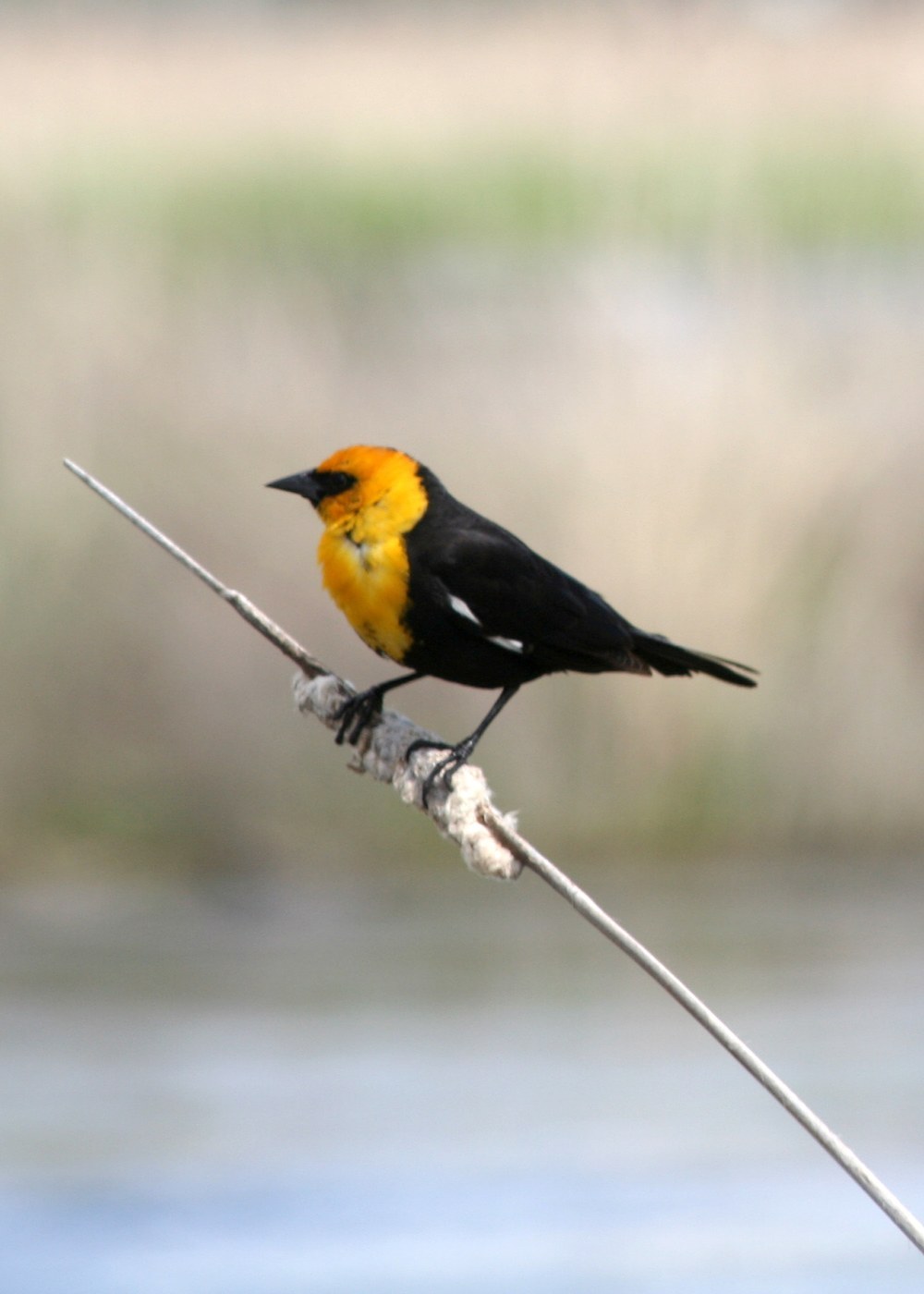
Yellow-headed Blackbird
Glossy black body plumage with a bright yellow head and breast

Yellow-eyed Junco
Contour and flight feathers

Yellow-fronted Canary
Small, smooth body plumage

Yellow-breasted Greenfinch
Compact, smooth body plumage