

Black-cheeked Lovebird
Agapornis nigrigenis
A small lovebird with a dark brownish-black face, an orange-tinged forehead and throat, and a green body, restricted to a small region of southern Zambia.
- Feather type
- Small compact flight feathers, short rounded tail
- Colours
- Brown-black face, orange-tinged forehead and throat, green body
- Bird size
- Very small, ~14 cm
Found a feather like this?
Identify any feather from a photo, free.
Overview
Overview
The Black-cheeked Lovebird is a small parrot with one of the most restricted ranges among African lovebirds, found only in a limited area of southern Zambia. It closely resembles the Yellow-collared Lovebird in structure but differs in the exact tone and extent of its facial coloring.
Its brownish-black face combined with an orange wash near the bill and a yellow-green breast makes it distinguishable from its close relatives with careful observation.
Identifying the Feather
Feather Identification
- Head feathers: Dark brown to blackish feathers cover the cheeks and crown, similar in placement to the Yellow-collared Lovebird's mask but with a slightly browner tone.
- Forehead and throat: An orange-tinged wash appears near the base of the bill and throat, less extensive than the vivid orange-red face of Fischer's Lovebird.
- Breast: A yellow-green wash covers the upper breast, transitioning to green on the belly and back.
- Bill: A red bill contrasts with the dark facial feathers, similar to the Yellow-collared Lovebird.
- Compared to similar species: The orange throat wash combined with a yellow-green (rather than bright yellow) breast band separates this species from the Yellow-collared Lovebird, which has a cleaner yellow collar and lacks the orange throat tint.
Plumage & Molt
Plumage Notes
Sexes look alike in plumage. Juveniles show duller, less defined facial coloring, brightening somewhat after their first molt.
Molt occurs gradually through the year. A bare white eye-ring surrounds the eye in adults, consistent with related masked lovebird species.
Habitat & Range
Habitat & Range
This species has one of the most restricted ranges of any African parrot, confined to a small area of mopane woodland in southern Zambia near water sources. Its limited range makes habitat condition especially important for the population.
It is a resident species within its small range, with local movement tied closely to water availability, particularly during the dry season.
Behavior & Field Notes
Behavior & Field Notes
Black-cheeked Lovebirds are social, generally seen in small flocks that gather at water sources, especially during the dry season when their tight association with permanent water is most evident. They forage for seeds and grasses on the ground and in low vegetation.
They nest in tree cavities, and pairs form close bonds, often perching in contact. Their calls are shrill, chattering notes typical of small lovebird species, often heard from flocks gathering to drink.
Frequently asked questions
How is the Black-cheeked Lovebird different from the Yellow-collared Lovebird?
The Black-cheeked Lovebird shows an orange-tinged throat wash and a yellow-green breast, while the Yellow-collared Lovebird has a cleaner, brighter yellow collar and no orange throat tint.
Where does the Black-cheeked Lovebird live?
It has one of the most restricted ranges of any African parrot, confined to a small area of mopane woodland in southern Zambia.
What color is the Black-cheeked Lovebird's face?
Dark brown to blackish feathers cover the cheeks and crown, with an orange-tinged wash near the base of the bill.
Does the Black-cheeked Lovebird depend on water sources?
Yes, it shows a close association with permanent water, particularly evident during the dry season.
Black-cheeked Lovebird guides
In-depth guides for identifying and understanding Black-cheeked Lovebird.

Other feathers you may enjoy
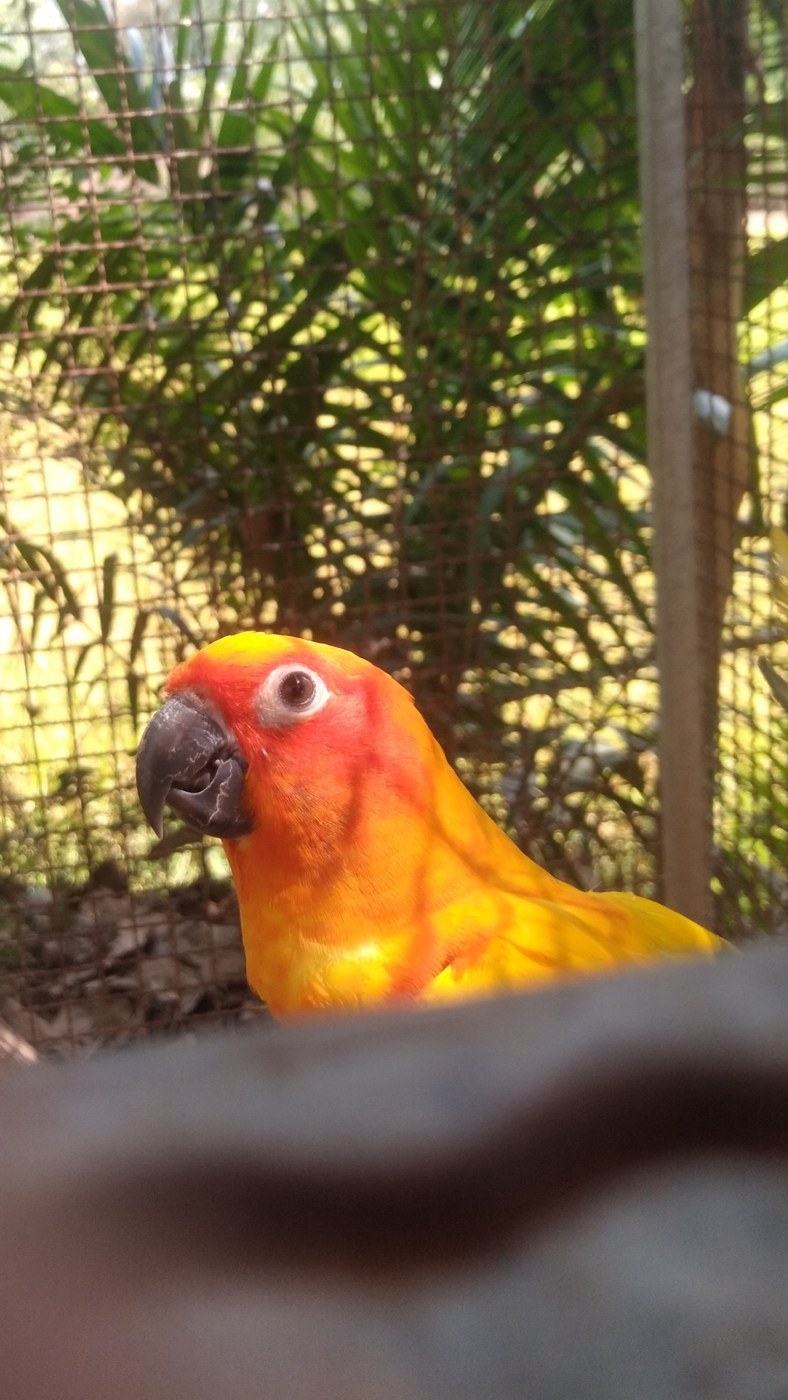
Sun Parakeet
Bright, dense body contour feathers; medium pointed tail feathers

Yellow-naped Amazon
Broad rounded contour feathers with sturdy flight feathers
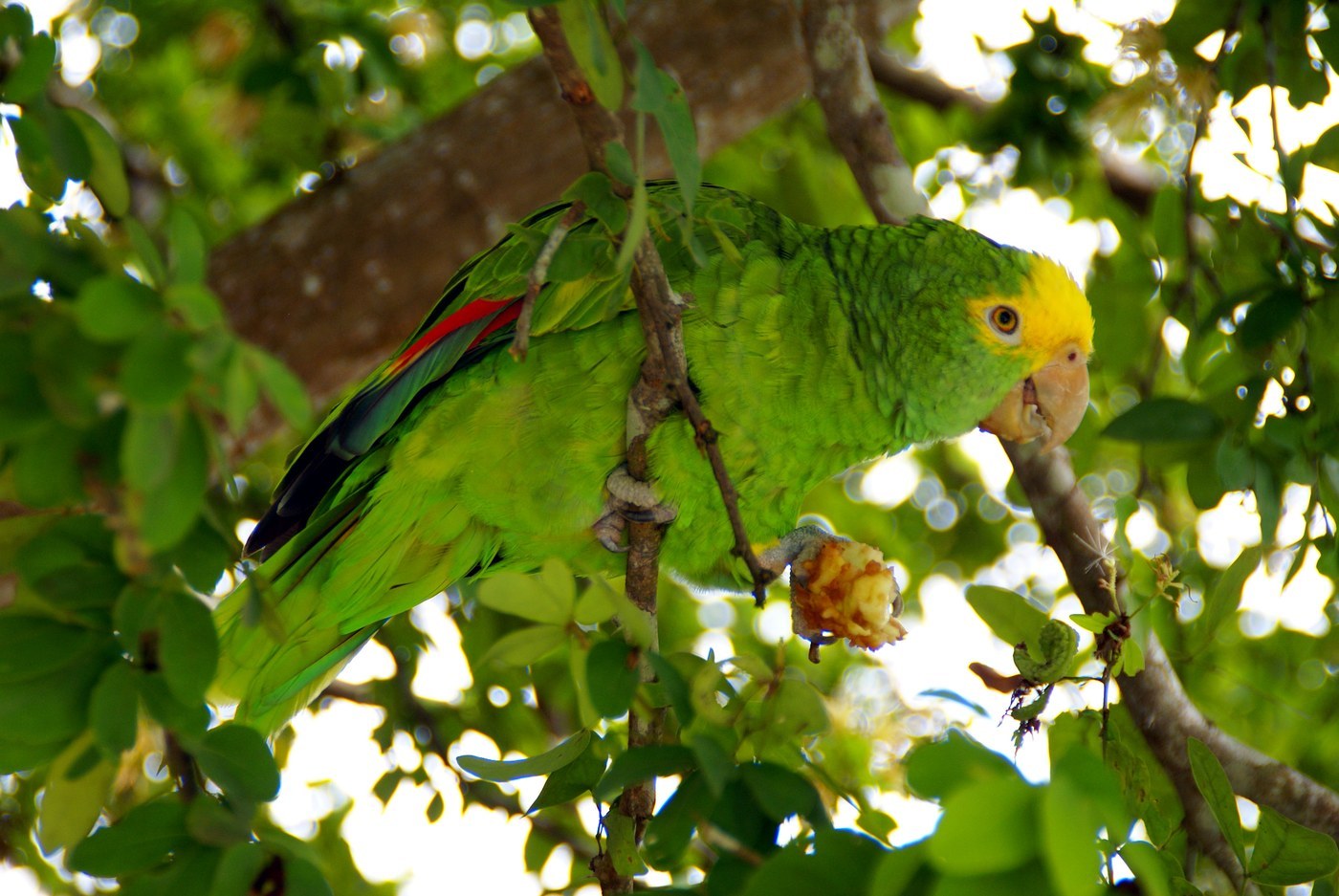
Yellow-headed Amazon
Dense, rounded body contour feathers; broad flight feathers
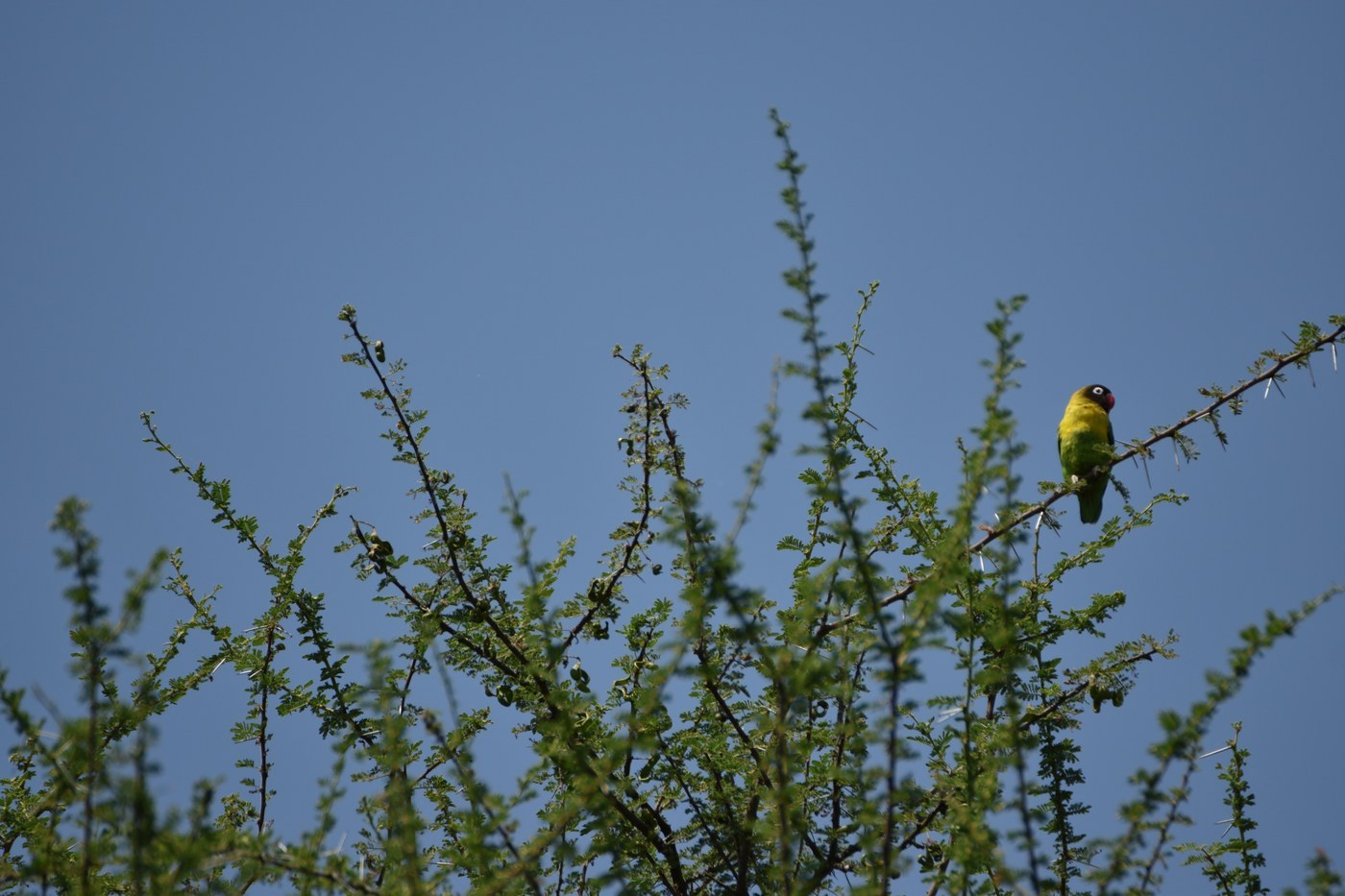
Yellow-collared Lovebird
Small compact flight feathers, short rounded tail

White-eyed Conure
Medium contour and long, graduated tail feathers

Yellow-tailed Black Cockatoo
Large, sturdy contour and flight feathers; short crest

Scarlet-chested Parrot
Small contour and flight feathers

Timneh Parrot
Broad flight feathers, scalloped body feathers with pale edges
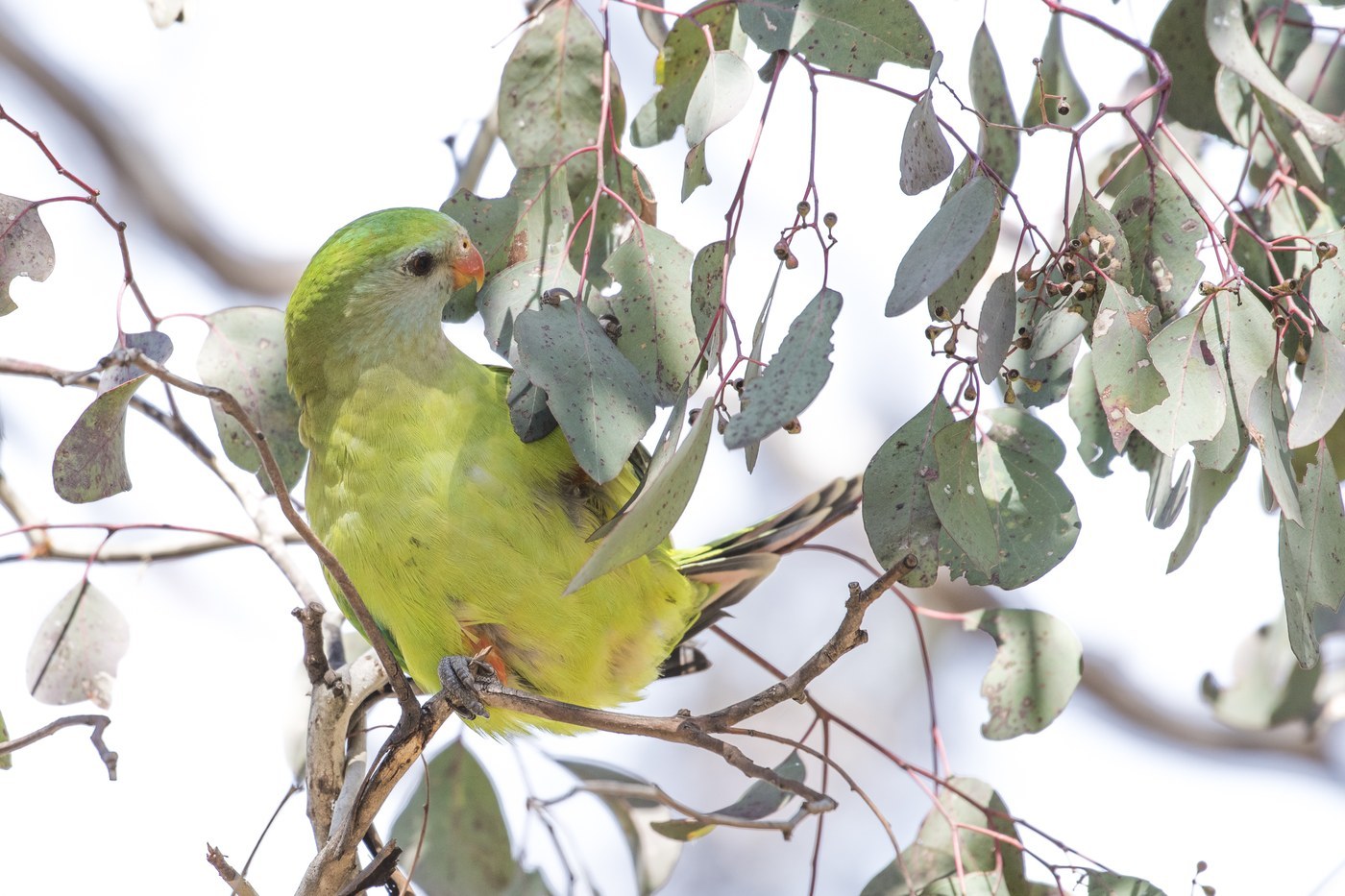
Superb Parrot
Sleek contour feathers with a long tapering tail

Red-shouldered Macaw
Compact body contour feathers; medium flight and tail feathers
Red-rumped Parrot
Sleek contour feathers with a bright rump patch in males

White-capped Pionus
Compact contour feathers and short, squared tail feathers