
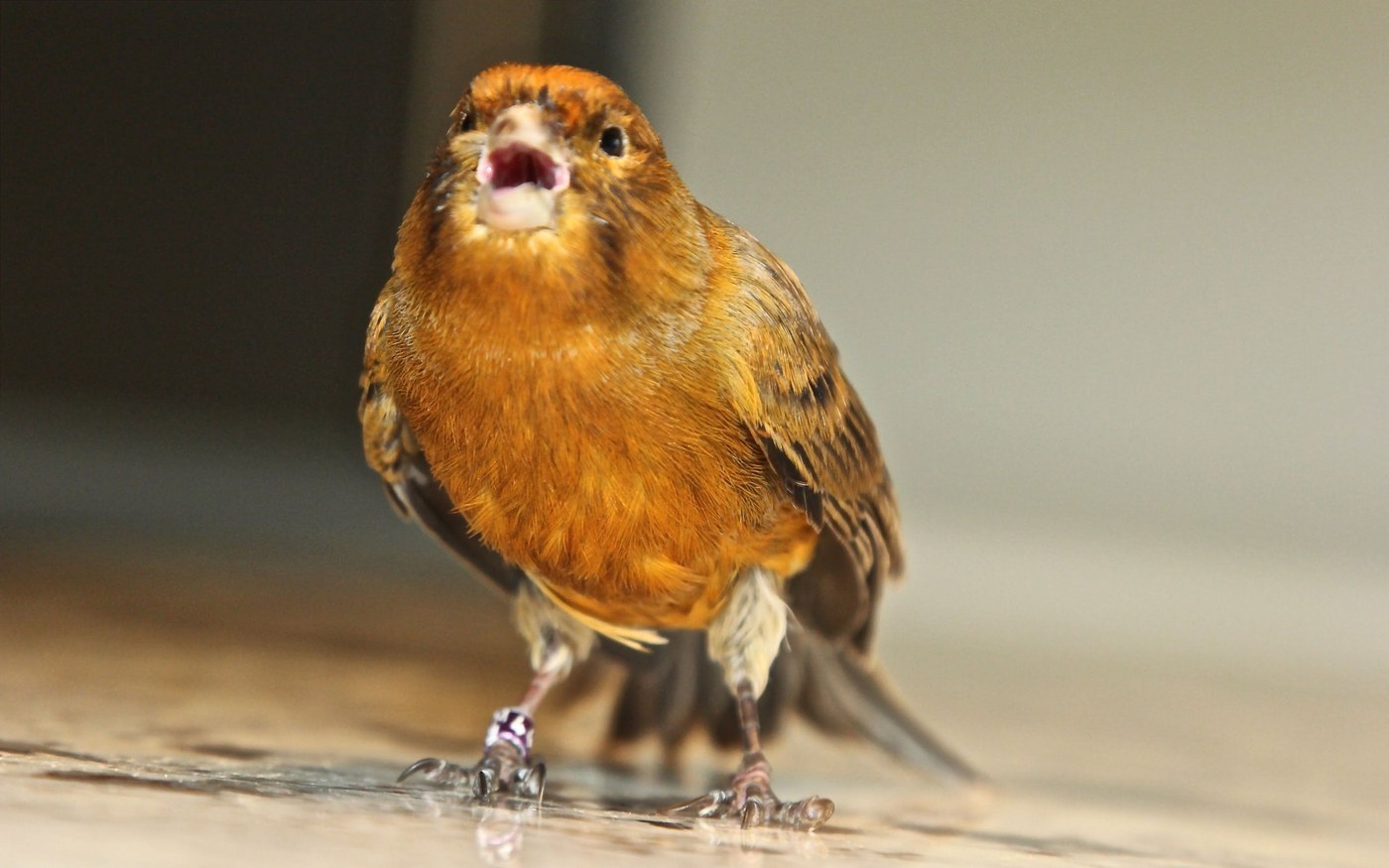
Atlantic Canary
Serinus canaria
The wild ancestor of the domestic canary, a streaky yellow-green island finch native to the Canary Islands, Azores, and Madeira.
- Feather type
- Small, streaked body plumage
- Colours
- Yellow-green streaked upperparts, yellowish underparts
- Bird size
- Small finch, ~12.5-14 cm
Found a feather like this?
Identify any feather from a photo, free.
Overview
Overview
The Atlantic Canary is the wild species from which the familiar domesticated canary was bred, native to the Canary Islands, Azores, and Madeira. In its natural form it is considerably duller and more streaked than the bright yellow domestic varieties commonly kept as cage birds.
Wild Atlantic Canaries show streaked olive-green upperparts and a yellowish wash on the face and underparts, with brown streaking extending down the flanks, giving an overall more subdued appearance than its famous domesticated descendant.
Identifying the Feather
Feather Identification
- Upperpart feathers: streaked olive-green to greyish-brown, giving camouflage among scrub and low vegetation.
- Underpart feathers: yellowish wash on the throat and breast, fading to duller streaked flanks.
- Face feathers: yellow-green tone, less vivid than domesticated canary breeds.
- Tail and wing feathers: brownish, unmarked by strong wing bars.
- Distinguishing from similar species: streakier and duller than domestic canaries; similar in general pattern to European Serin but found only on Atlantic islands within its native range.
Plumage & Molt
Plumage Details
Wild Atlantic Canaries show streaked olive-green upperparts with a yellow-green wash on the face and breast, and dull brownish streaking along the flanks. This coloring is considerably more muted than the bright yellow plumage associated with domesticated canary breeds, which were selectively bred over centuries for brighter and more uniform coloration. Juveniles are even more heavily streaked and duller than adults.
Habitat & Range
Habitat & Range
This species is native to the Canary Islands, Azores, and Madeira, inhabiting scrub, woodland edges, and cultivated land at a range of elevations. Populations are resident on their native islands, with limited movement between habitats depending on food availability.
Behavior & Field Notes
Behavior & Field Notes
Atlantic Canaries feed on small seeds gathered from the ground and low vegetation, often forming small flocks outside the breeding season. Males sing a bright, varied, warbling song, the wild counterpart to the song valued in domesticated canaries. Nests are built in trees or shrubs, typically well concealed. The species' natural streaked, olive-toned plumage contrasts strongly with the bright yellow coloring familiar from cage-bred canaries.
Frequently asked questions
How does the wild Atlantic Canary compare in color to a pet canary?
The wild form is considerably duller and more streaked, showing olive-green and yellow-green tones rather than the bright uniform yellow of domesticated breeds.
Where does this species occur naturally?
It is native to the Canary Islands, Azores, and Madeira in the eastern Atlantic.
What do Atlantic Canary feathers look like on the underparts?
The throat and breast show a yellowish wash that fades into duller, streaked brownish flanks.
Is the Atlantic Canary the same species as the pet canary?
Yes, the domesticated canary was bred from this wild species, though centuries of selective breeding have altered its color and song considerably.
Atlantic Canary guides
In-depth guides for identifying and understanding Atlantic Canary.
Other feathers you may enjoy

Yellow-breasted Bunting
Contour and flight feathers, chestnut-and-yellow breeding pattern

Sedge Wren
Tiny streaked crown and back feathers

Yellow-winged Cacique
Glossy black body feathers, yellow wing patch, shaggy crest

Yellow Warbler
Small contour and flight feathers

Yellow-throated Warbler
Small contour and flight feathers

Yellow-throated Vireo
Bright yellow throat and spectacle feathers; olive-green back feathers; two white wing-bar feathers

Yellow-rumped Warbler
Small contour and flight feathers

Yellow-hooded Blackbird
Contrasting hood and body feathers

Yellow-headed Blackbird
Glossy black body plumage with a bright yellow head and breast

Yellow-eyed Junco
Contour and flight feathers

Yellow-fronted Canary
Small, smooth body plumage

Yellow-breasted Greenfinch
Compact, smooth body plumage