
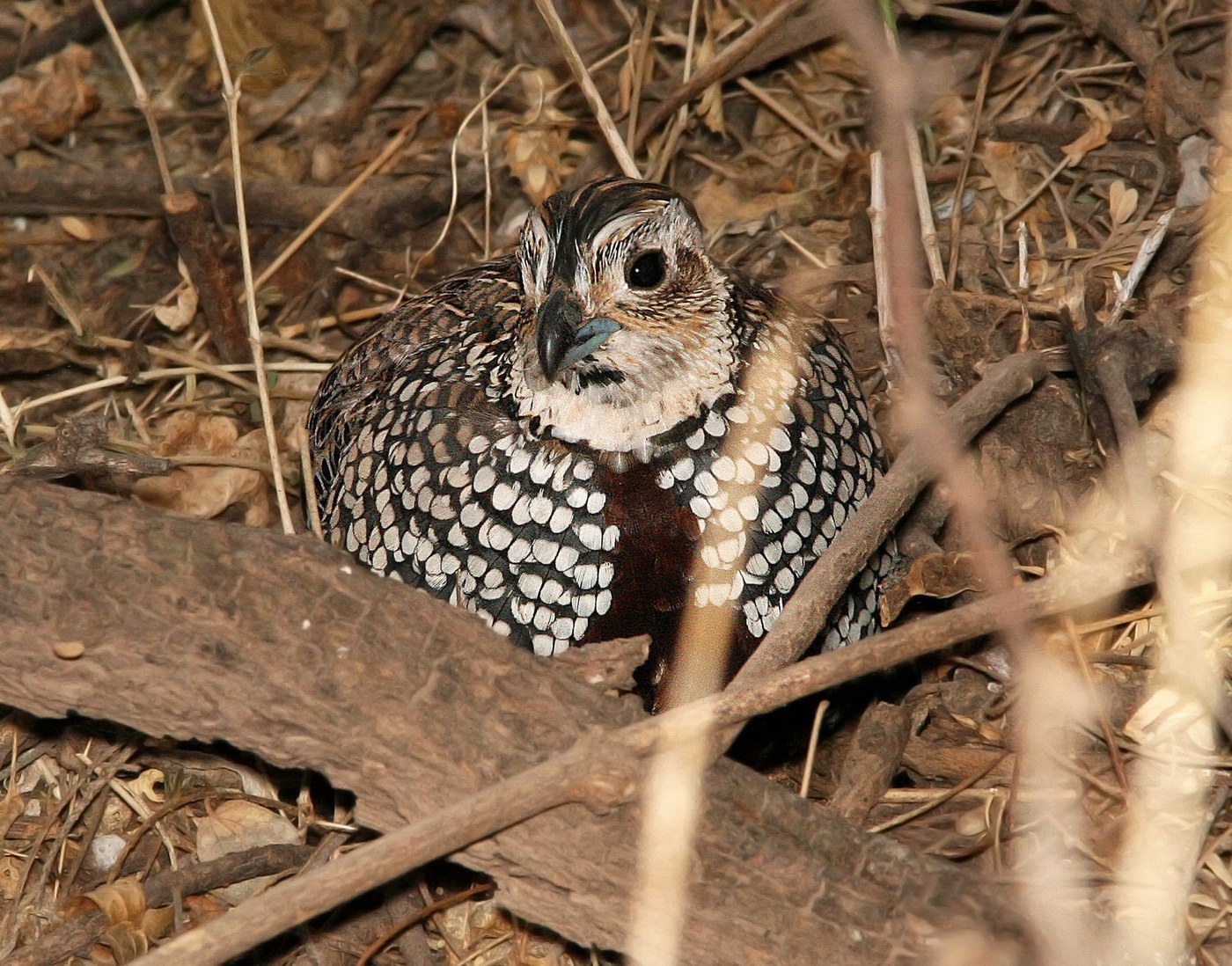
Montezuma Quail
Cyrtonyx montezumae
A round, secretive quail of southwestern grasslands, with males showing one of the boldest black-and-white facial patterns of any North American gamebird.
- Feather type
- Soft, boldly patterned contour feathers
- Colours
- Black, white, buff, cinnamon, and slate
- Bird size
- Small dove-sized, ~21 cm
Found a feather like this?
Identify any feather from a photo, free.
Overview
The Montezuma Quail is a small, plump gamebird of oak-savanna and grassy woodland from the southwestern United States south through the Mexican highlands. Males wear a striking harlequin-like face pattern of black-and-white stripes, offset by heavily spotted cinnamon-and-black flanks, making them one of the most ornately patterned quail in the world. Its round shape, short tail, and reluctance to flush have earned it the nickname 'fool quail.'
Identifying the Feather
- Face feathers (male): short, dense feathering forms a bold black-and-white striped pattern unlike any other North American quail.
- Flank feathers (male): buffy-cinnamon ground color heavily marked with round black and white spots.
- Body shape: overall rounded, dumpy contour feathering with a very short tail, giving a compact silhouette.
- Female plumage: cryptic tan-brown feathers with fine dark mottling, lacking the bold face pattern.
- Underlying down: unusually dense and soft compared to open-country quail, suited to cool upland habitats.
Plumage & Molt
Males show the dramatic black-and-white facial mask and spotted cinnamon flanks described above, while females are cryptically patterned in soft browns and buffs for camouflage on the nest and in grass cover. Juveniles resemble females but are duller overall. Adults molt once yearly after breeding, with males regaining their full facial pattern well before the following breeding season.
Habitat & Range
This species inhabits oak and pine-oak woodlands with a well-developed grass understory, from the southwestern United States (Arizona, New Mexico, Texas) south through the highlands of Mexico. It is a non-migratory resident, staying within local home ranges year-round and shifting only slightly with seasonal grass and food availability.
Behavior & Field Notes
Montezuma Quail are famously reluctant to fly, often remaining motionless in cover and flushing explosively only when nearly stepped on. They feed largely on bulbs, tubers, and invertebrates, often digging small conical pits in the soil while foraging. Coveys are typically small family groups that roost together in a tight circle on the ground. Their voice is a soft, descending, whinnying whistle, quite different from the sharper calls of other quail.
Frequently asked questions
Why is the Montezuma Quail called the 'fool quail'?
It relies on camouflage and stillness rather than flight, often staying put until an observer is very close, which made it seem tame or 'foolish' to early hunters and naturalists.
How can you tell a male Montezuma Quail's feathers from a female's?
Males have a bold black-and-white striped face and cinnamon flanks covered in round spots, while females are plain buffy brown with fine mottling.
What habitat produces most Montezuma Quail feather finds?
Oak and pine-oak woodlands with dense bunchgrass understory in the southwestern US and Mexican highlands.
Are Montezuma Quail migratory?
No, they are year-round residents that make only small local movements tied to food and cover availability.
Montezuma Quail guides
In-depth guides for identifying and understanding Montezuma Quail.
Other feathers you may enjoy

Ring-necked Pheasant
Body (contour), tail, and wing feathers

Bornean Peacock-pheasant
Contour and tail feathers with iridescent ocelli

Crested Argus
Extremely elongated, ocellated (eyespot-patterned) tail feathers among the longest of any bird; tall, erectile crest

Grey Partridge
Body and flank feathers

Willow Ptarmigan
Larger, stockier body feathers with warmer rufous tones in summer; tail feathers black year-round

Wild Turkey
Broad, iridescent body feathers and large flight and tail feathers

Bulwer's Pheasant
Contour feathers and elongated white tail feathers
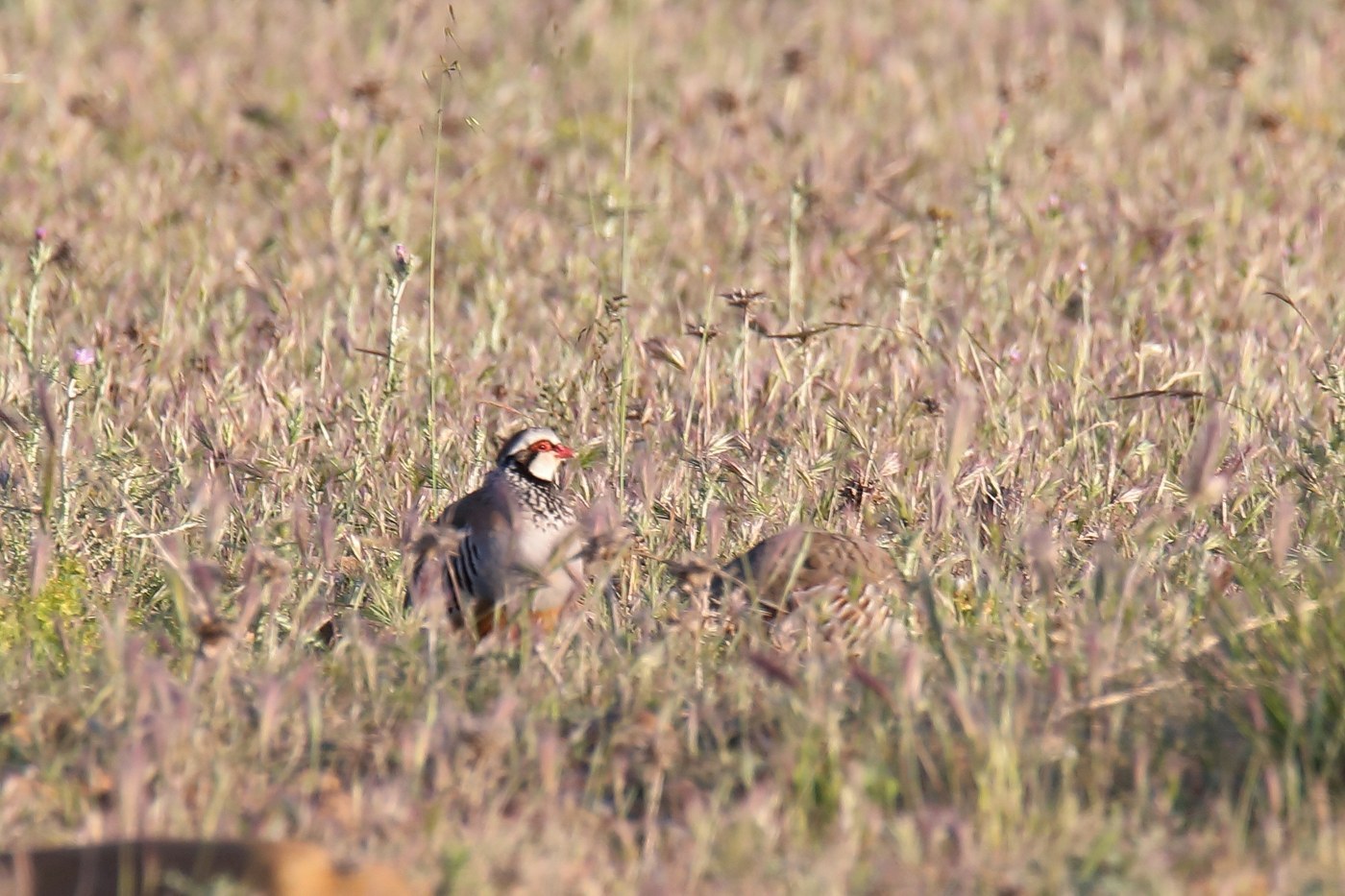
Red-legged Partridge
Flank, body, and flight feathers

White-tailed Ptarmigan
Small body feathers with a tail that stays pure white year-round, unlike other ptarmigan

Edwards's Pheasant
Contour and tail feathers

Sooty Grouse
Dense, plain contour feathers with a pale-tipped, fanned tail

Snow Partridge
Finely vermiculated barred contour feathers