

Himalayan Snowcock
Tetraogallus himalayensis
The largest of the Himalayan alpine gamebirds, marked by a bold white face and throat patch bordered with chestnut and black, and heavily streaked chestnut flanks.
- Feather type
- Large, densely patterned contour feathers with a bold facial pattern
- Colours
- Gray-brown, white, chestnut, and black
- Bird size
- Large, largest gamebird in this set, ~57 cm
Found a feather like this?
Identify any feather from a photo, free.
Overview
The Himalayan Snowcock is a large, hardy gamebird of the high alpine zone across the Himalayas and mountains of Central Asia, notably introduced successfully to the Rocky Mountains of Nevada in North America. It is considerably larger than most partridges and quail, with a bold white face and throat patch bordered by chestnut and black stripes, set against an overall gray-brown body with bold chestnut-streaked flanks marked with black-and-white barring.
Identifying the Feather
- Face and throat: bold white patch bordered by chestnut and black stripes, the species' most conspicuous field mark.
- Flanks: heavily streaked chestnut with black-and-white barring, more boldly patterned than the flanks of smaller partridges.
- Body: overall gray-brown, appearing plain and pale at a distance compared to the strong facial and flank pattern.
- Bill and legs: reddish, consistent with other high-altitude Phasianidae.
- Overall size: notably larger and heavier-bodied than Chukar or Rock Partridge, useful alongside plumage for identification.
Plumage & Molt
Sexes are broadly similar in plumage, with males averaging larger in size. Juveniles are duller, with a less crisply defined facial pattern until their first molt. A single complete molt occurs annually after the short alpine breeding season.
Habitat & Range
Himalayan Snowcock inhabit high alpine meadow, rocky slopes, and scree above the treeline across the Himalayas, Tian Shan, Pamirs, and other Central Asian ranges, and have been successfully introduced to alpine habitat in the Ruby Mountains of Nevada in North America. The species makes modest seasonal elevational movements, descending somewhat in the harshest winter weather.
Behavior & Field Notes
This species forages on the ground for seeds, leaves, and invertebrates across open alpine terrain, generally in small groups. It prefers running uphill over flying, and when flushed will often glide long distances downhill on set wings. Nests are shallow ground scrapes hidden among rocks or alpine vegetation. Its calls include loud, far-carrying whistles that echo across high mountain slopes.
Frequently asked questions
How big is the Himalayan Snowcock compared to other alpine gamebirds?
It is notably larger and heavier than Chukar, Rock Partridge, or Snow Partridge, making it the largest gamebird typically found in this high-altitude habitat.
What is the key facial feature of the Himalayan Snowcock?
A bold white face and throat patch bordered by chestnut and black stripes.
Where was the Himalayan Snowcock introduced outside Asia?
It was successfully introduced to alpine habitat in the Ruby Mountains of Nevada in North America.
How does the Himalayan Snowcock escape danger?
It prefers running uphill over flying, and when flushed often glides long distances downhill on set wings.
Himalayan Snowcock guides
In-depth guides for identifying and understanding Himalayan Snowcock.

Other feathers you may enjoy

Ring-necked Pheasant
Body (contour), tail, and wing feathers

Bornean Peacock-pheasant
Contour and tail feathers with iridescent ocelli

Crested Argus
Extremely elongated, ocellated (eyespot-patterned) tail feathers among the longest of any bird; tall, erectile crest

Grey Partridge
Body and flank feathers

Willow Ptarmigan
Larger, stockier body feathers with warmer rufous tones in summer; tail feathers black year-round

Wild Turkey
Broad, iridescent body feathers and large flight and tail feathers

Bulwer's Pheasant
Contour feathers and elongated white tail feathers
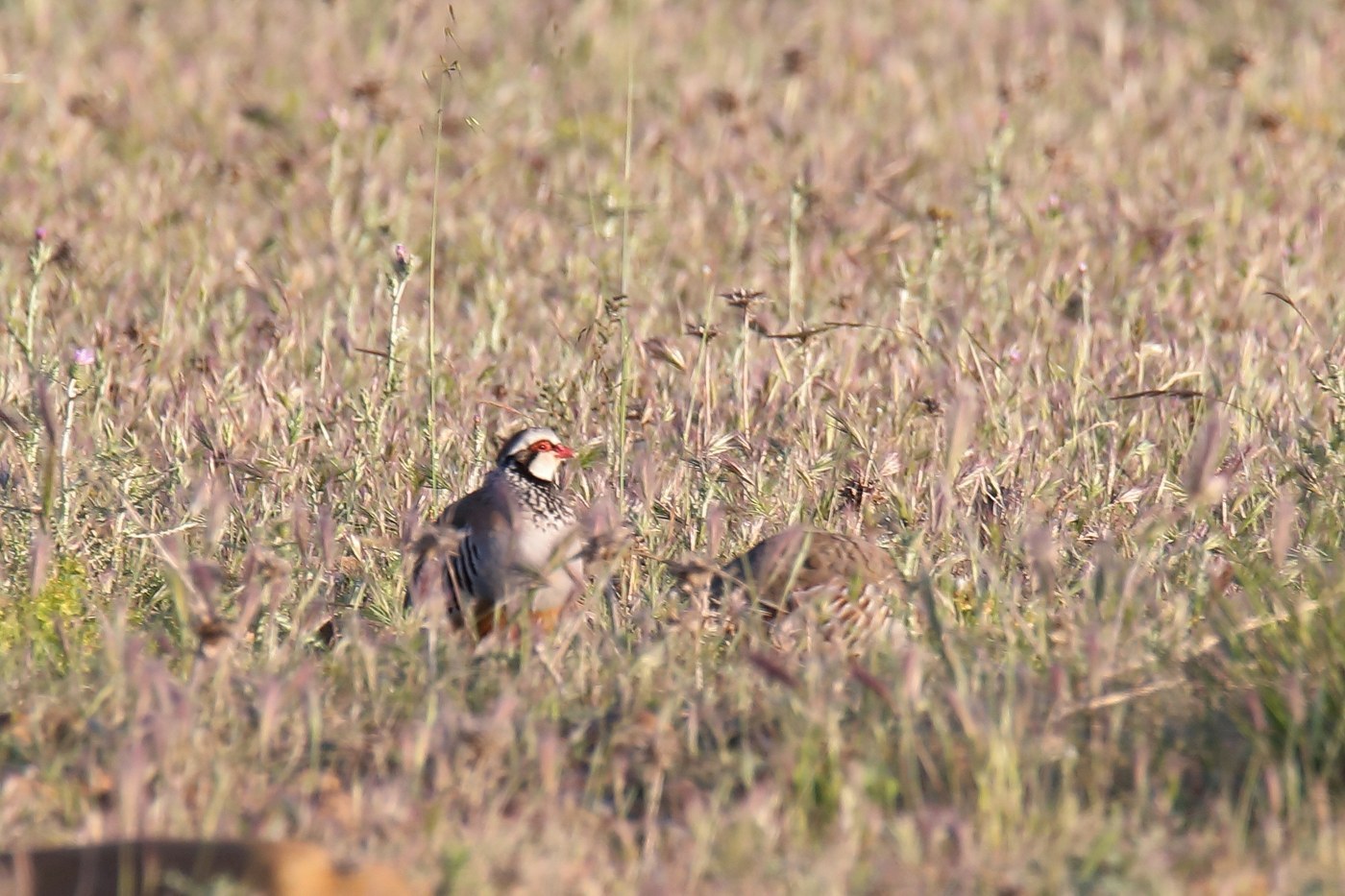
Red-legged Partridge
Flank, body, and flight feathers

White-tailed Ptarmigan
Small body feathers with a tail that stays pure white year-round, unlike other ptarmigan

Edwards's Pheasant
Contour and tail feathers

Sooty Grouse
Dense, plain contour feathers with a pale-tipped, fanned tail

Snow Partridge
Finely vermiculated barred contour feathers