
How to Identify American Robin Feathers
A guide to the rusty-orange breast feathers, dark gray-brown back, and white eye-crescent markings that identify American Robin feathers.
Read the full American Robin encyclopedia entry →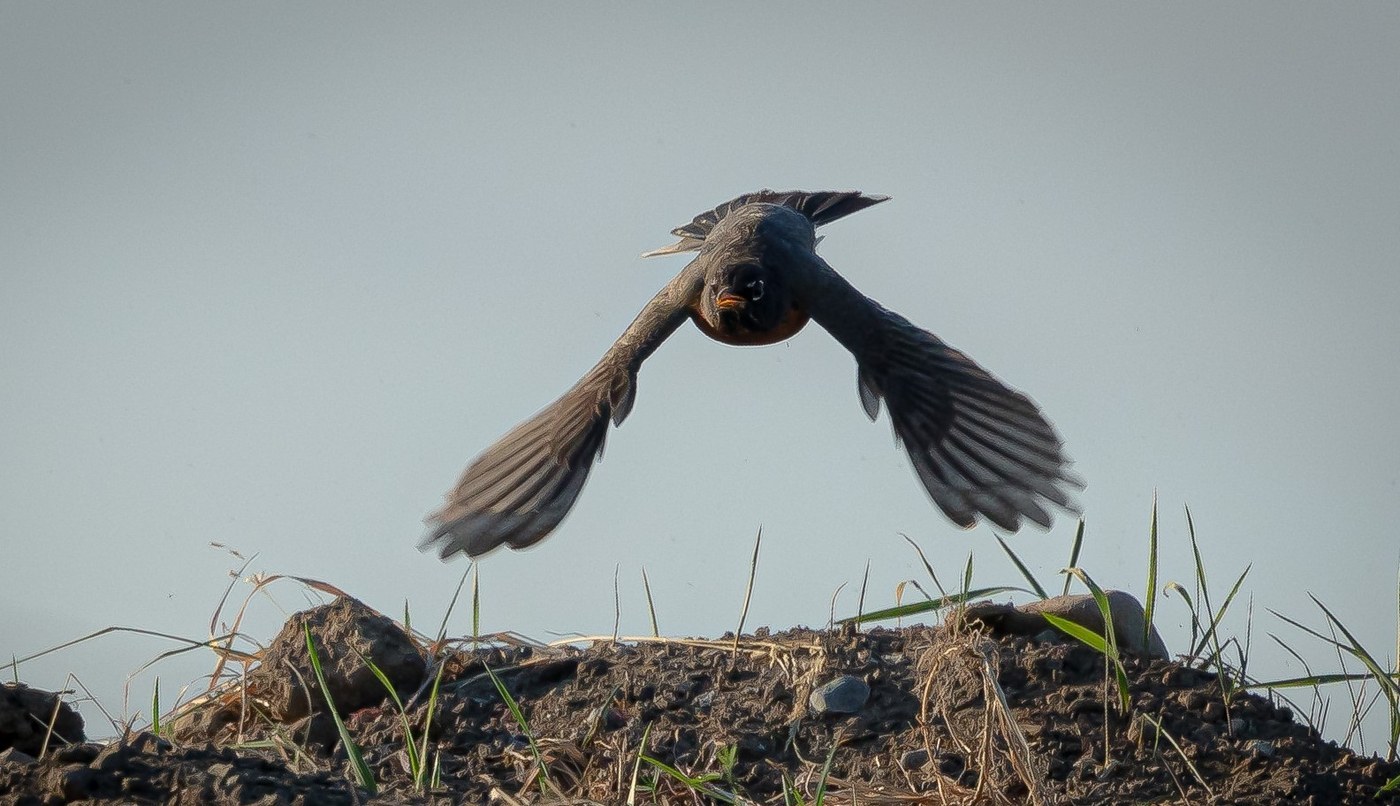
What American Robin's Feathers Look Like
American Robin feathers are familiar to most backyard observers, but the details help confirm an identification with confidence. Breast and belly feathers are a warm brick-orange to rust color, often described as "robin red-breast," though the true tone leans more orange than red. Back, wing, and tail feathers are a dark, uniform gray-brown, without streaking or barring. Head feathers are the darkest, nearly blackish on males and slightly paler gray-brown on females, with small white crescent marks above and below the eye on facial feathers. The lower belly and undertail covert feathers are white, providing contrast beneath the orange breast. Outer tail feathers often show a small white tip or corner patch, visible as a flash when the tail is spread — a useful clue on an otherwise plain dark tail feather. Feather size is moderate for a songbird, with flight feathers around 9–11 cm.
Step-by-Step: Is This Feather From an American Robin?
- Check for orange-rust breast/belly feathers. This warm rusty tone paired with dark gray-brown back feathers is the core robin combination.
- Look for white corners on outer tail feathers. A small white patch near the tip of an otherwise dark tail feather is a helpful secondary clue.
- Inspect facial feathers for white crescents. Small white marks above and below where the eye would be support this identification.
- Compare darkness of the head. A nearly black head feather suggests a male; a paler grayish head feather suggests a female.
- Judge overall size. Flight feathers around 9–11 cm fit a robust thrush-sized bird, larger than most sparrows but smaller than a jay.
Similar Species & How to Tell Them Apart
The Varied Thrush, found mainly in western forests, shares an orange breast but adds a bold black breast band and orange eyebrow stripe and wingbars not present in American Robin — any feather with orange wingbars or a black chest band points to Varied Thrush instead. Other thrushes in the robin's range, such as Wood Thrush or Hermit Thrush, have spotted, not solid orange, underparts, making them easy to rule out. No common backyard bird combines a solid rust breast with a plain dark gray-brown back and white tail corners quite like the American Robin, so this combination is fairly diagnostic on its own.
Where & When You'll Find Them
American Robins are found across nearly all of North America in lawns, gardens, woodlands, and parks, foraging on open ground for earthworms and insects. Many populations, especially in the northern part of the range, migrate south for winter, while others in milder climates stay year-round, sometimes shifting from lawns to fruit-bearing trees in colder months. Feathers are easy to find in almost any yard or park with robins present, and the biggest feather turnover happens during the late-summer post-breeding molt, when adults replace all their body and flight feathers before migration, making July and August especially productive months to find dropped robin feathers on lawns and under trees.
Frequently asked questions
What is the single easiest robin feather clue?
A warm rust-orange breast or belly feather paired with a plain dark gray-brown back feather is the most reliable combination for this species.
How do I rule out a Varied Thrush?
Check for orange wingbars or a black breast band — if present, it's Varied Thrush; plain dark wings and no chest band point to American Robin.
Why do some robin tail feathers have a white corner and others don't?
The small white tip is mainly visible on the outer tail feathers; inner tail feathers are plain dark gray-brown without any white marking.
When are robin feathers most common to find?
Late summer during the post-breeding molt is the peak period, when adults shed and regrow their feathers before fall migration or the onset of winter.
American Robin identified by the community
Recent American Robin feathers identified with Feather Identifier.


