
How to Identify Western Reef Heron Feathers
How to identify Western Reef Heron feathers, whether from the slate-gray dark morph or the white morph, using bill/leg color context, plume shape, and structure compared to Little Egret.
Read the full Western Reef Heron encyclopedia entry →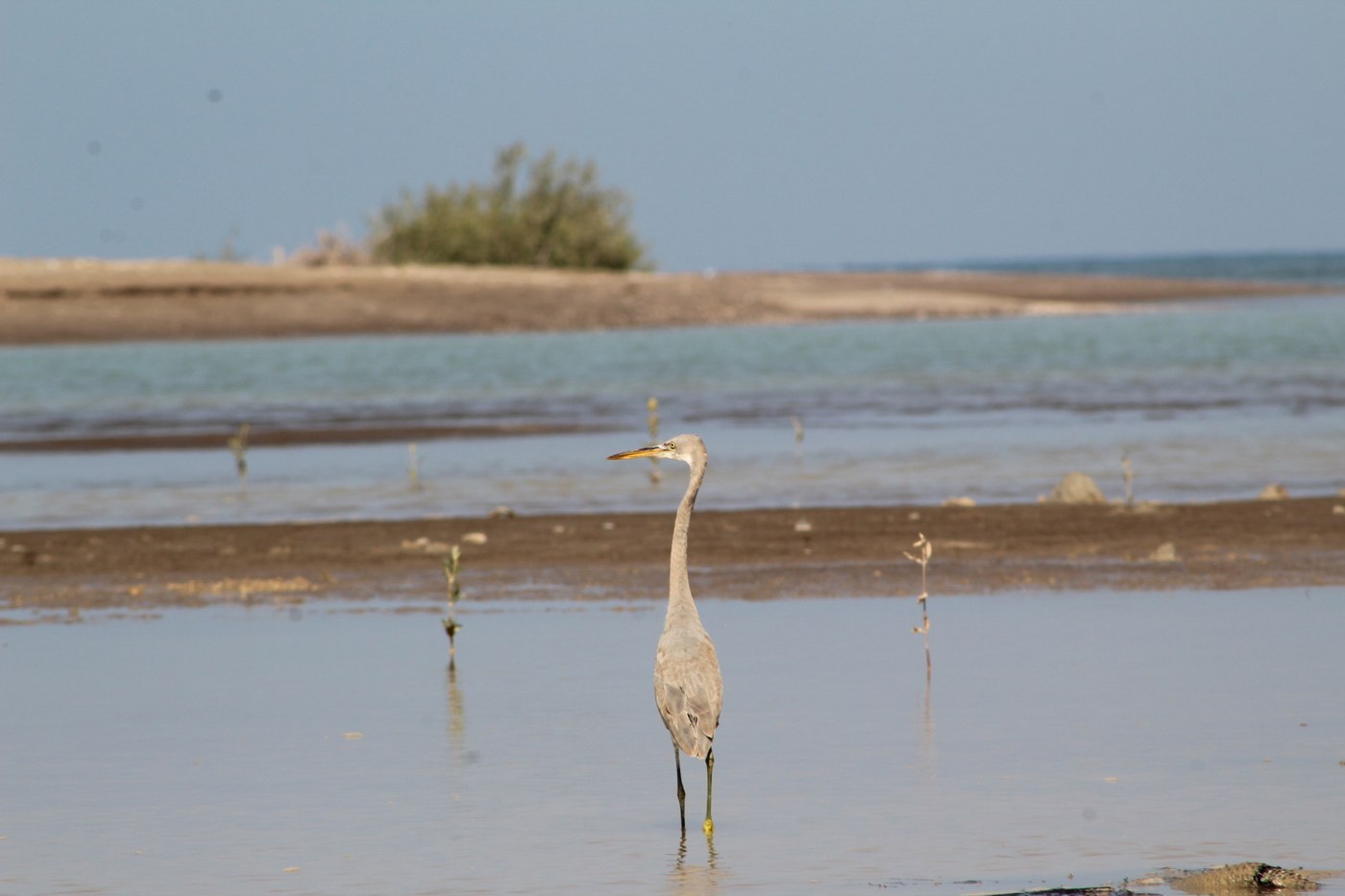
What Western Reef Heron Feathers Look Like
Western Reef Heron is unusual among herons because it occurs in two color morphs, and feathers will look completely different depending on which one you've found. Dark-morph birds have slate-gray body (contour) feathers with a subtle bluish sheen, and a distinctive white throat streak running down the foreneck — a white feather found alongside slate-gray ones from the same bird is a strong clue for this morph. White-morph birds are entirely white, feather for feather, and can be confused with egrets (see below).
In both morphs, flight feathers (primaries/secondaries) are moderately broad and softly textured, typical heron structure — gray in dark-morph birds, white in the white morph, without barring or spotting in either case (herons generally have plain, unpatterned flight feathers).
During the breeding season, adults grow ornamental display plumes: long, wispy, loosely-webbed feathers on the nape and lower back (aigrettes) that look thin and almost hair-like compared to normal contour feathers. These are diagnostic of the heron/egret family broadly but not unique to this species alone.
Step-by-Step: Is This Feather From a Western Reef Heron?
- Identify the morph. Slate-gray with any white throat-area feather nearby = dark morph; pure white with no gray = white morph (needs further checks below).
- Check feather size and structure. Broad, softly webbed feathers in the 4–8 inch range for major flight feathers fit a medium heron.
- Look for the throat streak (dark morph only). A single white feather that clearly doesn't match otherwise slate-gray plumage suggests the diagnostic throat stripe of this species.
- For white feathers, consider bill and leg color noted at the site (if visible on a carcass or nearby remains). Western Reef Heron has a thick, often bicolored (dark with yellow base) bill and duller yellow-green legs, versus Little Egret's slender all-dark bill and black legs with bright yellow feet.
- Check for breeding plumes. Long, thin, loosely-barbed nape or back feathers indicate breeding condition and heron/egret family, narrowing things down alongside morph and location.
Similar Species & How to Tell Them Apart
- Little Egret (white morph confusion) — Little Egret has a slim, entirely black bill and black legs with contrasting yellow feet; Western Reef Heron's white morph has a heavier, often bicolored bill and duller yellowish legs, plus a thicker neck and more hunched posture in life.
- Dimorphic Egret (African populations sometimes treated as part of this complex) — essentially the same morph pattern; separated mainly by range rather than feather detail.
- Grey Heron — much larger overall, with noticeably longer, larger flight feathers and a different, paler blue-gray tone lacking the reef heron's uniform slate coloring.
- Cattle Egret — smaller, stockier, with buffy-orange breeding plumes rather than the reef heron's plain white or slate feathers.
Where & When You'll Find Them
Western Reef Herons live along coastal mudflats, mangroves, and rocky shorelines from West Africa through the Red Sea and into parts of the Indian Ocean coast, rarely straying far inland. They feed by wading and stalking in the intertidal zone, so feathers most often turn up near tidal flats, mangrove edges, and coastal lagoons rather than freshwater wetlands. Molt timing varies with the local breeding season across this species' wide range, but breeding plumes are grown ahead of the nesting season and are most likely to be found near coastal breeding colonies during and just after breeding.
Frequently asked questions
How do I know if a white feather is Western Reef Heron and not Little Egret?
On its own, a plain white body feather can't be separated by feather alone — check any accompanying bill or leg color evidence at the site, since Western Reef Heron has a heavier bicolored bill and dull yellow-green legs versus Little Egret's slender black bill and black legs with yellow feet.
What does the white throat streak on the dark morph tell me?
It's a distinctive marking — if you find a plain white feather mixed in with otherwise uniform slate-gray feathers from the same bird, it strongly suggests the dark morph of this species rather than a solid dark heron.
Are the two morphs different subspecies or just individual variation?
They're color morphs within the same species, not separate subspecies — both dark and white morphs can occur in the same population and even interbreed.
Where are feathers most likely to be found?
Along tidal mudflats, mangrove fringes, and rocky coastal shorelines — this species rarely uses freshwater habitats, unlike many other herons and egrets.
What do the breeding plumes look like compared to normal feathers?
They're long, thin, and loosely webbed with a wispy, almost hair-like texture, quite different from the heron's normal smooth, broad contour feathers, and are grown just before the breeding season.