
How to Identify Spotted Flycatcher Feathers
A guide to identifying Spotted Flycatcher feathers by their streaked crown and breast, grayish-brown upperparts, upright long-winged build, and thin bristled bill, distinguishing them from other Old World Muscicapa flycatchers.
Read the full Spotted Flycatcher encyclopedia entry →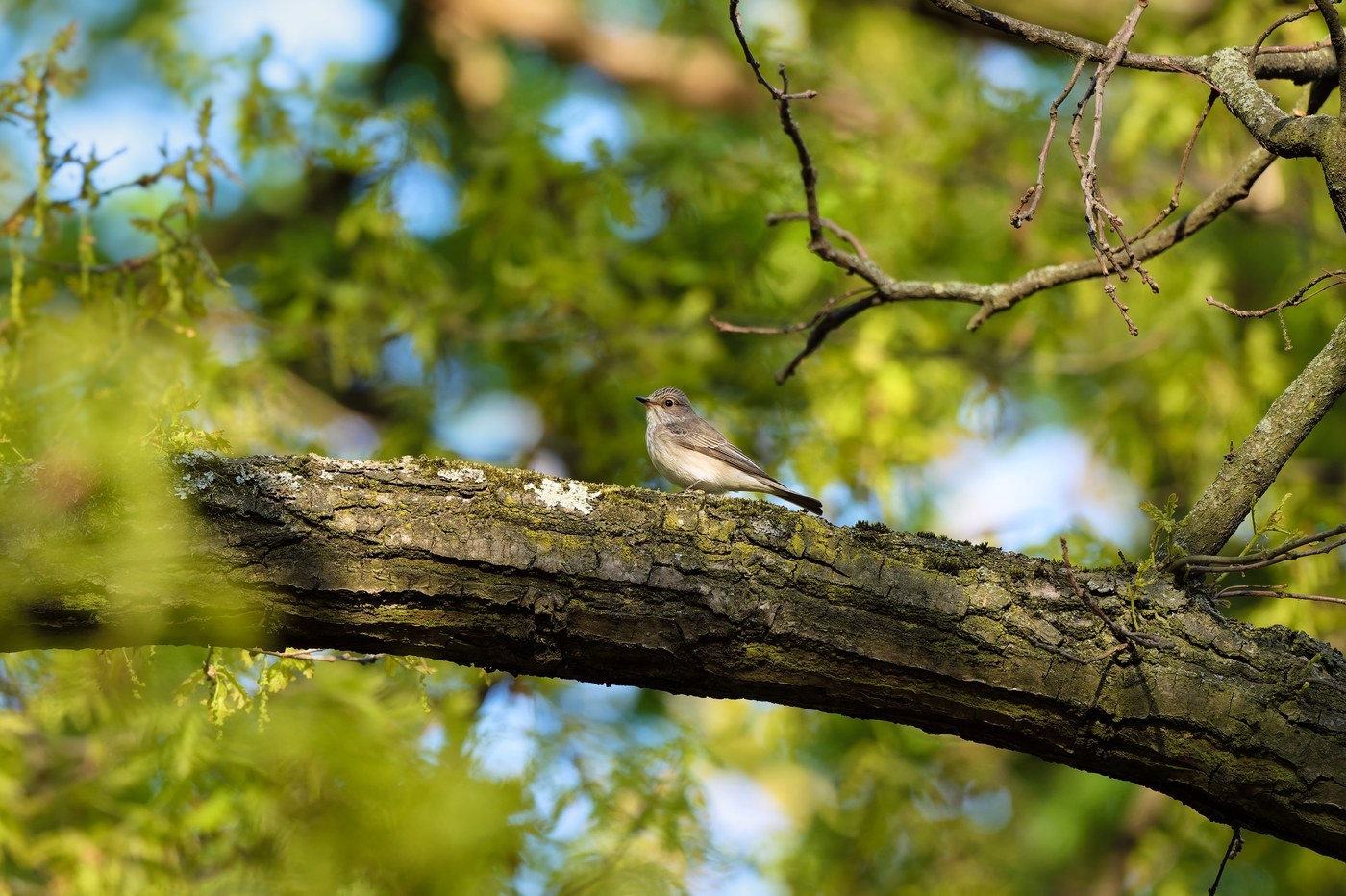
What Spotted Flycatcher's Feathers Look Like
Spotted Flycatcher, a long-distance migrant breeding across Europe and western Asia and wintering in Africa, is named for a subtle but genuine feather feature: fine dark streaking on an otherwise plain bird. Crown feathers show thin dark streaks on a grayish-brown ground, giving the head a softly streaked cap rather than a solid color. Breast and flank feathers are whitish to buffy, marked with light but distinct dusky streaking, concentrated most heavily across the upper breast and fading toward the belly.
Upperpart feathers (back, mantle, wing coverts) are a plain grayish-brown with little pattern, and wing coverts show narrow pale edging forming faint, indistinct wing bars — much less crisp than the bold wing bars of many warblers. The species has proportionally long wings for its small size, an adaptation for its long migratory journeys and its sallying, aerial insect-catching feeding style, so primary feathers are relatively long and pointed compared to more sedentary small songbirds. Around the bill base, short stiff rictal bristles are present (a flycatcher-family trait), helping funnel insects into the gape during aerial hawking.
Step-by-Step: Is This Feather From a Spotted Flycatcher?
- Look for fine streaking on crown and breast feathers. Thin dusky streaks on an otherwise plain grayish-brown or whitish ground is the species' clearest diagnostic combination.
- Check wing covert edging. Narrow, indistinct pale fringing forming faint (not bold) wing bars supports this species over more strongly wing-barred small songbirds.
- Assess wing feather length and shape. Long, pointed primary feathers relative to overall small body size fit a long-distance migrant flycatcher.
- Look for rictal bristles at the bill base. Short, stiff bristle feathers support a flycatcher-family identification.
- Consider overall plainness. A generally understated grayish-brown and whitish color scheme, without bold color patches, is typical of this species.
Similar Species & How to Tell Them Apart
- Asian Brown Flycatcher — very similar but shows less distinct streaking on the breast, a more uniformly plain grayish-brown breast wash instead of clear dusky streaks, and a shorter wing relative to body size.
- Dark-sided Flycatcher — shows more diffuse, smudgy dark patches on the breast sides rather than Spotted Flycatcher's finer, more even streaking, and typically a shorter primary projection.
- Pied Flycatcher (unrelated genus, similar habitat) — males show bold black-and-white contrast entirely absent from Spotted Flycatcher's subdued streaked pattern.
Where & When You'll Find Them
Spotted Flycatchers breed in open woodland, gardens, parkland, and orchards across Europe, into western Asia, then undertake a long migration to spend the winter in sub-Saharan Africa. Feathers are most likely to be found near breeding territories in late spring and summer, particularly around favored perches used for sallying after insects, and along migration stopover sites in spring and autumn, when tired migrants molt or lose feathers while refueling before continuing their long journey to or from Africa.
Frequently asked questions
What's the key feather feature that gives this species its name?
Fine dark streaking on the crown and breast feathers, set against an otherwise plain grayish-brown and whitish body, is the diagnostic pattern behind the name Spotted Flycatcher.
How do I tell it apart from Asian Brown Flycatcher?
Asian Brown Flycatcher shows a more uniformly plain grayish-brown breast wash with less distinct streaking, and typically a shorter wing relative to body size, compared to Spotted Flycatcher's clearer streaked pattern and longer wings.
Why are the wings relatively long on this species?
Spotted Flycatcher is a long-distance migrant traveling between Europe/western Asia and sub-Saharan Africa each year, and its proportionally long, pointed primary feathers reflect that demanding journey.
What are rictal bristles and why do they matter?
They're short, stiff bristle feathers at the base of the bill common to flycatchers, helping funnel flying insects into the gape during aerial hunting, and their presence supports a flycatcher-family identification.
When are Spotted Flycatcher feathers most likely to be found?
Near breeding territories in late spring and summer, and along migration stopover sites in spring and autumn when birds pass through Europe, Asia, and Africa on their long-distance journeys.