
How to Identify Short-toed Treecreeper Feathers
Recognizing the bark-patterned brown upperparts, silvery underparts, and stiff pointed tail feathers of the Short-toed Treecreeper.
Read the full Short-toed Treecreeper encyclopedia entry →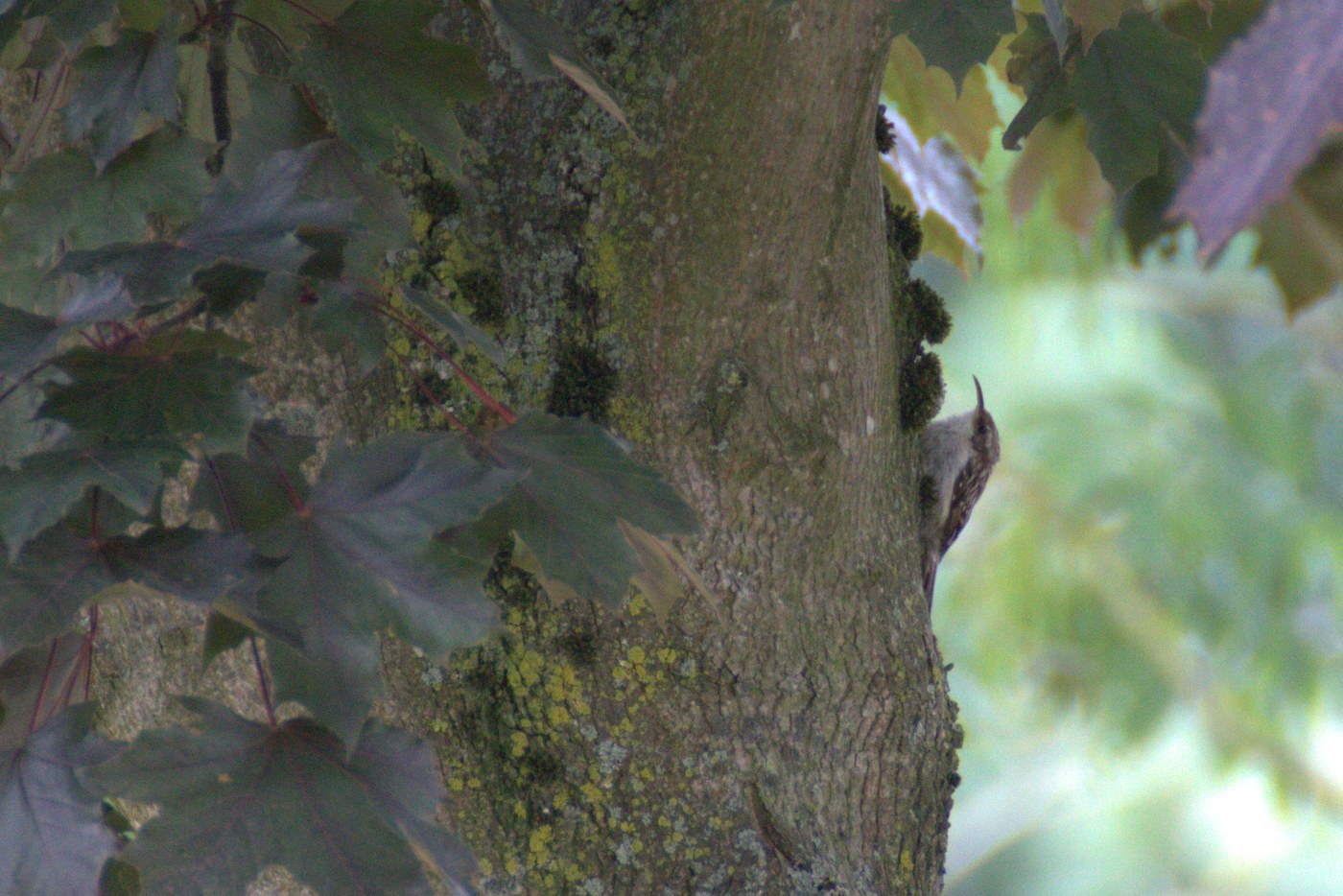
What Short-toed Treecreeper Feathers Look Like
Short-toed Treecreeper feathers are built for a life spent creeping up tree trunks, and their pattern reflects that camouflage need perfectly. Back and crown feathers show fine streaking in brown, buff, and dark brown, closely mimicking the mottled texture of tree bark — an intricate, busy pattern rather than a simple solid color. Underparts feathers are silvery-white to pale grayish-white, plain and unmarked, giving strong contrast against the busily patterned back. A key diagnostic feather type comes from the tail: treecreeper tail feathers are notably stiff, narrow, and pointed at the tip, an adaptation (much like woodpeckers, though unrelated) that lets the bird brace itself against bark while climbing — a stiff, pointed tail feather with a worn-looking tip is a strong clue for this family. The bill, if attached, is thin, fine, and distinctly downcurved, suited for probing bark crevices for insects. Overall feather size is tiny, matching a bird only about 12–13 cm long.
Step-by-Step: Is This Feather From a Short-toed Treecreeper?
- Check for stiff, pointed tail feathers with a somewhat worn-looking tip — this bracing adaptation is a strong family-level clue.
- Assess the back pattern. Fine brown-and-buff streaking mimicking bark texture, not a plain or boldly patterned back.
- Confirm plain silvery-white underparts with no streaking.
- Consider overall tiny size. Feathers should be very small, matching a 12–13 cm bird.
- Look for a thin, downcurved bill if any bill material is present.
- Factor in habitat. A feather found on or near tree trunks, especially in deciduous or mixed woodland, fits this species' bark-foraging lifestyle.
Similar Species & How to Tell Them Apart
The primary confusion species is the Eurasian Treecreeper, which is extremely similar in overall pattern and habits, sharing the same bark-mimicking back and pale underparts. The most reliable distinguishing features are subtle: Short-toed Treecreeper tends to show slightly duller, browner (less rufous-buff) flank feathers and a marginally longer, more strongly curved bill, though these differences are fine enough that geographic range is often the deciding factor — Short-toed Treecreeper dominates in southern and western Europe, while Eurasian Treecreeper is more numerous in northern and eastern regions, with a zone of overlap where either species is plausible. Eurasian Nuthatch, sharing tree-trunk habitat, has a completely different plain blue-gray back with no streaking at all, plus a stubby, non-stiffened tail, making it easy to rule out.
Where & When You'll Find Them
Short-toed Treecreepers are non-migratory residents of deciduous and mixed woodlands, parks, and gardens across much of western and southern Europe and parts of North Africa, spending nearly their entire foraging life spiraling up tree trunks and along large branches probing bark crevices for insects. Because of this fidelity to woodland trunks, feathers are almost always found directly on or beneath mature trees rather than in open ground away from woodland. Molt occurs mainly in late summer (roughly July–September) after the breeding season, which is the most productive window for finding fresh feathers caught in bark crevices or fallen at the base of favored foraging trees.
Frequently asked questions
What is the best single clue for a Short-toed Treecreeper tail feather?
A stiff, narrow, pointed tail feather with a somewhat worn tip, an adaptation for bracing against tree bark while climbing, is a strong clue for the treecreeper family generally.
How do I tell this apart from a Eurasian Treecreeper feather?
The differences are subtle — slightly duller, browner flank feathers and a marginally longer bill in Short-toed Treecreeper — so geographic range often matters as much as plumage detail.
Why is habitat such a strong clue for this species?
Because it forages almost exclusively on tree trunks and large branches, feathers are nearly always found directly on or beneath mature trees in woodland.
How does a Eurasian Nuthatch feather differ?
Nuthatch has a plain blue-gray back with no bark-mimicking streaking and a stubby, non-stiffened tail, making it easy to distinguish from a treecreeper.
When are Short-toed Treecreeper feathers most likely to be found?
Late summer, during the post-breeding molt from roughly July to September, is the most productive time.