
How to Identify Shoebill Feathers
How to identify the huge blue-gray body feathers and shaggy crest of the Shoebill, a massive African wading bird.
Read the full Shoebill encyclopedia entry →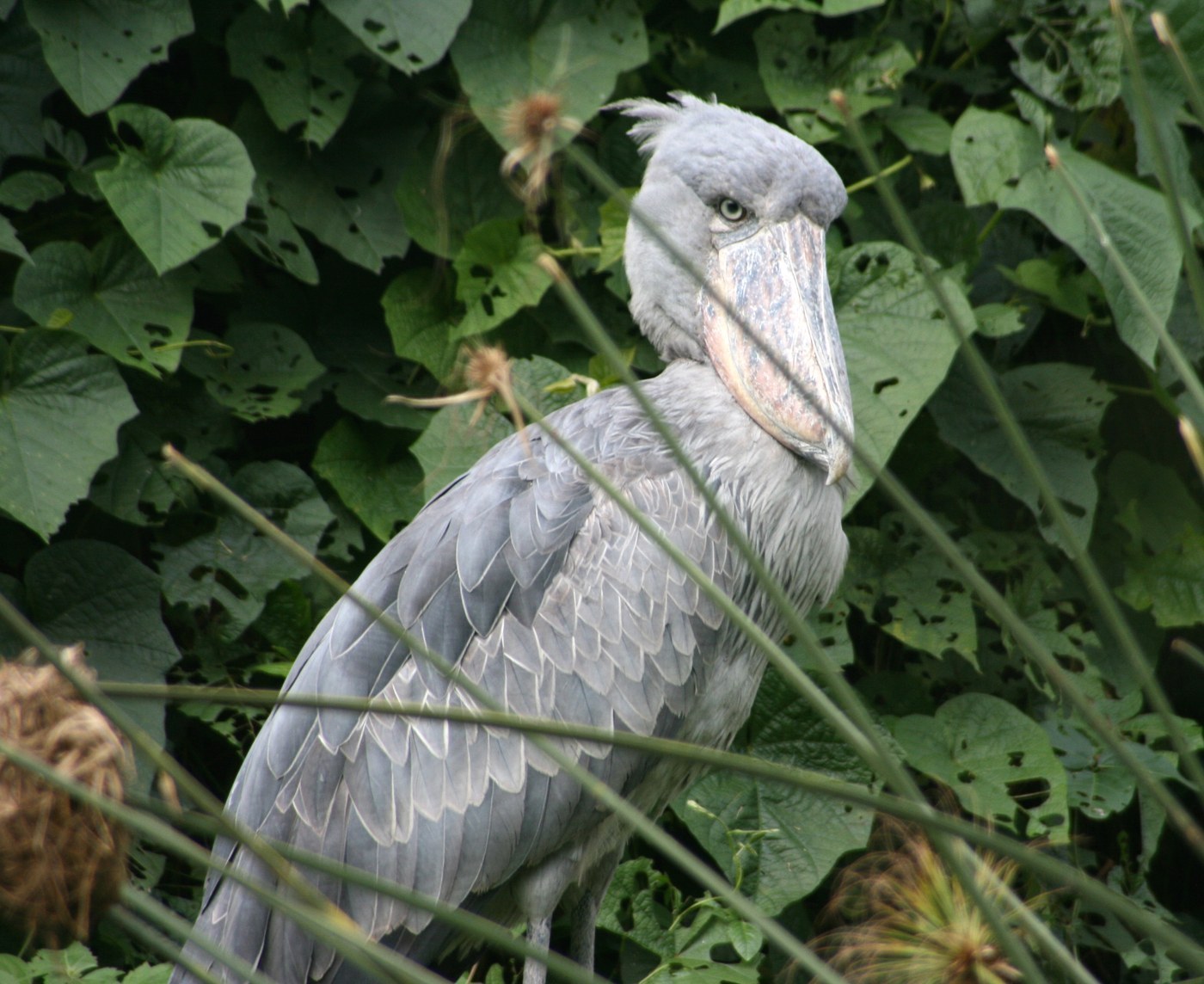
What Shoebill Feathers Look Like
Shoebill feathers are large and simply colored, matching the proportions of one of the most massive wading birds in the world. Body contour feathers are a uniform slate blue-gray, with a soft, almost powdery texture in places — Shoebills, like herons, produce specialized powder-down feathers that continuously disintegrate into a fine, talc-like powder used for preening, so some body feathers may feel unusually soft, brittle, or dusty compared to typical contour feathers. There is no streaking, barring, or contrasting patches anywhere on the body plumage; the coloring is essentially solid gray with sometimes a faint darker slate wash on the back and wings. Flight feathers are large and broad, colored the same blue-gray as the body, built for slow, deliberate soaring flight rather than speed. A shaggy, somewhat unkempt-looking tuft of elongated feathers forms a loose crest at the back of the head, differing in appearance from typical smooth contour feathers by looking slightly wispy and disheveled even when fresh.
Step-by-Step: Is This Feather From a Shoebill?
- Check the sheer size first. Given this bird's height (over 1 meter tall) and huge wingspan (around 2.3–2.6 meters), flight feathers should be notably large.
- Confirm uniform slate blue-gray coloring with no barring, streaking, or contrasting patches anywhere.
- Feel for a powdery or soft, slightly brittle texture on some body feathers, consistent with powder-down.
- Look for shaggy, wispy texture if the feather comes from the back-of-head crest area, rather than a smooth, tightly held vane.
- Consider broad, rounded flight feather shape, suited to soaring rather than fast flapping flight.
- Factor in wetland habitat context, since this species is essentially never found away from swamps.
Similar Species & How to Tell Them Apart
Few birds approach the Shoebill's combination of size and plain blue-gray coloring. Large gray herons, such as the Goliath Heron, share a generally gray tone in places but show more contrasting rufous or chestnut coloring on the neck and underparts, plus more slender, elongated neck and back plumes typical of herons, unlike the Shoebill's uniformly plain, stocky plumage. Storks such as the Marabou Stork, another large African wetland bird, show contrasting black-and-white plumage rather than uniform gray, plus a bare pink neck and head rather than feathered. The combination of huge size, uniform slate-gray color, and powder-down texture together rules out essentially every other African wetland bird.
Where & When You'll Find Them
Shoebills inhabit large freshwater swamps, papyrus marshes, and seasonally flooded wetlands across central tropical Africa, including South Sudan, Uganda, the Democratic Republic of Congo, Zambia, and neighboring countries, where they stand motionless for long periods hunting fish and other aquatic prey in dense marsh vegetation. As non-migratory residents tied closely to permanent wetland habitat, feathers are essentially only found within these swamp systems, often near favored hunting platforms of floating vegetation. Molt in this species, like many large tropical waterbirds, is not tightly bound to one narrow season and tends to be gradual, though feather turnover often follows the breeding period, so feathers may be found near nest platforms and roosting sites at various points in the year rather than during one dramatic molt event.
Frequently asked questions
What is the most distinctive texture clue for a Shoebill feather?
A soft, slightly powdery or brittle texture on some body feathers is characteristic, resulting from this species' specialized powder-down feathers used in preening.
How large should I expect a Shoebill flight feather to be?
Very large, reflecting a bird that stands over a meter tall with a wingspan of roughly 2.3 to 2.6 meters.
How does this differ from a Marabou Stork feather?
Marabou Stork shows contrasting black-and-white plumage rather than the Shoebill's uniform slate blue-gray coloring throughout the body.
Is the crest at the back of the head different from body feathers?
Yes, it looks shaggy and slightly wispy or disheveled compared to the smoother, more uniform texture of typical body contour feathers.
Where would a Shoebill feather realistically be found?
Almost exclusively within large freshwater swamps and papyrus marshes of central tropical Africa, since this species rarely strays from permanent wetland habitat.