
How to Identify Scott's Oriole Feathers
A guide to the lemon-yellow and black feathers of Scott's Oriole, a desert songbird of the American Southwest, and how to separate them from other yellow-and-black orioles.
Read the full Scott's Oriole encyclopedia entry →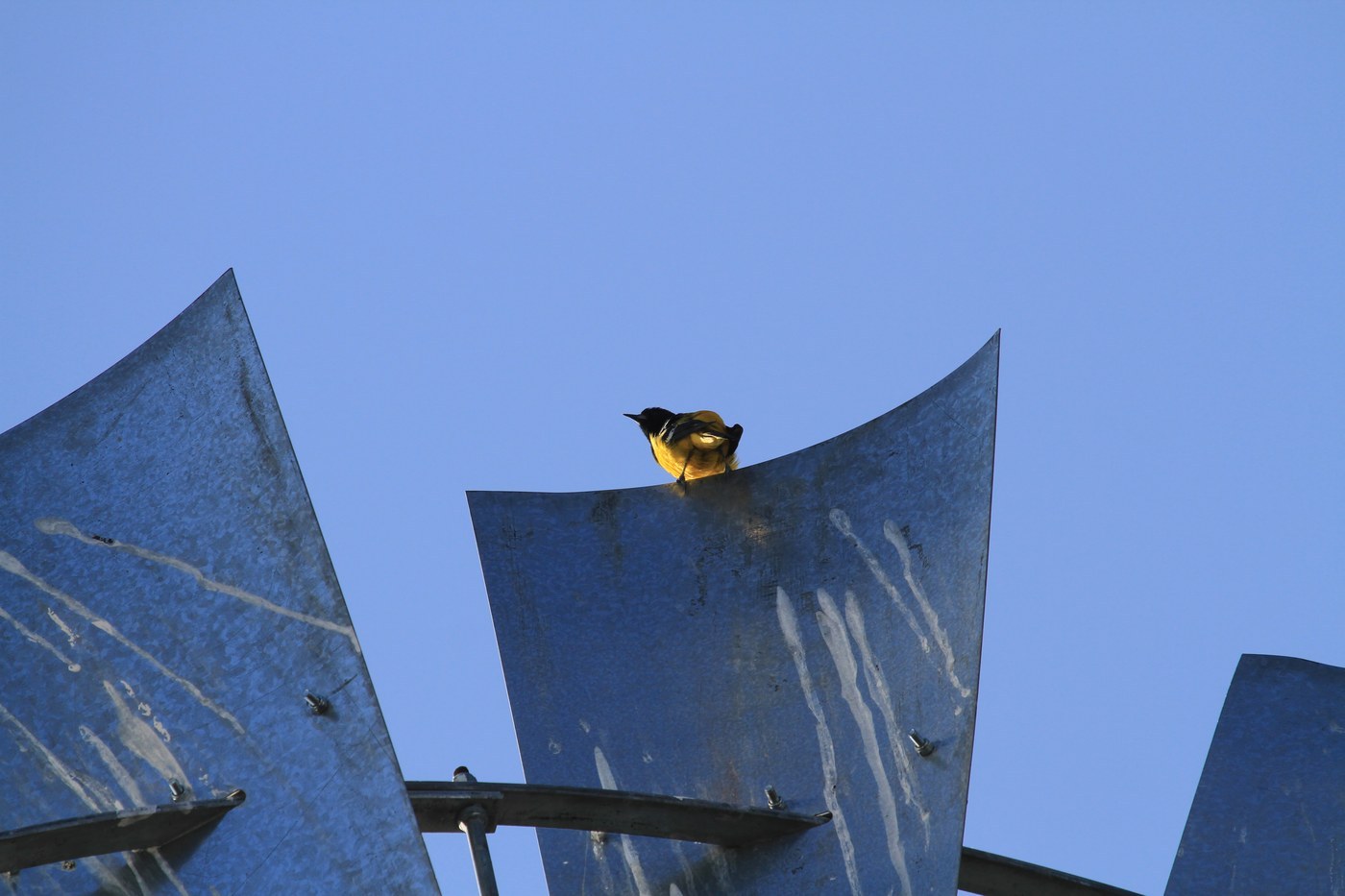
What Scott's Oriole's Feathers Look Like
Scott's Oriole is a desert-adapted songbird with a bold, high-contrast plumage that sets it apart from most other North American orioles. Adult male feathers show a solid black hood, back, throat, and upper breast, sharply set off against a lemon-yellow belly, rump, and shoulder patch — the lemon-yellow tone here is notably cooler and cleaner than the warmer orange found in many related orioles, so a yellow feather with a distinctly lemon (not orange) cast is a useful first clue. Wing feathers are black with white wing bars and white edging on the flight feathers, providing crisp white highlights against the black. Tail feathers are black with yellow at the base of the outer feathers, forming yellow corners visible when the tail is fanned. Females and immatures are considerably duller, olive-yellow with darker, blackish-olive wings and only a partial or absent black hood, but they retain the same underlying lemon-yellow rather than orange tone. Feathers are small to medium, typically 4-9 cm, consistent with a mid-sized songbird.
Step-by-Step: Is This Feather From a Scott's Oriole?
- Check the shade of yellow: a clean, cool lemon-yellow rather than warm orange is a key first clue.
- Look for a solid black hood/back feather: an unstreaked, uniformly black feather from the head/back region supports adult male ID.
- Search for white wing bars: crisp white edging on black wing feathers is diagnostic.
- Examine tail feathers for yellow corners: yellow at the base of otherwise black outer tail feathers is a useful confirming sign.
- Assess habitat: found in desert scrub, yucca, and agave country of the Southwest, not humid woodland.
- Rule out orange tones: any warm orange-red feather points away from this species toward a different oriole.
Similar Species & How to Tell Them Apart
Hooded Oriole, which shares some desert and palm-oasis habitat, shows a warmer orange-yellow to orange body color rather than Scott's clean lemon-yellow, plus a more extensively black throat patch that doesn't fully form the solid hood seen in Scott's Oriole. Bullock's Oriole, common across much of the same western range, is largely orange with a black eyeline and crown rather than a full black hood, and shows a larger white wing patch rather than narrow wing bars, making the overall pattern noticeably different once compared side by side. Baltimore Oriole, mostly an eastern species with limited range overlap, is deep orange (not lemon-yellow) with a solid black hood similar in extent to Scott's, but the warmer orange tone and different wing bar pattern (broader white wing patch) help separate the two where ranges might meet.
Where & When You'll Find Them
Scott's Oriole is a bird of arid and semi-arid country in the southwestern United States and Mexico, strongly associated with yucca, agave, and desert grassland habitats, often nesting directly in the leaves of yucca plants. Feathers are most likely to be found near yucca stands and desert scrub where the birds forage for insects and nectar, as well as near nest sites woven into yucca leaves. This species is a fairly short-distance migrant, arriving on breeding grounds in spring (March-April) and departing by late summer, so feathers are most common from spring through late summer, with the post-breeding molt in July and August likely producing the highest volume of fresh feathers before birds move south for winter.
Frequently asked questions
What's the best clue to separate Scott's Oriole from other yellow orioles?
A clean, cool lemon-yellow tone (rather than warm orange) paired with a solid black hood and white wing bars is the most reliable combination.
How is this different from Hooded Oriole?
Hooded Oriole shows a warmer orange-yellow color and a less complete black hood, while Scott's Oriole has a cooler lemon-yellow and a fully solid black hood.
Does this species have orange feathers at all?
No, true Scott's Oriole feathers are lemon-yellow and black; any warm orange feather suggests a different oriole species.
Where should I expect to find these feathers?
Near yucca, agave, and desert scrub habitat in the southwestern U.S. and Mexico, often close to nests woven into yucca leaves.
When is molt most active?
July and August, following the breeding season, before the birds migrate south for winter.