
How to Identify Sarus Crane Feathers
A guide to the pale gray body plumage and blackish flight feathers of the Sarus Crane, the world's tallest flying bird, and how to tell it apart from other large cranes.
Read the full Sarus Crane encyclopedia entry →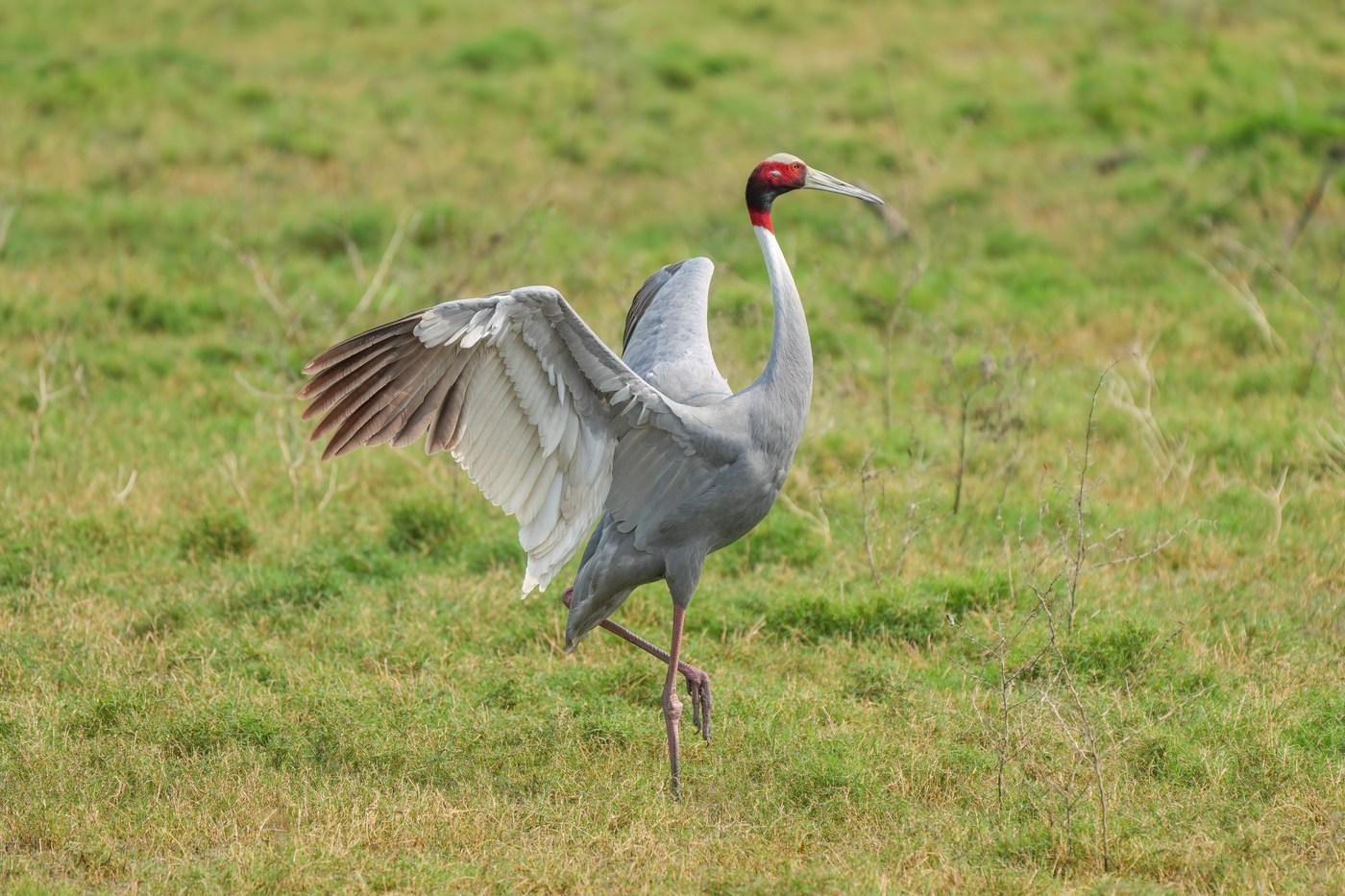
What Sarus Crane's Feathers Look Like
As the tallest flying bird in the world, Sarus Crane produces some of the largest feathers you're likely to encounter: body and covert feathers commonly measure 15-25 cm, with primary flight feathers reaching 35-45 cm and possessing thick, sturdy shafts. The bulk of the body plumage is a soft pale gray, smooth and unmarked, without streaking or barring of any kind. Primaries and outer wing feathers are noticeably darker, a deep blackish-gray to black, contrasting with the paler body and inner wing feathers. Unlike Sandhill Crane, Sarus Crane feathers typically stay a cleaner, unstained gray, since this species does not have the same well-documented mud-preening/staining habit — so rust-orange staining is a less reliable clue here than it is for its American relative. Elongated, drooping tertial feathers form a bustle-like plume over the tail, similar to other true cranes, with a slightly curled tip and looser, more open barb structure than typical wing feathers.
Step-by-Step: Is This Feather From a Sarus Crane?
- Check size first: very large feathers, body feathers 15+ cm and flight feathers up to 45 cm, are consistent with this exceptionally tall species.
- Confirm plain pale gray body color with no streaking or spotting.
- Look for dark blackish primaries contrasting with the paler body.
- Assess staining: unlike Sandhill Crane, expect relatively clean gray rather than heavy rust wash, though light staining can still occur.
- Search for elongated, drooping tertial (bustle) feathers with a looser, curled structure.
- Consider location: found in open wetlands, rice paddies, or grasslands of South or Southeast Asia, or northern/eastern Australia.
Similar Species & How to Tell Them Apart
Sandhill Crane overlaps closely in size and gray coloring but occurs only in North America and eastern Siberia (no range overlap with Sarus Crane) and shows more frequent, pronounced rust-orange staining on the back from its preening habit. Common Crane (Grus grus), found across Europe and Asia, is similar in size but typically shows a more complex head/neck feather pattern with black-and-white markings on the neck and a small red crown patch, whereas Sarus Crane's head/neck bare skin (not feathered) is red, so neck feathers themselves are plain gray, not patterned. Brolga, an Australian crane closely related and geographically overlapping with Sarus Crane in parts of Australia, is extremely similar in feather appearance; the two are best separated by bare head/neck skin extent and voice rather than by feather color alone, since gray body and dark primary feathers look nearly identical between them.
Where & When You'll Find Them
Sarus Crane inhabits wetlands, marshes, and increasingly agricultural land such as rice paddies across the Indian subcontinent and parts of Southeast Asia, with a separate population in northern Australia. Because this species is largely non-migratory or only locally nomadic (unlike Sandhill Crane's long migrations), feathers can be found near suitable wetland habitat throughout the year, with likely upticks during the molt period after breeding, when adults may go through a flightless wing molt phase and shed both flight and body feathers near nesting territories. Breeding occurs mainly during the rainy season across much of its range, so feathers from downy chicks or newly fledged juveniles are most likely to appear in the months following seasonal rains.
Frequently asked questions
How can I tell Sarus Crane feathers from Sandhill Crane feathers?
Geography is the best clue since their ranges don't overlap; feather-wise, Sandhill Crane shows more frequent rust staining while Sarus Crane tends to stay cleaner pale gray.
Are Sarus Crane feathers stained with rust like Sandhill Crane's?
Less commonly — Sarus Crane doesn't have the same well-known mud-preening habit, so unstained pale gray is more typical, though some staining can still occur.
What's the best way to distinguish Sarus Crane from Brolga?
Feather color alone is very difficult since both show plain pale gray body and dark primaries; range and the extent of bare red head/neck skin are more reliable field marks on the living bird.
How large are the flight feathers?
Primaries can reach 35-45 cm, reflecting the species' status as the tallest flying bird in the world.
Is there a specific molt season?
Feathers are found year-round near wetlands, but activity increases around the post-breeding molt and following the rainy-season breeding period.