
How to Identify Sage Thrasher Feathers
How the bold blackish streaking on white underparts and pale eye set the smallest thrasher apart from its desert relatives.
Read the full Sage Thrasher encyclopedia entry →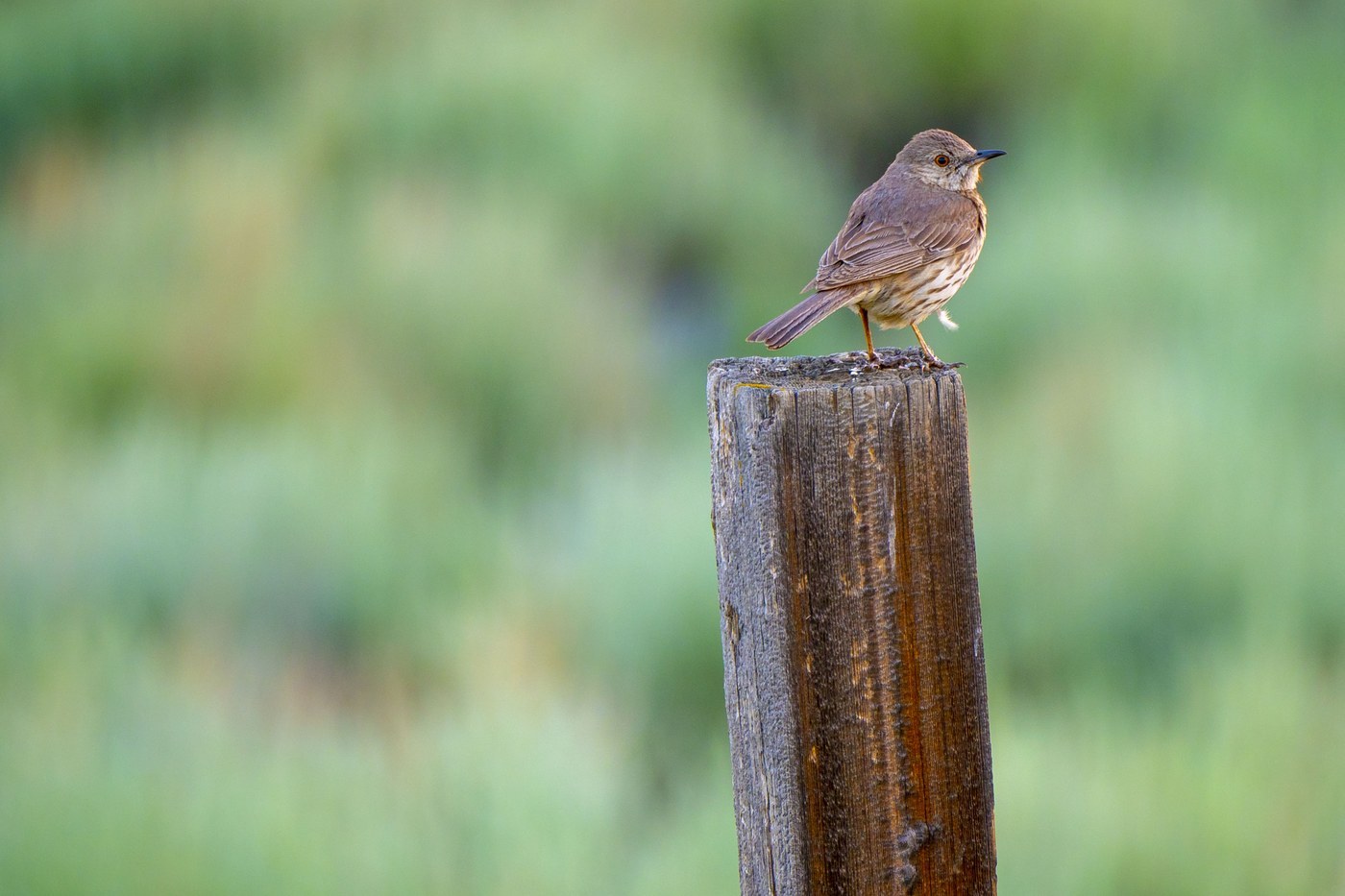
What Sage Thrasher Feathers Look Like
The Sage Thrasher is the smallest of the North American thrashers and, unusually for the group, shows heavy streaking rather than plain underparts. Breast and belly feathers are whitish with bold, blackish-brown streaking, a pattern quite different from the plain or lightly marked underparts of most other thrashers. Back and wing feathers are plain grayish-brown, unmarked except for narrow white wingbar edging on some covert feathers. The tail is relatively short for a thrasher, grayish-brown, with white corners/tips on the outer tail feathers, a useful confirming feature. The eye is pale yellow (a soft-tissue feature, not a feather trait, but useful field context). Compared to other thrashers, the bill-associated head feathers reflect a notably shorter, only slightly curved bill rather than the long, strongly decurved bill of many desert thrashers — though this is only indirectly reflected in feather proportions and overall smaller head size.
Step-by-Step: Is This Feather From a Sage Thrasher?
- Check underparts feathers for bold streaking. White-to-buff feathers with dark blackish-brown streaks are the strongest single clue, since most other thrashers show plain underparts.
- Look for white wingbar edging on covert feathers, an additional supporting mark.
- Check outer tail feathers for white corners or tips.
- Assess overall size. This is a small thrasher, noticeably more compact than Curve-billed or Bendire's Thrasher, so smaller feather size supports the ID.
- Consider back color. Plain grayish-brown without pattern, contrasting with the streaked underparts.
- Match habitat. Feathers found in sagebrush steppe in the western interior United States support this species strongly during the breeding season.
Similar Species & How to Tell Them Apart
The Northern Mockingbird, sometimes sharing habitat edges, is larger, has entirely unstreaked underparts, a longer tail, and bold white wing patches quite different from Sage Thrasher's narrower wingbar edging. Bendire's Thrasher, found in warmer desert habitat further south, has a longer, more evenly curved bill and shows fainter, more diffuse breast streaking rather than the bold, crisp streaks of Sage Thrasher. Curve-billed Thrasher, larger still, has a long, strongly downcurved bill and plainer, less contrastingly streaked underparts, along with an orange (not pale yellow) eye in some populations.
Where & When You'll Find Them
Sage Thrashers breed in sagebrush steppe across the interior western United States, migrating to winter mainly in the desert Southwest and northern Mexico, making this one of the few migratory thrashers rather than a year-round resident. Feathers are most likely to be found on the breeding grounds in sagebrush habitat during spring and summer, with the post-breeding molt occurring before migration in late summer, and a second window of feather drop possible on the wintering grounds in southwestern deserts.
Frequently asked questions
What is the key feature separating this species from other thrashers?
Bold blackish-brown streaking on white underparts, unusual among thrashers, most of which have plain or lightly marked underparts.
Are the wings patterned?
Yes, with narrow white wingbar edging on some covert feathers, though nothing as bold as a mockingbird's white wing patches.
How does the tail help confirm the ID?
Outer tail feathers show white corners or tips, a useful supporting feature alongside the streaked underparts.
How is this different from a Bendire's Thrasher feather?
Bendire's Thrasher has fainter, more diffuse breast streaking and comes from a bird with a longer, more evenly curved bill, versus Sage Thrasher's bold, crisp streaking and shorter bill.
Does this species migrate?
Yes, unusually for a thrasher, it migrates from sagebrush breeding grounds to winter in the desert Southwest and northern Mexico.