
How to Identify Rose-ringed Parakeet Feathers
How the extremely long, tapering green tail feathers and rose-black neck ring mark a Rose-ringed Parakeet feather among feral parrot flocks.
Read the full Rose-ringed Parakeet encyclopedia entry →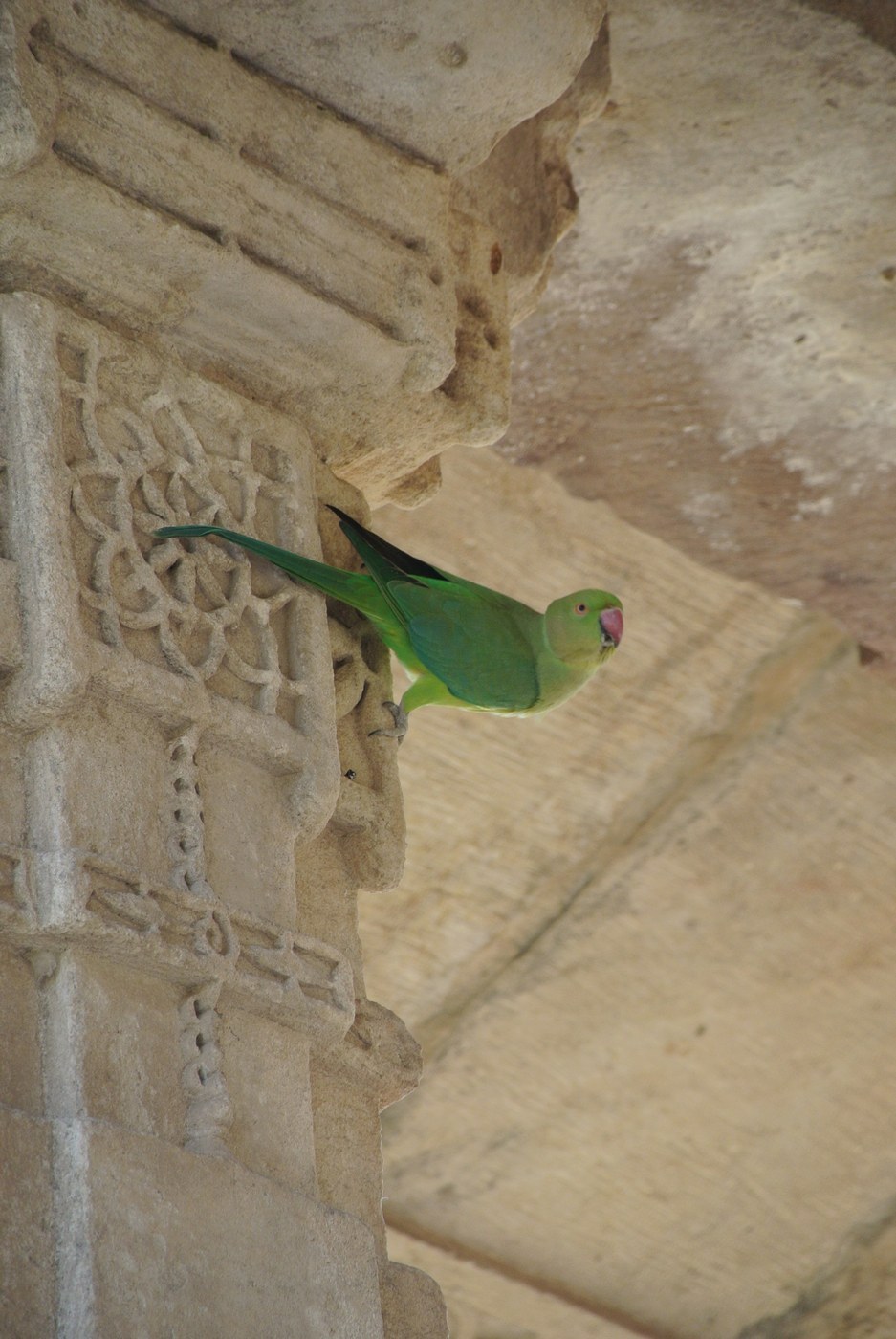
What Rose-ringed Parakeet Feathers Look Like
Rose-ringed Parakeets are built around one standout feature: exceptionally long, wedge-shaped central tail feathers, often 20–30 cm on their own and tapering to a fine point — proportionally longer than almost any other commonly encountered parakeet. Body and covert feathers are a uniform bright grass-green, with a slight blue-green wash on the nape and hindneck. Wing flight feathers are green with subtle blue tips on the outer primaries. Males carry the namesake feature on the throat and neck: a narrow black chin stripe that continues into a rose-pink neck ring, though this ring is only present on facial/neck feathers, not on flight or tail feathers.
The texture of the feathers has the smooth, slightly waxy feel typical of parrots, with a pale yellowish shaft visible when held to the light. Tail feathers are blue-green above and yellow-green below.
Step-by-Step: Is This Feather From a Rose-ringed Parakeet?
- Measure tail feather length. Anything approaching 20+ cm and tapering to a narrow point strongly suggests this species over other feral parakeets.
- Confirm the green color and waxy texture. Bright grass-green with a smooth, slightly powdery feel is typical of parrot feathers generally, so combine with shape.
- Look for a rose or black facial feather. A small feather showing a black-to-rose gradient is from the neck ring area and is close to diagnostic.
- Check the primaries for blue tips. Blue-tinged wingtip feathers on an otherwise green wing support this ID.
- Consider the setting. Urban parks and city trees with large feral flocks are the classic source.
Similar Species & How to Tell Them Apart
The Monk Parakeet, another common feral species, has a grey face and breast rather than solid green, and a noticeably shorter tail, so any grey-based feather points away from Rose-ringed. The Alexandrine Parakeet is larger overall with the same black-bordered-rose neck ring but adds a maroon shoulder patch on the wing coverts — a maroon feather from the shoulder area indicates Alexandrine rather than Rose-ringed. The Plum-headed Parakeet is smaller with males showing a plum-purple head instead of green, making head feathers the quick giveaway there.
Where & When You'll Find Them
Native to sub-Saharan Africa and South Asia, Rose-ringed Parakeets have established large, self-sustaining feral populations in cities across Europe (notably London), the Middle East, and parts of the U.S., typically centered on parks with large roost trees. Because they live in mild climates and molt gradually across the year rather than in one concentrated period, feathers can be found under roost and feeding trees in city parks in any season, though numbers often peak in late summer and early autumn after the main annual molt.
Frequently asked questions
How long is a typical Rose-ringed Parakeet tail feather?
The central tail feathers can reach 20-30 cm including their tapering tip, making them proportionally the longest feathers of any commonly seen feral parakeet.
Do females have the rose neck ring too?
No, the black chin stripe and rose-pink ring are male-only features; females and juveniles have plain green necks without the ring.
Is the green color from pigment or structure?
It's largely pigment-based (psittacofulvins) combined with feather structure, giving the bright, slightly matte grass-green seen in hand, distinct from the more iridescent green of some songbirds.
Can I find these feathers outside of cities?
Yes, in their native range across South Asia and Africa they occur in open woodland, farmland, and villages, not just urban parks.
What time of year do most feathers turn up in feral European populations?
Late summer into autumn, following the main molt, though mild-climate populations shed feathers in smaller numbers year-round.
Rose-ringed Parakeet identified by the community
Recent Rose-ringed Parakeet feathers identified with Feather Identifier.


