
How to Identify Rock Bunting Feathers
How to spot the grey-and-black striped head feathers and rufous body of the Rock Bunting, a streaky songbird of rocky hillsides across southern Europe and Asia.
Read the full Rock Bunting encyclopedia entry →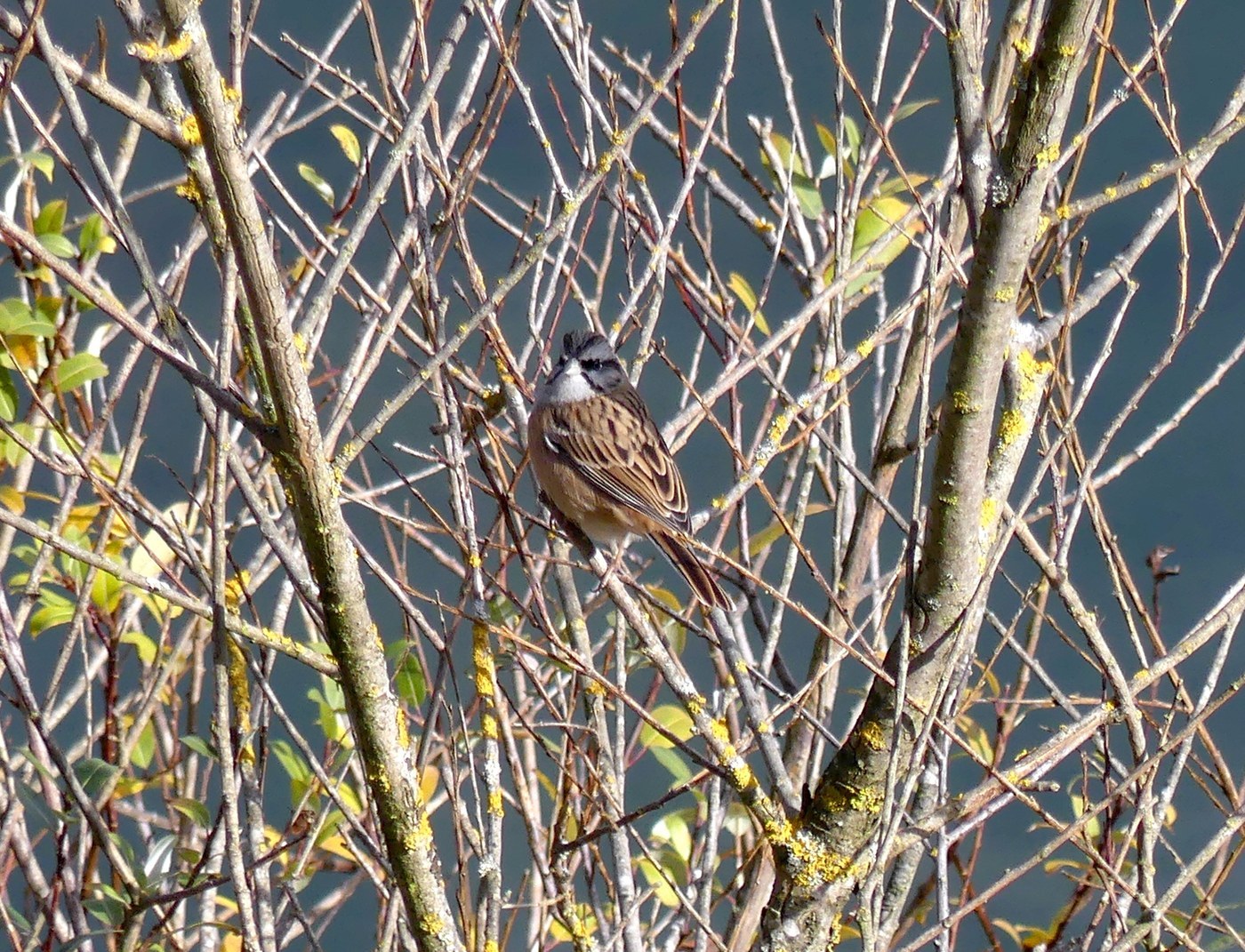
What Rock Bunting Feathers Look Like
The Rock Bunting (Emberiza cia) is a streaky, ground-loving songbird found on dry rocky slopes across southern Europe, North Africa, and parts of Asia, and its feathers combine bunting-typical streaking with a distinctive head pattern.
- Head feathers: pale blue-grey with bold black stripes running through the crown and behind the eye — this striped grey-and-black head pattern is one of the most useful clues for the species, quite different from the plainer heads of many other buntings.
- Back feathers: warm rufous-brown with dark streaking, giving a streaky, camouflaged look typical of open-country buntings.
- Underparts: rich rufous-orange on the belly and flanks, unstreaked and warmer in tone than the streaked back — a useful contrast within the same bird's plumage.
- Throat feathers: pale grey, part of the same grey head pattern, unstreaked and clean-looking against the darker head stripes.
- Wing feathers: brown with buff-white fringing/wing bars, moderate in size for a small songbird.
- Tail feathers: brown with white outer edges, visible as flashes of white when the tail is fanned in flight — an outer tail feather with a clean white edge is a useful supporting clue.
- Size: small songbird scale, similar to a sparrow or other bunting, with flight feathers typically under 7 cm.
Step-by-Step: Is This Feather From a Rock Bunting?
- Check for grey-and-black head striping. A pale blue-grey feather with bold black stripe markings, if it's a head feather, is a strong initial clue for this species over plainer-headed buntings and sparrows.
- Look for the rufous-grey contrast. Rufous-orange underpart feathers found alongside grey-and-black-striped head feathers and streaky brown back feathers support Rock Bunting specifically.
- Examine tail feather edges. White outer edges on brown tail feathers is consistent with this species and many Emberiza buntings generally.
- Assess size. A small, sparrow-sized feather set fits the bunting family generally; the specific color combination narrows it to this species.
- Consider habitat and range. Found on a dry, rocky hillside, vineyard terrace, or scree slope in southern Europe or nearby regions, a striped grey-headed, rufous-bodied small feather set strongly supports Rock Bunting.
Similar Species & How to Tell Them Apart
- Cirl Bunting: shows yellow in the face and underparts rather than the Rock Bunting's grey-and-rufous scheme, an easy color distinction.
- Ortolan Bunting: has a greenish-grey head and yellow throat/eye-ring area rather than the black-striped grey head of the Rock Bunting.
- Meadow Bunting (Asian range overlap): very similar overall pattern, but tends to show a bit more white in the face and slightly different head stripe proportions; range is the most useful separator where the two overlap in Asia.
- House Sparrow: superficially similar streaky brown look, but lacks the Rock Bunting's clean grey head striping and rufous unstreaked underparts.
Where & When You'll Find Them
Rock Buntings favor dry, rocky, sparsely vegetated slopes, scrubby hillsides, vineyard terraces, and mountain foothills across southern Europe, North Africa, the Middle East, and into parts of central and eastern Asia, often at moderate elevations. Feathers are most likely found on these open rocky slopes near low scrub used for cover and nesting, with molt following the breeding season in mid-to-late summer, and northern/higher-elevation populations that migrate to lower ground or milder climates in winter potentially dropping feathers along the way during that movement.
Frequently asked questions
What's the most distinctive single feature to look for?
The bold black stripes running through an otherwise pale grey head feather is the most useful single clue, since it's a combination not shared by many co-occurring buntings and sparrows.
How do I rule out a house sparrow?
House Sparrow lacks the Rock Bunting's clean grey-and-black striped head and warm unstreaked rufous underparts, showing a more uniformly streaky brown look overall instead.
Does elevation matter for finding this feather?
Yes, Rock Buntings favor dry rocky slopes often at moderate to fairly high elevations, so a matching feather found in a lush lowland garden is less likely to be this species.
Are juvenile feathers different from adults?
Juveniles are duller and more diffusely streaked overall with less crisp head striping, so a washed-out version of the pattern can still indicate a young Rock Bunting rather than a different species.