
How to Identify Ring Ouzel Feathers
A guide to the scaly-edged black feathers and white breast crescent of the Ring Ouzel, a mountain-dwelling thrush related to the Blackbird.
Read the full Ring Ouzel encyclopedia entry →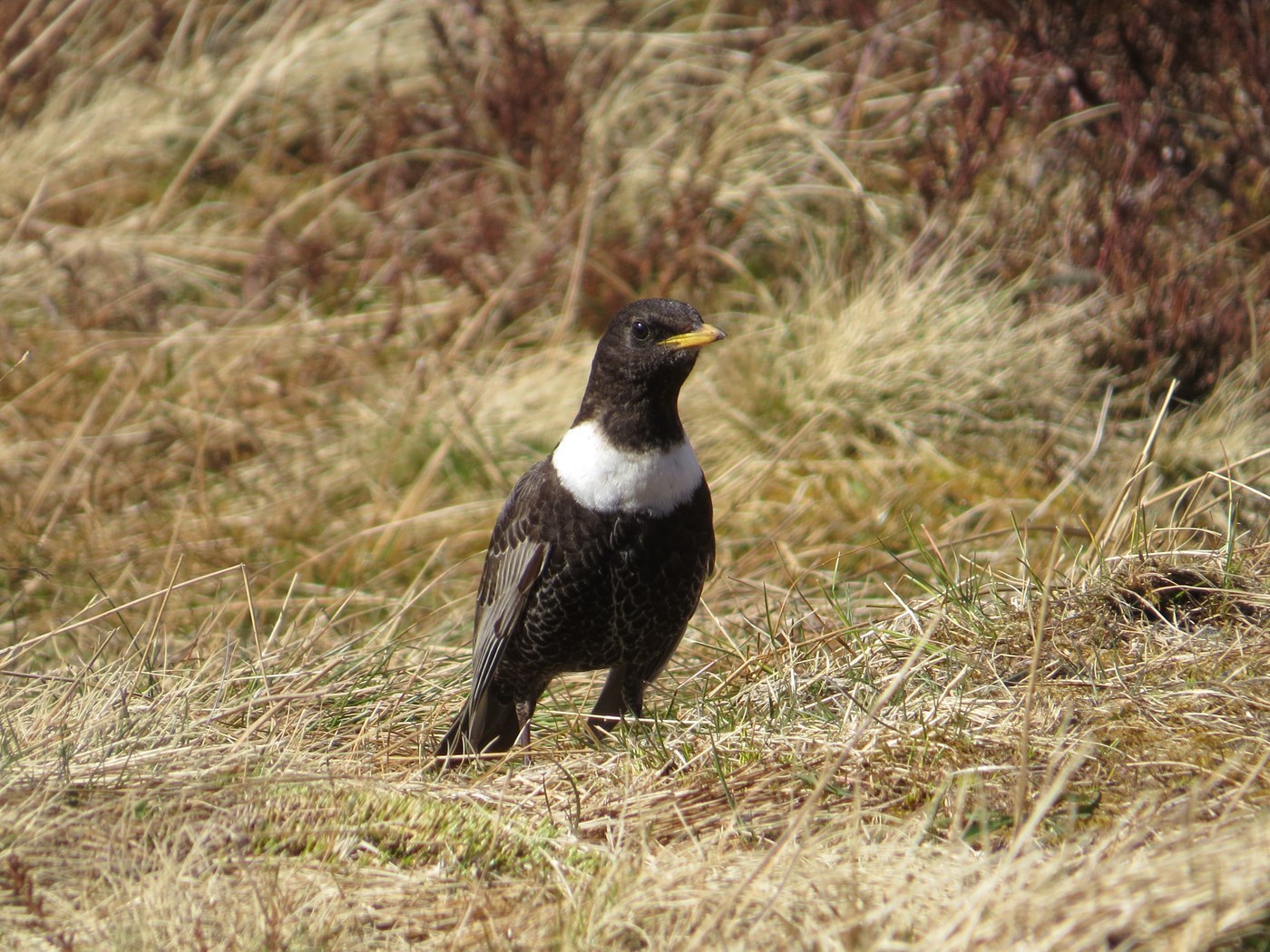
What Ring Ouzel Feathers Look Like
The Ring Ouzel (Turdus torquatus) is a thrush of upland moors and mountains across Europe, and its feathers share the family's classic look with one very distinctive twist.
- Male body feathers: sooty black overall, but each feather — especially on the belly, flanks, and wing coverts — has a pale silvery-grey scalloped fringe, giving a distinctly scaly, frosted appearance unlike the flat black of a true Blackbird.
- Breast crescent feathers: a bold white crescent-shaped patch across the upper breast is made up of clean white feathers that stand out sharply against the black surrounding plumage — this is the single most diagnostic feature of the species.
- Female feathers: similar pattern but browner overall rather than true black, with a duller, more buff-white breast crescent, sometimes less crisply defined.
- Wing feathers: black-brown with pale fringing along the flight feather edges, creating a subtly pale wing panel visible in flight and identifiable from individual flight feathers by their pale edging.
- Bill/leg color: not feather-related, but males have a yellow bill, useful if a beak is found alongside feathers.
- Texture and size: typical thrush-family feathers — medium-sized, moderately stiff, similar in scale to a Blackbird or American Robin feather.
Step-by-Step: Is This Feather From a Ring Ouzel?
- Look for scalloped, frosty fringing. Black feathers with pale silvery-grey crescents on their tips, especially on body and covert feathers, are a strong initial clue distinguishing this species from a plain-black thrush.
- Check for a white crescent feather. A clean white feather with a slightly curved, crescent-like shape found among black or brown feathers strongly supports Ring Ouzel, especially in upland habitat.
- Assess overall darkness. True black feathers (versus dark brown) with scalloping suggest a male; brown feathers with duller scalloping suggest a female or immature.
- Compare wing edges. Pale-fringed flight feathers, giving a subtly two-toned look along the wing, support this identification over an unmarked Blackbird feather.
- Factor in elevation and habitat. Found on a moor, upland heath, or mountainside rather than a garden or woodland strongly favors Ring Ouzel over the closely related, much more common Blackbird.
Similar Species & How to Tell Them Apart
- Common Blackbird: the closest relative and most likely confusion species — Blackbird feathers are flatter, more uniformly glossy black without the scalloped pale fringing, and lack any white breast crescent.
- Fieldfare: shows grey on the head and rump rather than an all-black body, and lacks the crescent-shaped white breast patch.
- Redwing: much smaller with a distinctive orange-red flank patch rather than any white crescent, and an overall browner tone.
- Mistle Thrush: larger, paler grey-brown overall with bold dark spotting rather than scalloped fringing, and no white crescent.
Where & When You'll Find Them
Ring Ouzels breed on upland moorland, rocky mountainsides, and heather-covered slopes across Britain, Scandinavia, and mountain ranges of central and southern Europe, generally above where Blackbirds are common, then migrate to winter in the Mediterranean region and North Africa. Feathers are most likely found on breeding territories in spring and summer, particularly near rocky outcrops and gullies used for nesting, with additional feather drop during the post-breeding molt in late summer before birds head south for winter.
Frequently asked questions
What's the single best clue that separates this from a Blackbird?
The pale, scalloped fringing on otherwise black feathers plus a crescent-shaped white breast feather are both absent in the closely related Blackbird, making them the most reliable distinguishing features.
Why do some feathers look more brown than black?
Females and immature Ring Ouzels are browner overall than adult males, so a scalloped brown feather with a duller whitish crescent can still belong to this species, just a different age or sex.
Would I find this feather in a lowland garden?
It's unlikely — Ring Ouzels favor upland moorland and mountain habitat away from the gardens and woodlands where the similar-looking Blackbird thrives, so habitat context is a useful supporting clue.
Does the white crescent feather ever appear incomplete or faint?
Yes, especially in females and younger birds the crescent can be duller, narrower, or buff-tinged rather than a crisp bright white, so a faint pale breast band shouldn't be ruled out automatically.