
How to Identify Red-legged Honeycreeper Feathers
A guide to identifying Red-legged Honeycreeper feathers by their turquoise-blue male body, black wings and mask, curved bill, and red legs, distinguishing them from the similar Purple Honeycreeper.
Read the full Red-legged Honeycreeper encyclopedia entry →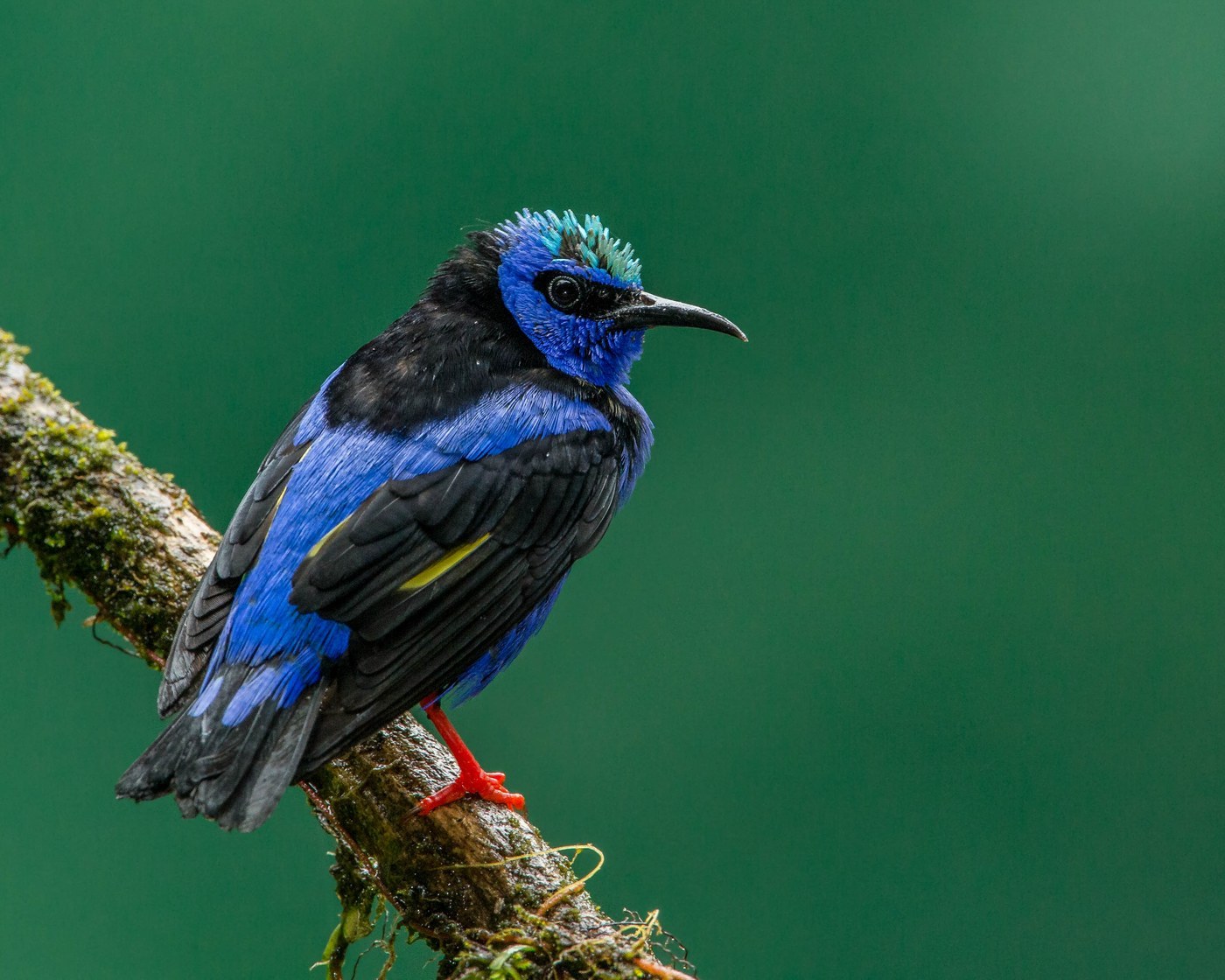
What Red-legged Honeycreeper's Feathers Look Like
Red-legged Honeycreeper is a small, brilliantly colored nectar-feeding tanager relative, and adult male feathers show a striking, saturated color scheme. Body feathers — crown, nape, back, and underparts — are a vivid turquoise to violet-blue, with the crown specifically showing a brighter, paler sky-blue than the rest of the body, a useful two-tone detail if a crown feather is found alongside a body feather. Wings, tail, and a small mask around the eye are solid black, sharply contrasting against the blue body.
A hidden feature worth checking on wing feathers: males show a small bright yellow patch on the underside of the wing (axillars/underwing coverts), normally concealed but visible if the wing is spread or a covert feather is examined directly — a distinctive, easily overlooked clue. Females and immatures are entirely different, showing an overall green body (brighter green above, paler below), without the male's blue tones, sometimes with faint bluish tinges on the head. The bill, if attached, is notably long, thin, and decurved, adapted for probing flowers.
Step-by-Step: Is This Feather From a Red-legged Honeycreeper?
- Check for turquoise-blue body feathers with a black mask, wings, and tail. This combination is highly distinctive for an adult male.
- Look for a brighter sky-blue crown feather. A paler blue crown feather, distinct from the slightly deeper blue of the body, supports this species specifically.
- Examine underwing covert feathers for yellow. A small hidden yellow patch on the underwing is a useful, distinguishing confirmation if present.
- Assess green feathers for females/immatures. An overall green tone, brighter above and paler below, without any blue, is consistent with a female or immature bird.
- Note bill shape if attached. A long, thin, downward-curved bill supports a nectar-feeding honeycreeper.
Similar Species & How to Tell Them Apart
- Purple Honeycreeper — males are deep purple (not turquoise-blue) with black wings and a black throat patch, and importantly have yellow (not red) legs, a useful distinguishing soft-tissue detail if skin is attached.
- Green Honeycreeper — males are overall green with a black head, entirely different from the turquoise-blue body of Red-legged Honeycreeper.
- Blue Dacnis — males show blue body with a black back, throat, and wings, but lack the honeycreeper's sharply decurved bill and the yellow underwing patch.
Where & When You'll Find Them
Red-legged Honeycreepers inhabit forest edge, second growth, plantations, and gardens across Central America and much of tropical South America, foraging actively for nectar, fruit, and insects, often in mixed-species flocks. Feathers are most often found near flowering trees and shrubs, with breeding and molt timing varying by region in this widespread tropical species, generally following the local rainy season when flowering and fruiting resources peak, making feathers most likely to turn up during and shortly after that period rather than on a single fixed calendar date.
Frequently asked questions
What's the clearest feather clue for a male Red-legged Honeycreeper?
A turquoise-blue body feather paired with a black wing, tail, or mask feather, plus a brighter sky-blue crown feather — this specific color combination is highly distinctive.
How do I tell this apart from Purple Honeycreeper?
Check the body color and leg color if attached — Purple Honeycreeper males are deep purple with yellow legs, while Red-legged Honeycreeper males are turquoise-blue with red legs.
What's the significance of a small yellow feather from the underwing?
Male Red-legged Honeycreepers have a hidden yellow patch on the underwing coverts, normally concealed but visible when the wing is spread or a loose covert feather is examined.
Why would a candidate feather be green instead of blue?
Females and immatures are entirely green rather than blue, so a green feather with no blue tones can still belong to this species, just not an adult male.
Where and when are these feathers most likely to be found?
Near flowering trees and shrubs in forest edge and garden habitat across Central and tropical South America, most often during and after the local rainy season.