
How to Identify Purple Heron Feathers
A field guide to recognizing the long, slender, chestnut-and-slate plumes of the Purple Heron and separating them from Grey Heron feathers.
Read the full Purple Heron encyclopedia entry →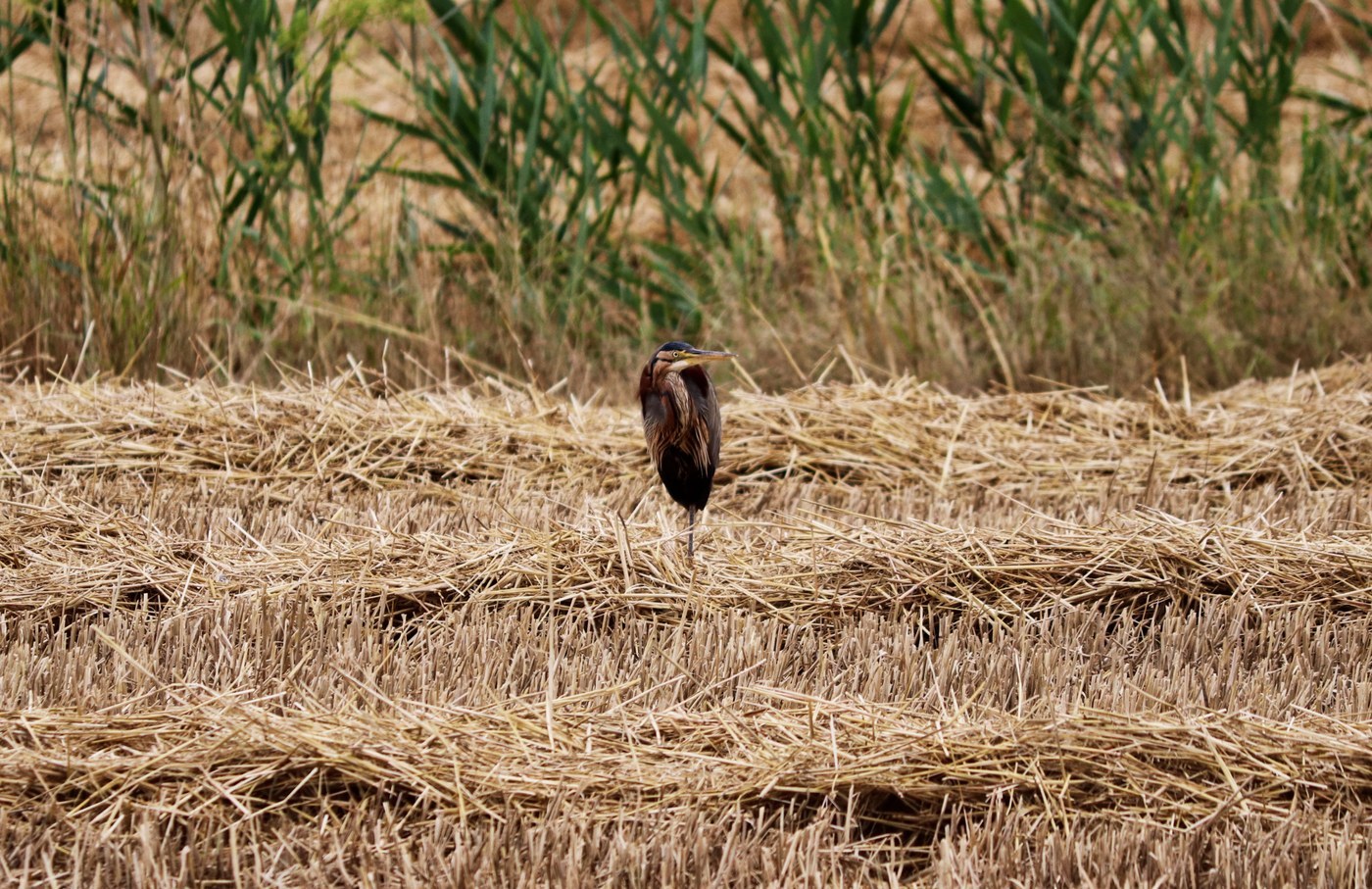
What Purple Heron's Feathers Look Like
The Purple Heron is a slimmer, more colorful cousin of the Grey Heron, and its feathers reflect that. Look for:
- Neck and head feathers: elongated, lance-shaped, and strikingly patterned — rufous-chestnut with bold black longitudinal stripes running down the front of the neck. These are unmistakable and rarely confused with any other heron.
- Back and scapular feathers: slate-grey with a distinct maroon or wine-purple wash, especially on breeding adults, which also grow long, wispy scapular plumes that droop over the folded wing.
- Flight feathers (primaries/secondaries): dark blackish-grey, long and strongly tapered, with a slightly glossy sheen but no barring.
- Underside/belly feathers: chestnut to rufous-brown, softer and more downy than the back feathers.
- Shaft color: pale cream to straw on body feathers, darkening to grey-brown on the flight feathers.
- Size: primaries can run 20–28 cm; neck plumes are narrow and can reach 15+ cm despite being thin.
Step-by-Step: Is This Feather From a Purple Heron?
- Measure it. Anything over 15 cm with a heron-like lance shape is in the right size range for a Purple Heron's neck or back plume.
- Check for chestnut-and-black neck striping. If the feather is narrow, pointed, and rufous with black streaks, you likely have a Purple Heron neck feather — this pattern is diagnostic and not shared with Grey Heron.
- Look at the back feathers for a purple-maroon cast. Hold the feather in good light and tilt it; Purple Heron back plumage shows a warm wine tone that Grey Heron lacks (Grey Heron is cooler blue-grey).
- Inspect the vane for softness. Body and plume feathers are wispy and loosely barbed (typical heron ornamental plumage), while flight feathers are stiff, tapered, and asymmetrical.
- Rule out juveniles. Young birds are duller, browner, and lack strong chestnut tones, so a plain brown lance-shaped feather from a wetland could still be a juvenile Purple Heron.
Similar Species & How to Tell Them Apart
- Grey Heron: Much cooler grey-and-white tones overall, with a black head stripe (not neck striping) and no chestnut wash on the back — Grey Heron feathers look "colder" and greyer.
- Goliath Heron: Similar chestnut coloring but feathers are dramatically larger (Goliath is nearly twice the size), with heavier, coarser barbs.
- Squacco Heron: Also frequents similar wetlands but its feathers are buffy-cream, much smaller, and lack the black neck striping entirely.
- Bitterns: Neck feathers can look superficially streaked, but bittern feathers are shorter, broader, and mottled/blotched rather than cleanly striped.
Where & When You'll Find Them
Purple Herons favor dense reedbeds, marshes, and vegetated freshwater edges across Africa, southern Europe, and Asia, rather than open riverbanks — so feathers turn up caught in reeds or floating at the margins of reedy wetlands rather than on open mudflats. Molt is gradual and mostly occurs after breeding (late summer into autumn), when adults replace worn plumes, so late-summer wetland visits are the best time to find dropped feathers.
Frequently asked questions
Why do Purple Heron feathers look purple in some light but grey in others?
The purple tone is a subtle wash over an otherwise slate base, so it only shows clearly in warm, direct light. In shade the same feather can look plain grey-brown, which is why comparing feathers in consistent lighting matters.
Are the long neck plumes only found on adults?
The strongest chestnut-and-black striping develops on adult breeding birds. Juveniles and non-breeding birds show a duller, more diffuse version of the pattern, so a faint or washed-out striped feather can still belong to this species.
Can I tell male from female Purple Herons by their feathers?
No — the sexes are essentially identical in plumage, so feather color and pattern cannot be used to determine sex.
Why are the flight feathers so dark compared to the body?
Flight feathers need to be stiff and durable for sustained flapping flight, so they carry more melanin, which darkens them and adds strength, while the ornamental body and neck plumes are softer and more colorful for display and camouflage.