
How to Identify Pied Avocet Feathers
A guide to the bold black-and-white feather pattern of the Pied Avocet and how it differs from the American Avocet and other black-and-white shorebirds.
Read the full Pied Avocet encyclopedia entry →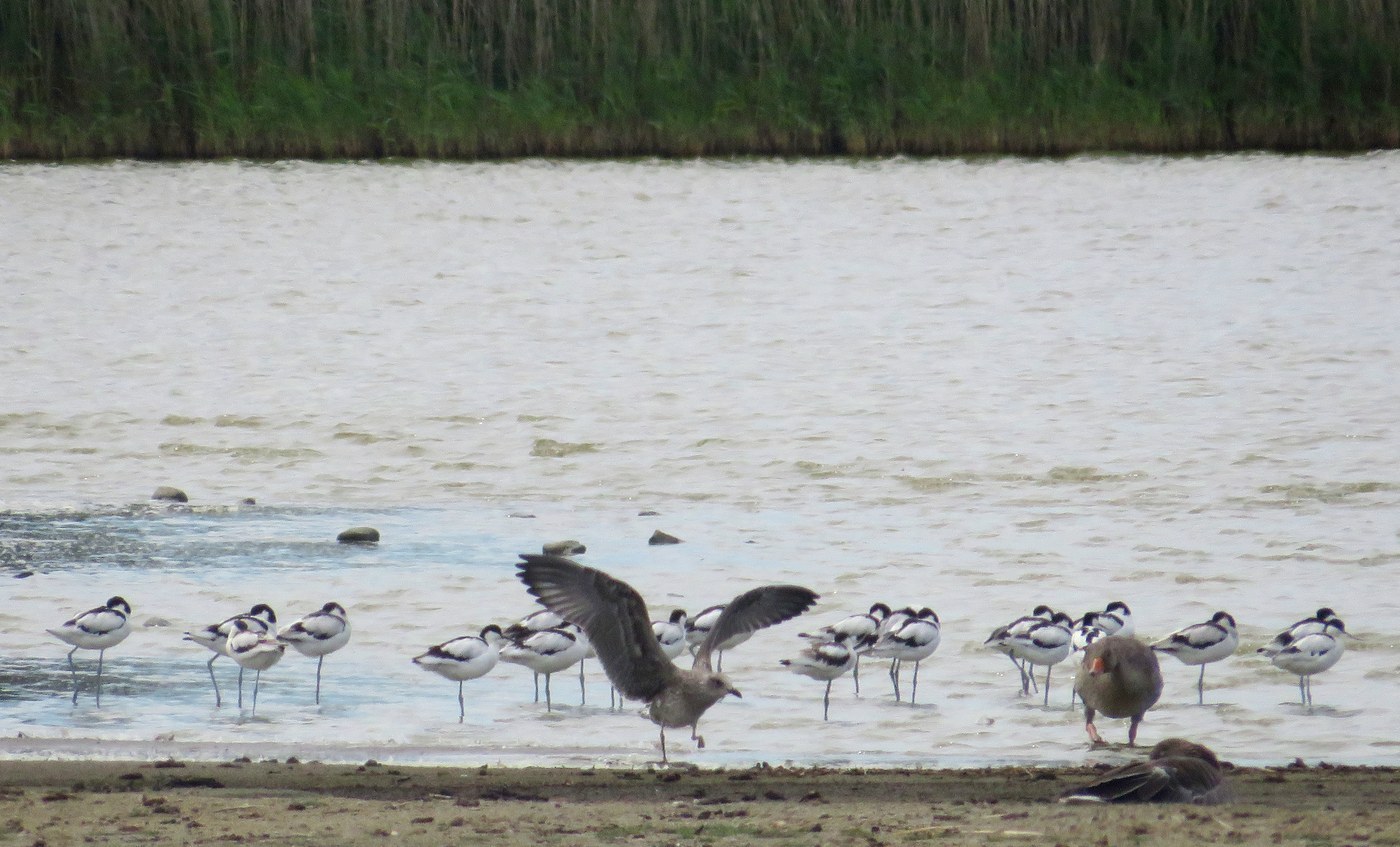
What Pied Avocet's Feathers Look Like
The Pied Avocet is a striking, unmistakable shorebird, and its feathers carry a bold, high-contrast pattern year-round:
- Head and crown feathers are solid black, forming a distinct cap
- Body feathers are otherwise clean white
- Scapular and wing covert feathers form bold black stripes/blocks against the white body, creating a dramatic striped pattern along the folded wing
- Primaries are solid black, contrasting sharply with the white body and inner wing
- Tail feathers are white, unmarked Feathers are moderately large for a shorebird, with long, elegant primaries reflecting the avocet's graceful flight, and the pattern remains essentially the same in all seasons and between sexes.
Step-by-Step: Is This Feather From a Pied Avocet?
- Check for pure black-and-white coloring with no buff, cinnamon, or rufous wash anywhere — this rules out its closest relative immediately.
- Look for bold black stripe/block patterning on scapular or covert feathers rather than plain black or plain white alone.
- Confirm solid black primaries contrasting against white secondaries/body feathers.
- Measure the feather — primaries several centimeters longer than a typical small sandpiper's, fitting a larger shorebird.
- Consider location and season — coastal lagoons, salt pans, and estuaries in Europe, Africa, or Asia support this species; no cinnamon-headed variant exists here in any season, unlike its American relative.
Similar Species & How to Tell Them Apart
- American Avocet: in breeding plumage shows a warm cinnamon-rust wash over the head and neck feathers, quite different from the Pied Avocet's solid black cap in every season — American Avocet's non-breeding gray-headed phase is closer in tone but still shows gray rather than crisp black.
- Black-winged Stilt: found in similar habitat and also black-and-white, but lacks the bold striped wing covert pattern, showing instead solid black wings against a white body with no black cap in most individuals, and has much longer, thinner pink-red legs (not feather-relevant, but useful for whole-bird confirmation).
- Pied Oystercatcher (where ranges might be confused): larger, bulkier feathers with a more solid black hood extending down the neck and back, rather than the sharply blocked cap-and-stripe pattern of the avocet.
Where & When You'll Find Them
Pied Avocets breed and forage in shallow coastal lagoons, salt pans, estuaries, and inland saline wetlands across Europe, parts of Africa, and Asia, sweeping their upturned bills side to side through shallow water and soft mud to catch small invertebrates. Many populations are migratory, moving between breeding wetlands and milder wintering estuaries, with some populations remaining resident in warmer parts of the range. Feathers are most likely to be found on the muddy or sandy margins of shallow lagoons and salt pans, with molt concentrated after the breeding season in late summer, when worn breeding feathers are replaced before migration or the onset of winter.
Frequently asked questions
What is the single most reliable clue for a Pied Avocet feather?
Pure black-and-white coloring with bold striped or blocked patterning on the wing coverts, and no cinnamon or buff wash anywhere.
How does this differ from an American Avocet feather?
American Avocet shows a warm cinnamon-rust wash on the head/neck in breeding plumage (or gray in winter), while Pied Avocet's cap is solid black year-round.
What habitat is most likely to produce this feather?
Shallow coastal lagoons, salt pans, and estuaries, or inland saline wetlands.
Do the sexes look different in feather pattern?
No, males and females are essentially identical in plumage.
When is molt most concentrated?
After the breeding season in late summer, before migration or the onset of winter.
Pied Avocet identified by the community
Recent Pied Avocet feathers identified with Feather Identifier.
