
How to Identify Philippine Eagle Feathers
How to recognize the massive size and distinctive shaggy blond nape crest that set Philippine Eagle feathers apart from any other bird of prey.
Read the full Philippine Eagle encyclopedia entry →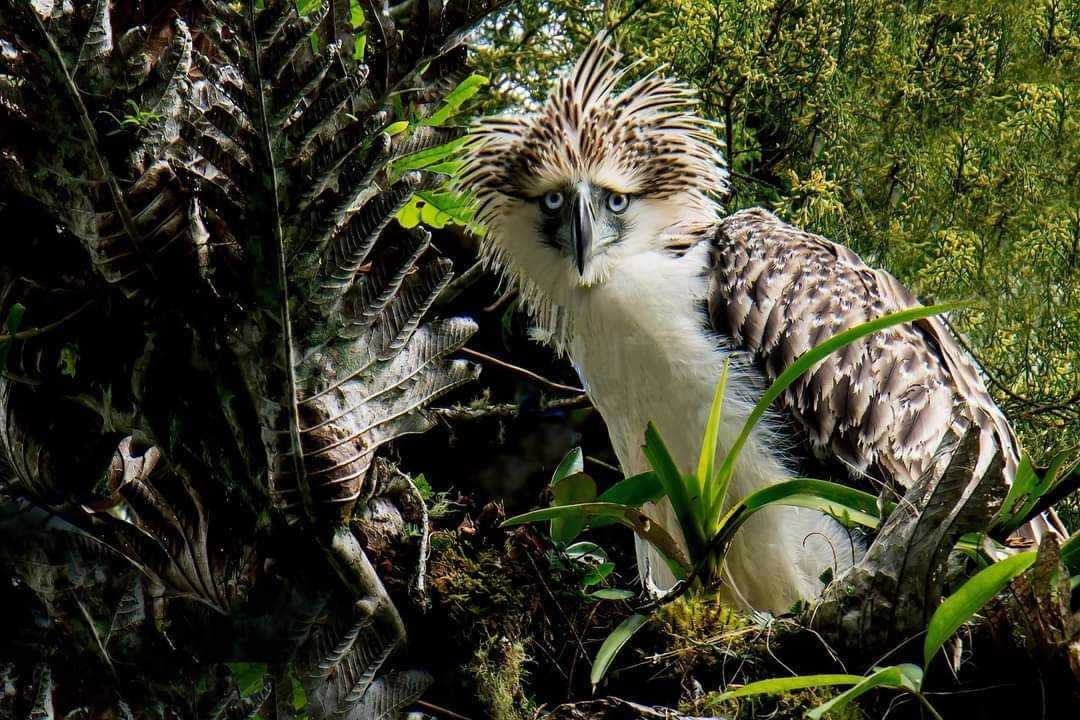
What Philippine Eagle's Feathers Look Like
The Philippine Eagle is among the largest eagles in the world, and its feathers are correspondingly enormous and distinctive:
- Nape and crown feathers are elongated, shaggy, and pale blond to cream-brown, forming a mane-like crest that can be raised — this is one of the most instantly recognizable feather features of any raptor in the world
- Back and wing feathers are dark brown, large and heavy
- Underpart feathers are creamy white to buff with fine dark shaft streaks, especially on the flanks and thighs
- Leg (tarsal) feathers extend fully down to the feet, typical of large "booted" eagles, so fully feathered leg material is consistent with this species
- Flight feathers are massive — primaries can reach 40+ cm — dark brown with darker barring Feathers are exceptionally large overall, reflecting a wingspan that can exceed 2 meters, among the biggest of any raptor feather you're likely to encounter.
Step-by-Step: Is This Feather From a Philippine Eagle?
- Check the size first. Any raptor feather approaching or exceeding 35-40 cm in length, found in the Philippines, should immediately suggest this species, since no other Philippine raptor approaches its size.
- Look for the shaggy blond nape/crest feathers — elongated, loosely webbed, pale cream-to-blond feathers unlike the sleek feathers found elsewhere on the body are highly diagnostic.
- Check underparts for fine dark shaft streaks on an otherwise creamy-white background.
- Confirm fully feathered leg material if present, consistent with a booted eagle rather than a bare-legged one.
- Cross-check location — this species is found only in old-growth and closed-canopy forest on four specific Philippine islands (Luzon, Samar, Leyte, Mindanao).
Similar Species & How to Tell Them Apart
- Philippine Hawk-Eagle: much smaller in every dimension, with a more contrasting barred tail and no shaggy blond nape crest.
- Crested Serpent Eagle: smaller, darker overall, with a short rounded crest rather than the long shaggy mane, and more heavily barred underparts.
- Any large domestic or feral bird feather: none approach the sheer size of Philippine Eagle flight feathers, so size alone rules out most confusion once carefully measured.
- Golden Eagle (not present in the Philippines but sometimes referenced for comparison): darker golden-brown nape feathers rather than the pale blond, looser crest of the Philippine Eagle, and occurs on a different continent entirely.
Where & When You'll Find Them
Philippine Eagles are restricted to large tracts of primary and old-growth rainforest on the islands of Luzon, Samar, Leyte, and Mindanao, where pairs hold enormous territories and hunt large prey like flying lemurs and civets from the canopy. The species has a very small remaining population, so any feather find is a rare event and should be treated as coming from genuinely undisturbed or lightly disturbed forest habitat. Breeding is slow, with pairs raising a single chick roughly every two years, and molt is correspondingly gradual and continuous rather than concentrated into a short season, so feathers may be found at any time of year near known nest or roost trees.
Frequently asked questions
What is the most distinctive feature of a Philippine Eagle feather?
The elongated, shaggy, pale blond-to-cream nape and crest feathers, unlike anything found on other Philippine raptors.
How large are Philippine Eagle flight feathers?
Primaries can exceed 35-40 cm, reflecting a wingspan of over 2 meters, among the largest of any raptor.
What do the underparts feathers look like?
Creamy white to buff with fine dark shaft streaks, especially on the flanks and thighs.
Are the legs feathered?
Yes, fully feathered down to the feet, typical of large booted eagles.
Where would a feather like this most likely be found?
In old-growth or primary rainforest on Luzon, Samar, Leyte, or Mindanao, given the species' restricted range.