
How to Identify Mountain Chickadee Feathers
How to identify the gray-backed, white-browed feathers of the Mountain Chickadee and distinguish them from Black-capped Chickadee look-alikes.
Read the full Mountain Chickadee encyclopedia entry →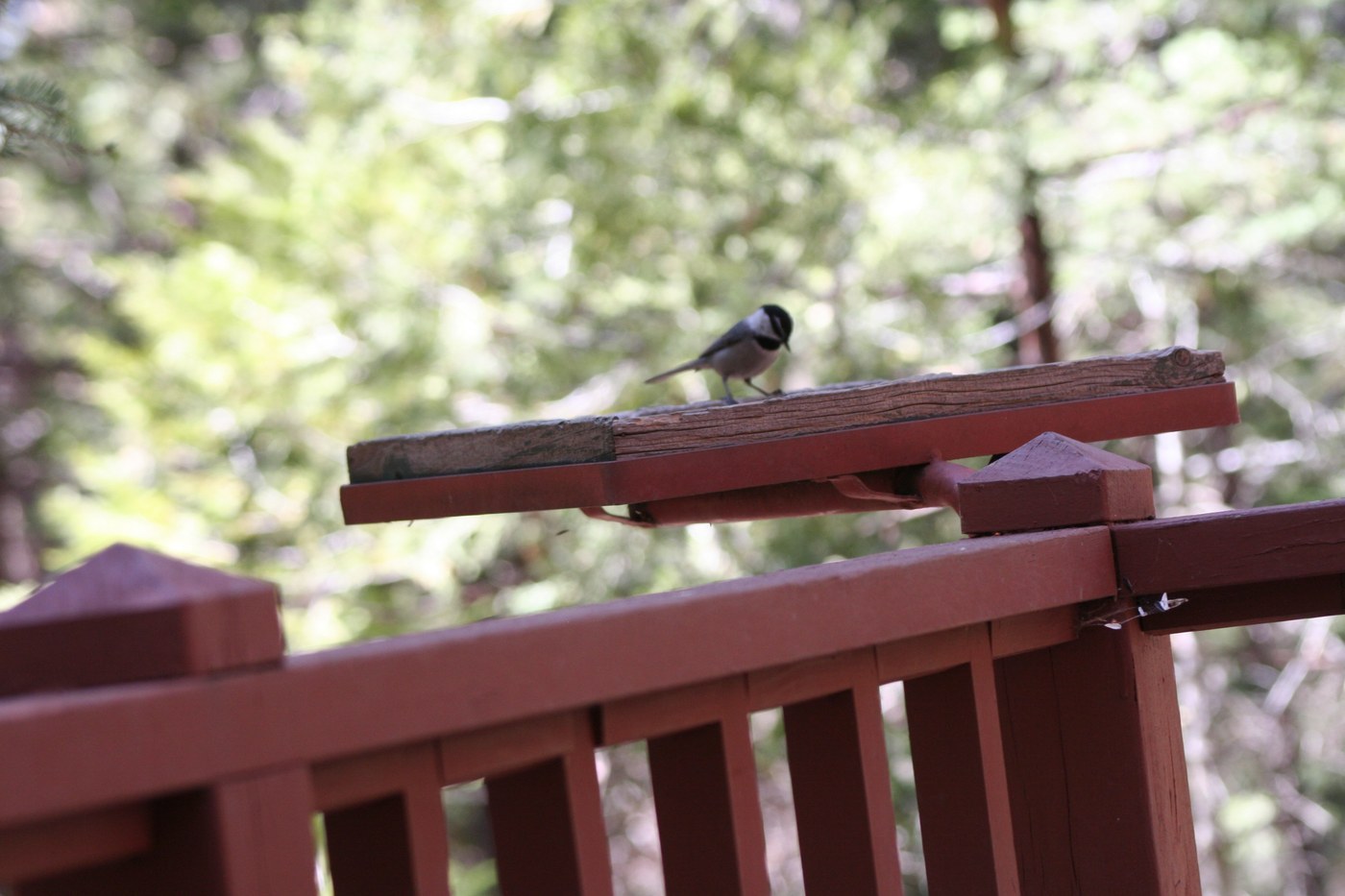
What Mountain Chickadee's Feathers Look Like
The Mountain Chickadee closely resembles its more familiar relatives, but one feather detail sets it apart immediately: a crisp white eyebrow stripe (supercilium) running above the eye, splitting the black cap from a black eyeline below — no other North American chickadee shows this stripe, making a head feather with this white line highly diagnostic. Aside from that stripe, the cap and throat bib are solid black, the cheek patch is white, and the back and wings are a plain soft gray, without the warmer buff or rusty tones some other chickadees show on the flanks. Flanks and belly are pale grayish-buff, a bit more muted than the brighter buffy flanks of Black-capped Chickadee. Flight feathers are gray with narrow pale fringing, giving a subtly scalloped edge rather than bold wingbars. Feather size is small, matching a bird around 5.25 inches long — primaries typically 2-2.25 inches, fine and soft in texture.
Step-by-Step: Is This Feather From a Mountain Chickadee?
- Look for a white eyebrow stripe on any head feather. A pale line running above where the eye would be, distinct from the black cap and eyeline, is the clearest single diagnostic for this species.
- Check the overall back color. Plain, cool gray (not warm buff or olive) fits Mountain Chickadee.
- Examine flank feathers for muted grayish-buff tone, less richly colored than Black-capped Chickadee's warmer flanks.
- Measure the feather. Small size (primaries around 2-2.25 inches) fits this compact chickadee.
- Consider elevation and habitat. A feather found in coniferous forest at moderate to high elevation in the western mountains supports Mountain Chickadee.
Similar Species & How to Tell Them Apart
The Black-capped Chickadee is the most important comparison and the two overlap in parts of the west, but Black-capped entirely lacks the white eyebrow stripe, showing a plain black cap running straight into a white cheek without any pale line above the eye; its flanks also tend to be warmer and more buffy. Chestnut-backed Chickadee, found in coastal and some interior western forests, has a rich chestnut-brown back that immediately rules out Mountain Chickadee's plain gray back. Boreal Chickadee shows a brown cap rather than black, along with warm brown flanks, both features absent from Mountain Chickadee. If a head feather clearly shows that extra white stripe above the eye, Mountain Chickadee is confirmed regardless of other similarities to its relatives.
Where & When You'll Find Them
Mountain Chickadees are residents of coniferous and mixed coniferous forest in mountainous terrain across the western United States and Canada, from the Rockies to the Sierra Nevada and Cascades, typically favoring pine and fir stands at moderate to high elevation. Many populations make short altitudinal movements, dropping to lower elevations in winter rather than undertaking long migrations, so feathers can be found near breeding habitat for most of the year with some found lower down in winter. The main molt occurs in late summer after breeding, making late summer through fall the best window for finding fresh feathers around nesting territories in mountain conifer forest.
Frequently asked questions
What is the single feature that confirms a Mountain Chickadee feather?
A white eyebrow stripe running above the eye on a head feather is unique among North American chickadees and is the clearest possible confirmation.
How do I tell this apart from a Black-capped Chickadee feather without the eyebrow stripe visible?
Look at overall tone — Mountain Chickadee's back is plainer cool gray and its flanks more muted grayish-buff, while Black-capped Chickadee tends to look slightly warmer and buffier on the flanks.
Why does my feather look brown instead of gray?
A warm brown back points away from Mountain Chickadee toward Chestnut-backed or Boreal Chickadee, both of which have brown rather than plain gray upperparts.
What size feather should I expect?
Primaries run about 2-2.25 inches, matching this small chickadee's roughly 5.25 inch body length.
When are Mountain Chickadee feathers easiest to find?
Late summer through fall, after the post-breeding molt, is the best time to find fresh feathers around mountain conifer forest nesting territories.