
How to Identify Meadow Pipit Feathers
A guide to the streaky olive-brown feathers of the Meadow Pipit and how to separate them from Tree Pipit, Rock Pipit, and other look-alike streaky songbirds.
Read the full Meadow Pipit encyclopedia entry →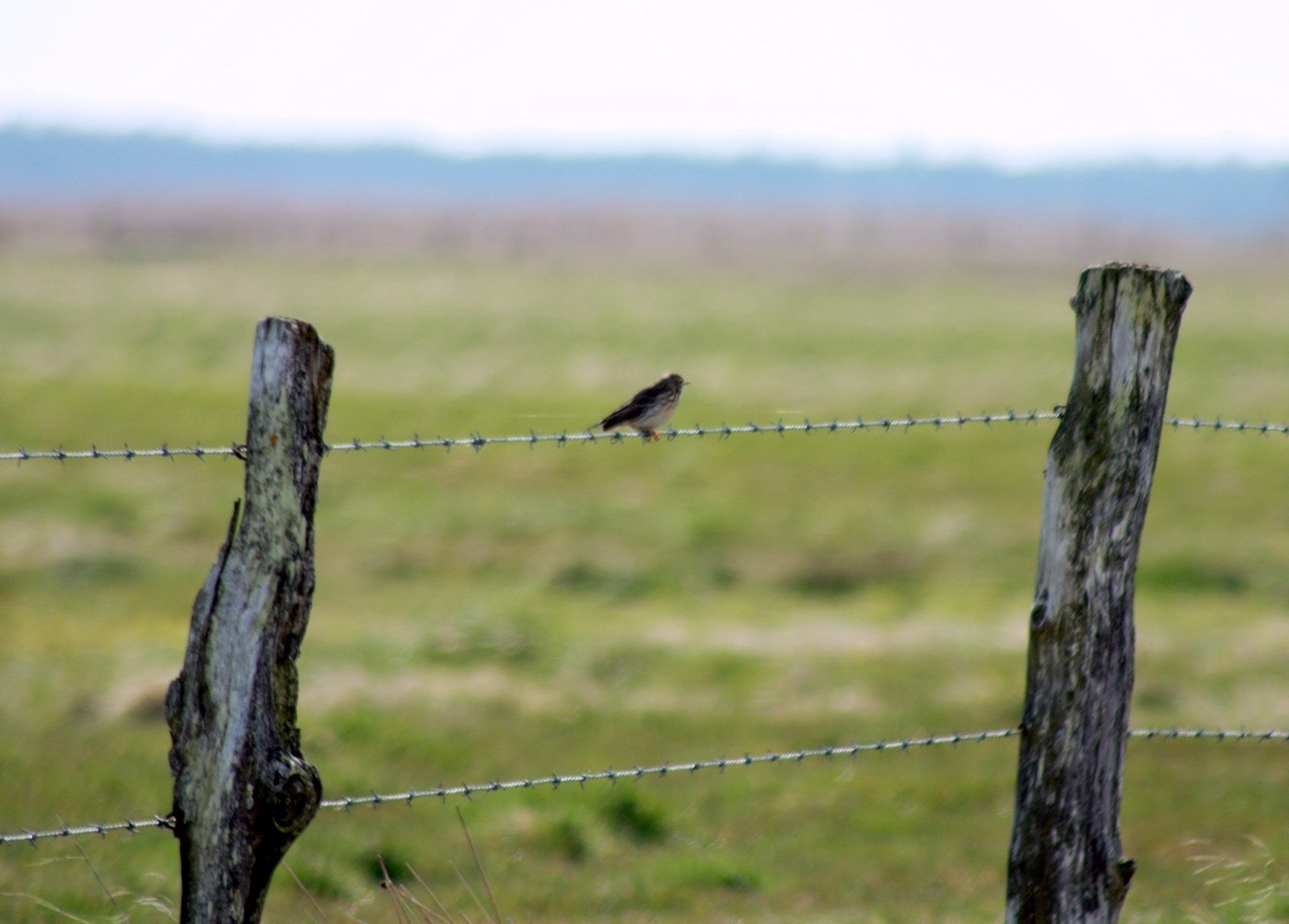
What Meadow Pipit Feathers Look Like
Meadow Pipit feathers are built for camouflage in open grassland, and it shows in their understated, streaky pattern. Back and mantle feathers are olive-brown with darker brown centers, creating a moderately bold streaked look — not as heavily marked as a thrush, but more contrasty than many warblers. Breast feathers are pale buff to whitish with fine, crisp dark streaking that tends to be narrower and more numerous than in some similar species, running down the flanks as well as across the breast. Wing feathers are dark brown edged with buff or whitish, forming faint wing-bar-like edges when several coverts are aligned, though the effect is subtle compared to boldly wing-barred songbirds. The most useful single feathers to look for are the outer tail feathers, which are largely white or whitish on the outer web — a bright, clean white patch against otherwise dark brown tail feathers, easily seen even on an isolated feather. Leg and foot color don't show on feathers, but the overall feather set is small and slender, consistent with a slim-bodied, ground-foraging songbird.
Step-by-Step: Is This Feather From a Meadow Pipit?
- Check the outer tail feathers first. Bright white on the outer web of an otherwise dark brown tail feather is one of the most reliable pipit clues.
- Look at breast/flank streaking density. Fine, numerous dark streaks on a pale buff background, extending onto the flanks, fits Meadow Pipit well.
- Assess back feather contrast. Olive-brown with moderate dark streaking — not as boldly patterned as a thrush, not as plain as many warblers.
- Consider size. Small and slender, consistent with a bird about 14–15 cm long.
- Factor in open, grassy habitat. Feathers found in moorland, rough pasture, or coastal grassland fit the species' preferred foraging ground.
Similar Species & How to Tell Them Apart
- Tree Pipit: Very similar, but breast streaking tends to be bolder and less extensive on the flanks, and the hind claw (not visible on shed body feathers) is shorter — overall feather-based separation from Meadow Pipit is genuinely difficult and often inconclusive.
- Rock Pipit: Feathers are darker and more sooty overall, with less crisp white in the outer tail feathers (often grayish rather than bright white), and streaking below is smudgier.
- Skylark: Larger overall with a small crest and a more contrasting pale trailing edge on the wing; body feathers are noticeably bigger.
- Common Whitethroat or other warblers: Lack the bright white outer tail feather patch and typically show less streaking on the underparts.
Where & When You'll Find Them
Meadow Pipits are widespread across open grassland, moorland, heath, and rough pasture throughout much of Europe and parts of Asia, nesting on the ground in low vegetation. Many populations are migratory, moving to milder lowland or coastal areas — and in some cases to North Africa — for winter, so feathers can be found on breeding moorland in summer and in wintering farmland or coastal grassland in colder months. Post-breeding molt runs through late summer into early autumn, making that period the most productive time to find fresh feathers near breeding territories, while migration stopover sites can also yield feathers during spring and fall passage.
Frequently asked questions
What's the single best clue for Meadow Pipit feathers?
Bright white on the outer web of the outer tail feathers, standing out clearly against otherwise dark brown tail feathers.
How does Meadow Pipit differ from Tree Pipit in the hand?
They're very similar; Tree Pipit tends to show bolder breast streaking with less extension onto the flanks, but separation from feathers alone is often inconclusive.
Is Rock Pipit a likely confusion species?
Yes, but Rock Pipit feathers are darker and sootier overall with less bright white in the tail and smudgier underpart streaking.
Where should I look for Meadow Pipit feathers?
Open moorland, rough pasture, and heath in summer; lowland farmland and coastal grassland in winter for migratory populations.
When is molt most likely to produce fresh feathers?
Late summer into early autumn, shortly after the breeding season ends.