
How to Identify Marbled Godwit Feathers
A guide to recognizing the cinnamon-buff, mottled feathers and long bicolored bill of the Marbled Godwit, a large North American shorebird.
Read the full Marbled Godwit encyclopedia entry →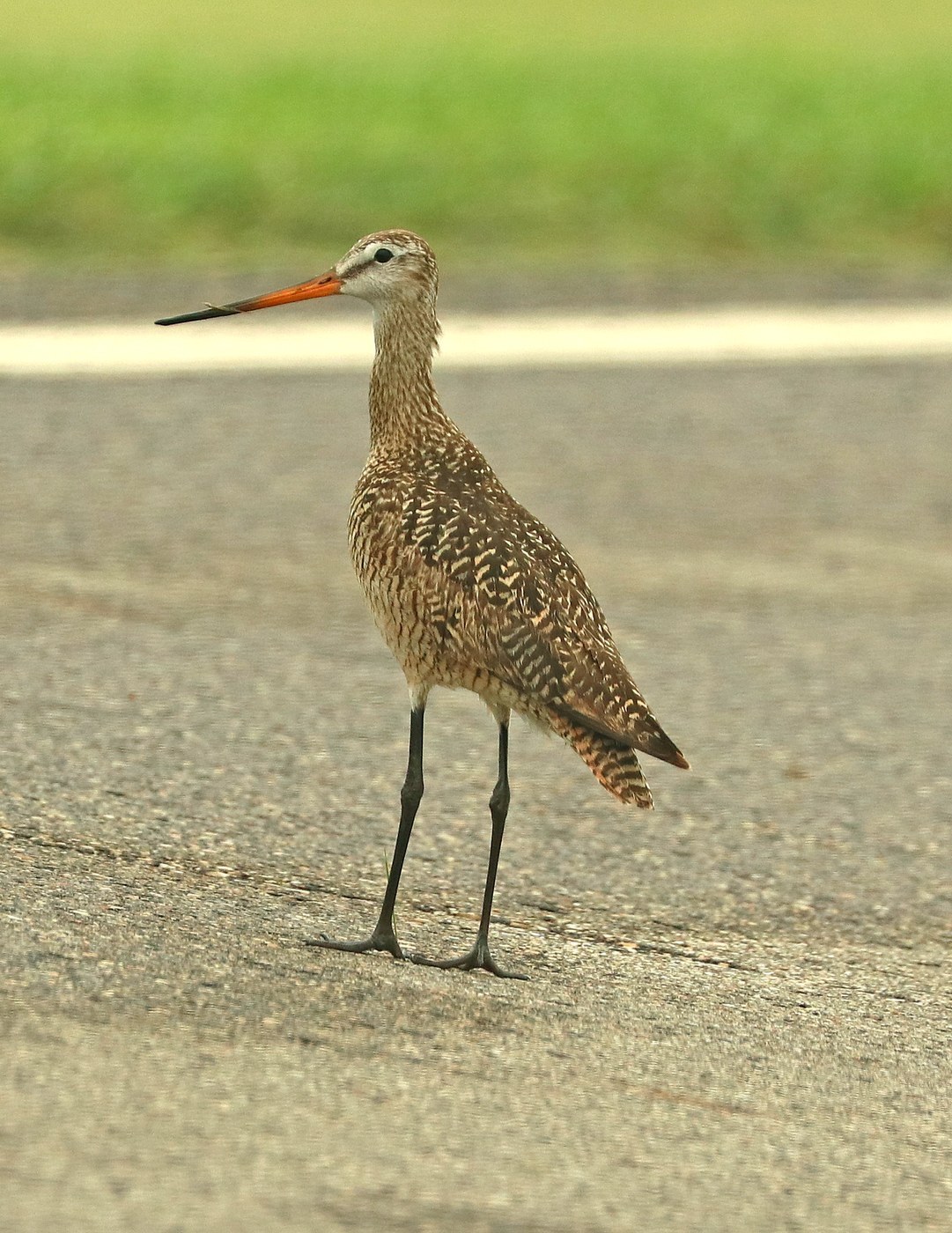
What Marbled Godwit's Feathers Look Like
The Marbled Godwit is a large North American shorebird named for the warm, mottled pattern covering most of its plumage. Body feathers overall are a cinnamon-buff to tawny-brown, each feather marked with dark barring or mottling that creates the "marbled" texture the species is named for — this pattern covers the back, wing coverts, and flanks fairly evenly, without the sharp streak-versus-plain-belly contrast seen in many other shorebirds. Underwing and wing-lining feathers show a notably rich cinnamon-orange wash, brighter and warmer than the somewhat duller back feathers, and this cinnamon tone is especially visible in flight. Flight feathers (primaries) are dark brown, providing contrast against the paler, warmer body feathers when the wing is spread. Tail feathers are barred cinnamon-and-brown, without a bold white rump patch. Bill material, if attached, would show a long, slightly upturned shape that is pink at the base and black toward the tip — a useful confirming detail beyond feathers alone.
Step-by-Step: Is This Feather From a Marbled Godwit?
- Check for an even, all-over mottled or barred cinnamon-brown pattern. This marbled texture across the whole body, rather than clean streaking, is the species' hallmark look.
- Look for cinnamon-orange tone on any underwing feather. A notably warm, rich orange-buff wash on a wing-lining feather is a strong supporting clue.
- Confirm the absence of a bold white rump or tail patch. Unlike some godwits and many other large shorebirds, Marbled Godwit lacks a bright white rump, so all-over warm barring without a white flash fits this species.
- Assess feather size. Large, robust feathers suiting a shorebird 40-50 cm long, one of the biggest sandpiper-family species in North America, match this bird well.
- Note any bill fragment. A long, slightly upturned bill that's pink at the base and dark at the tip helps confirm the species if present.
Similar Species & How to Tell Them Apart
Hudsonian Godwit and Bar-tailed Godwit are the closest relatives and the main confusion risk, but both show a bold white or pale rump/tail band in flight that Marbled Godwit lacks — a tail feather with a clean white base or band suggests one of those species rather than Marbled Godwit, whose tail stays cinnamon-and-brown throughout. Long-billed Curlew shares a similar warm cinnamon-brown tone and large size, but Curlew feathers show a more uniformly buffy-cinnamon underwing (very similar, admittedly) alongside a strongly down-curved rather than upturned bill — bill shape is the most reliable separator if any bill material is present. Willet, another large shorebird sharing some habitat, shows a much bolder black-and-white wing pattern in flight, easily ruled out by the presence of stark white wing stripes absent in Marbled Godwit.
Where & When You'll Find Them
Marbled Godwits breed on northern prairie grasslands and marshes in the north-central United States and south-central Canada, then migrate to winter along coastal mudflats, beaches, and estuaries across the southern United States, Mexico, and Central America. Feathers are most likely found on breeding grassland/wetland habitat in summer, and on coastal tidal flats and beaches during migration and winter, particularly near foraging areas exposed at low tide. The main molt occurs after breeding in later summer and again partially before spring migration, so late summer through fall on coastal wintering grounds is a particularly good window to find feathers.
Frequently asked questions
What's the best single clue to confirm a Marbled Godwit feather?
An even, all-over mottled or barred cinnamon-brown pattern combined with the absence of any bold white rump or tail patch is the most reliable combination for this species.
How do I tell this apart from a Hudsonian or Bar-tailed Godwit feather?
Both of those relatives show a bold white or pale band on the rump or tail in flight, which Marbled Godwit lacks entirely, keeping a cinnamon-and-brown barred tail throughout.
Could this be confused with a Long-billed Curlew feather?
The overall cinnamon-brown tone is similar, but if any bill material is present, Curlew's bill curves strongly downward while Marbled Godwit's bill is only slightly upturned.
Why is the underwing color mentioned separately from the back color?
The underwing and wing-lining feathers show a notably richer cinnamon-orange than the somewhat duller, more mottled back feathers, making the underwing a useful separate check.
When and where are feathers most likely to be found?
On northern prairie breeding grounds in summer, and on coastal mudflats and beaches during migration and winter, with late summer through fall on the coast being a particularly productive time.