
How to Identify Least Flycatcher Feathers
A practical guide to identifying the small, grayish Empidonax feathers of the Least Flycatcher, with an honest look at how difficult Empidonax feathers are to separate.
Read the full Least Flycatcher encyclopedia entry →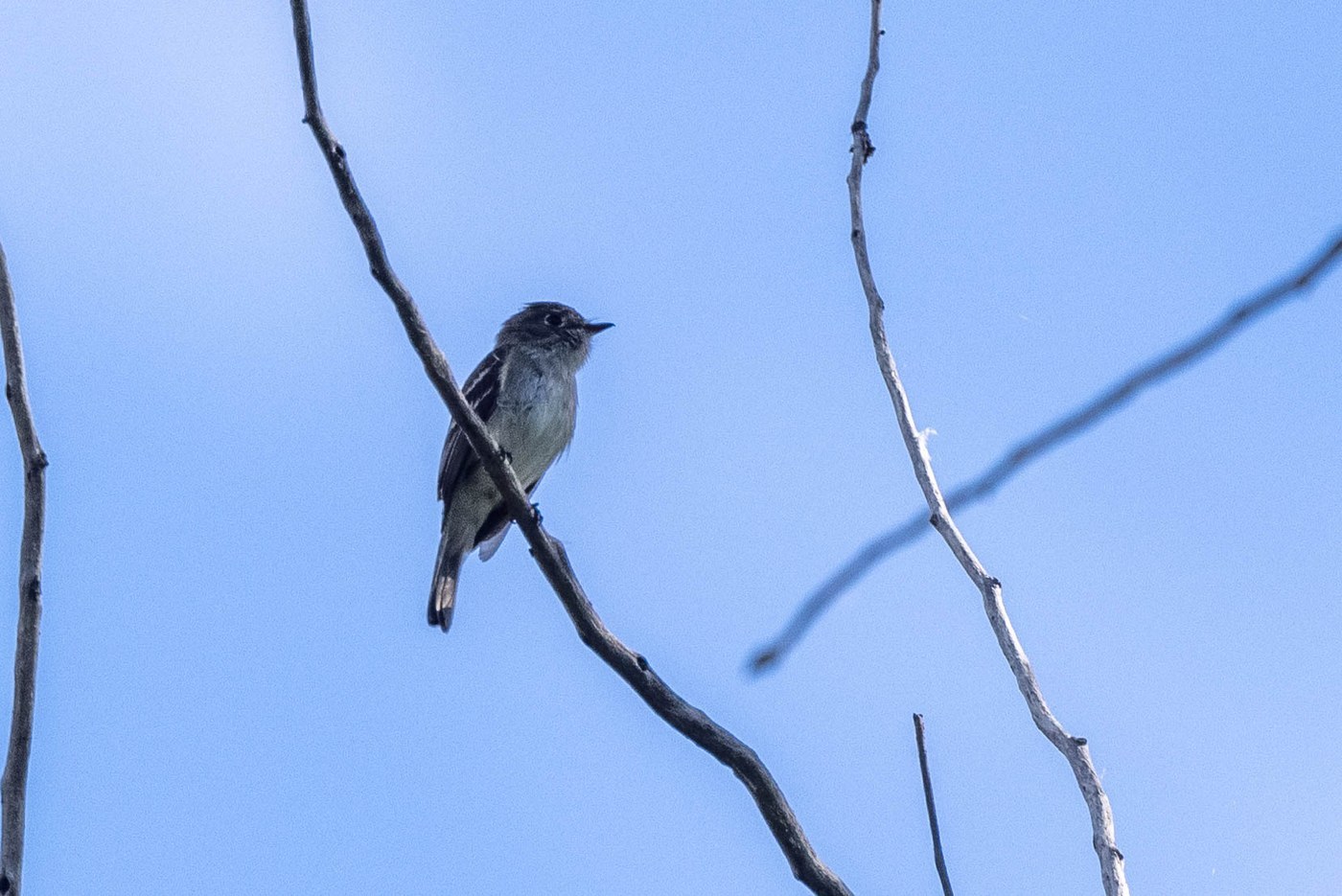
What Least Flycatcher Feathers Look Like
The Least Flycatcher is one of the smallest and grayest members of the notoriously difficult Empidonax flycatcher group. Feather-based identification within this group is genuinely challenging, but a few features help narrow things down.
- Body/contour feathers: Olive-gray to grayish above, with whitish underparts often showing a faint pale yellow wash on the belly.
- Wing feathers: Dark with two whitish wing bars, moderately bold for the genus.
- Eyering feathers: A small ring of feathers around the eye is bold and white, more prominent than in some other Empidonax species.
- Tail feathers: Dark, notched at the tip, unremarkable in pattern.
- Size: Among the smallest Empidonax species; primaries are short relative to body size, reflecting a relatively short primary projection (the primaries don't extend far past the folded wing).
- Shaft color: Pale grayish-brown, unremarkable.
Step-by-Step: Is This Feather From a Least Flycatcher?
- Confirm it's an Empidonax-type feather. Small, grayish-olive above with whitish below and two wing bars fits this genus broadly before narrowing to species.
- Check overall grayness. Least Flycatcher tends to run grayer and less strongly olive or yellow-tinged than several other Empidonax species.
- Look for a bold, complete white eyering feather. A crisp, well-defined eyering supports Least Flycatcher over species with fainter eyerings.
- Assess wing bar boldness. Least Flycatcher's wing bars are typically fairly crisp white, though this overlaps with several relatives.
- Be honest about the limits. Even experienced birders often cannot reliably separate Empidonax species by plumage alone, relying instead on voice, habitat, and range — a feather alone, without that context, may only get you to "Empidonax flycatcher" rather than a confirmed species.
Similar Species & How to Tell Them Apart
- Willow and Alder Flycatcher: Slightly larger and warmer olive-brown overall, with less crisp eyerings than Least Flycatcher, though feather-only separation is unreliable.
- Hammond's Flycatcher: Similar small size and grayish tone but with a longer primary projection and typically found in coniferous forest in the West rather than Least Flycatcher's more open deciduous woodland.
- Acadian Flycatcher: Larger, with a more yellowish-olive cast and buffier wing bars, found in more southerly, moister deciduous forest.
- Dusky Flycatcher: Very similar in the West; essentially indistinguishable from Least Flycatcher-type feathers without range/habitat context.
Where & When You'll Find Them
Least Flycatchers breed across southern Canada and the northern and eastern United States in open deciduous woodland, forest edges, orchards, and parks, then migrate to winter in Mexico and Central America. Molt occurs mainly after breeding in late summer or on the wintering grounds, so fresher feathers are most likely found on breeding territories in August or in wintering habitat in the tropics during the colder months. Given the genuine difficulty of Empidonax identification from feathers alone, treat any specific species call from a lone feather as tentative unless paired with strong location and habitat context.
Frequently asked questions
Can I really tell Least Flycatcher apart from other Empidonax by feather alone?
Not with full confidence — even experienced birders typically rely on voice, range, and habitat rather than plumage to separate Empidonax species, so a lone feather usually only narrows things to the genus level.
What's the most useful single clue for Least Flycatcher specifically?
A bold, crisp white eyering paired with an overall grayish (rather than warm olive) tone is the best available clue, though it's not fully conclusive on its own.
Why does this feather look so plain compared to more colorful songbirds?
Empidonax flycatchers as a group are subtly plumaged, relying on voice and behavior for field identification rather than bold color patterns, so a plain grayish-olive feather with wing bars is expected.
When is the best time to find these feathers?
Late summer on the breeding grounds, during post-breeding molt, or on the wintering grounds in Mexico and Central America during the winter months.