
How to Identify Lark Bunting Feathers
How to spot the bold white wing patch of breeding male Lark Buntings and the subtler streaked feathers of females and winter birds, plus how to avoid confusing them with blackbirds.
Read the full Lark Bunting encyclopedia entry →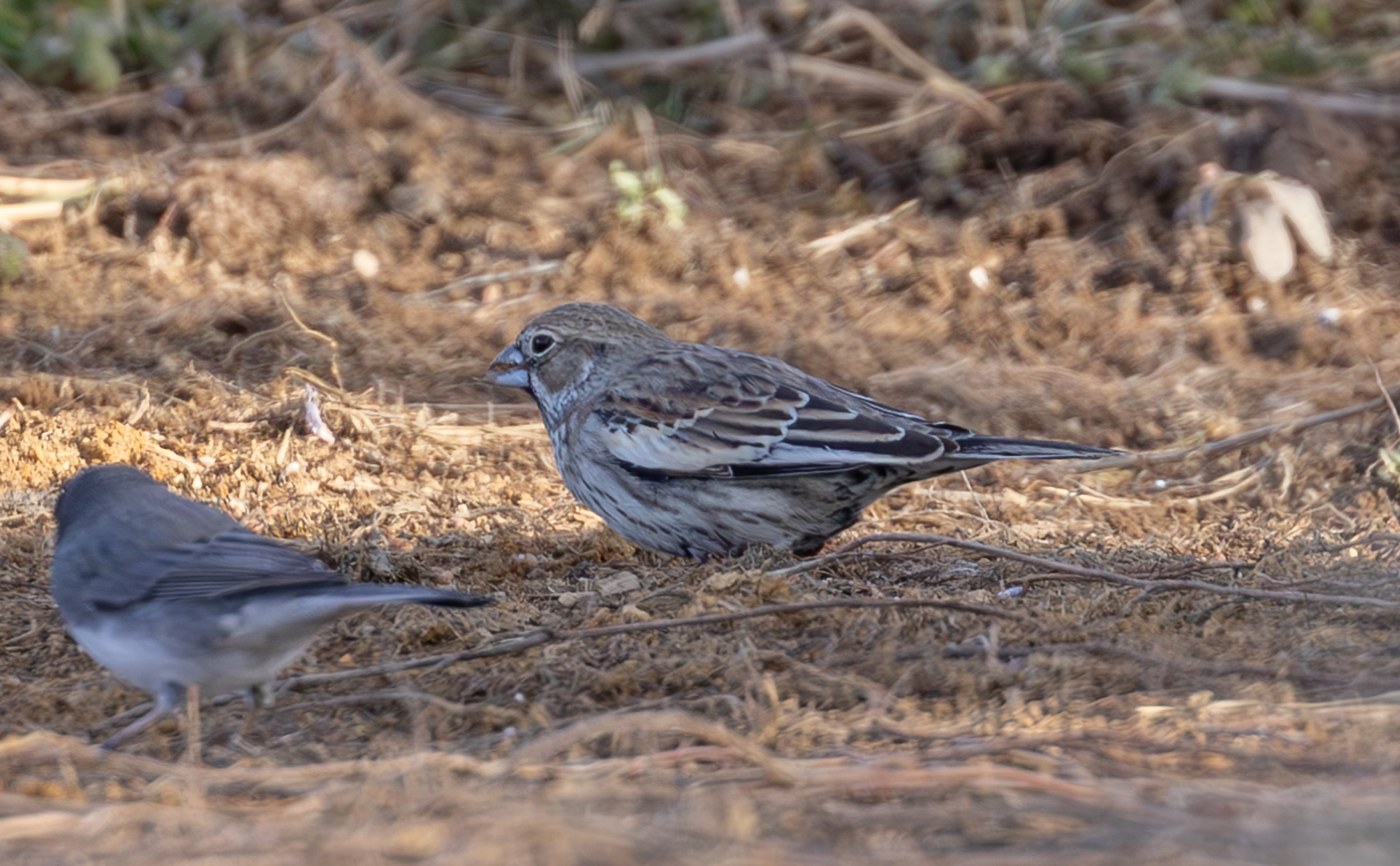
What Lark Bunting Feathers Look Like
Lark Buntings show one of the most dramatic seasonal feather contrasts of any North American sparrow-like bird. Breeding males are essentially black with a bold, large white patch on the wing coverts, while females and nonbreeding males are streaky brown, more like a typical sparrow.
- Breeding male wing feathers: Black flight feathers paired with a conspicuous white or whitish patch on the median and lesser wing coverts — this patch feather is unmistakable if found: mostly or entirely white with a black base, unlike anything on a similarly sized streaky sparrow.
- Breeding male body feathers: Deep, glossy black, without streaking.
- Female/nonbreeding feathers: Grayish-brown, streaked with darker brown centers, plus a buffy-white to whitish patch on the wing coverts — smaller and less pure white than the male's, but still present as a clue.
- Tail feathers: Dark brown to blackish, notched at the tip, with white edging visible mainly toward the base of outer feathers in some individuals.
- Size: A chunky, finch-like bird; feathers run larger than a typical sparrow but smaller than a blackbird.
Step-by-Step: Is This Feather From a Lark Bunting?
- Look for a solid white wing-covert feather with a black base. This single feather type is the most diagnostic find for a breeding male.
- Check overall color. A solid black body feather (no streaking) paired with a white wing patch feather strongly suggests breeding male Lark Bunting rather than a blackbird, which lacks the white wing patch.
- For streaky brown feathers, check for any whitish or buffy wing patch remnant. This separates female/winter Lark Bunting from otherwise similar streaky sparrows that lack any pale wing patch.
- Compare feather size. Larger and chunkier than typical sparrows (e.g., Savannah or Vesper Sparrow), closer in bulk to a small blackbird.
- Factor in habitat. Finds in shortgrass or mixed-grass prairie, sagebrush flats, or open plains of the western and central Great Plains support this identification.
Similar Species & How to Tell Them Apart
- Bobolink (breeding male): Also black with pale patches, but the pale areas are on the nape and back/rump, not the wing coverts — a white patch on the back rather than the wing points to Bobolink instead.
- Red-winged Blackbird: Black with red-and-yellow shoulder patches, not white — color of the patch is the key difference.
- Vesper Sparrow: Streaky brown with white outer tail feathers but lacks any white wing-covert patch, distinguishing it from female/winter Lark Bunting.
- Savannah Sparrow: Smaller, finer streaking, no whitish wing patch at all.
Where & When You'll Find Them
Lark Buntings breed across the shortgrass and mixed-grass prairies of the central and northern Great Plains, then migrate to winter in the southwestern U.S. and Mexico in open grassland and desert scrub, often in large flocks. Breeding males acquire their black-and-white plumage through a spring molt and lose it after breeding, molting back into a browner, female-like plumage for fall and winter — so a pure black-and-white wing patch feather is most likely to be found on the breeding grounds in late spring through summer, while streaky brown feathers with a duller wing patch turn up on the wintering grounds.
Frequently asked questions
I found an all-white feather with a black base — is this definitely a Lark Bunting?
It's a strong candidate if found in Great Plains grassland habitat, since the bold white wing-covert patch on breeding males is quite distinctive, but always weigh location and season alongside the feather itself.
Why don't all the black feathers I find have a white patch nearby?
Only the wing covert feathers show the white patch; black body feathers from the same bird will be solid black without any white, so you may simply have found a body feather rather than a wing feather.
Do female Lark Buntings ever look black like the males?
No, females remain streaky brown year-round and never acquire the male's black breeding plumage, though they do show a smaller pale wing patch.
When would I most likely find a full black breeding-male feather?
Late spring through summer on the breeding grounds, since males molt into this bold black-and-white plumage for the breeding season and lose it afterward.