
How to Identify Hadada Ibis Feathers
A step-by-step guide to recognizing the Hadada Ibis's plain grey-brown body feathers and glossy green-purple wing patch, and telling them apart from other African ibises.
Read the full Hadada Ibis encyclopedia entry →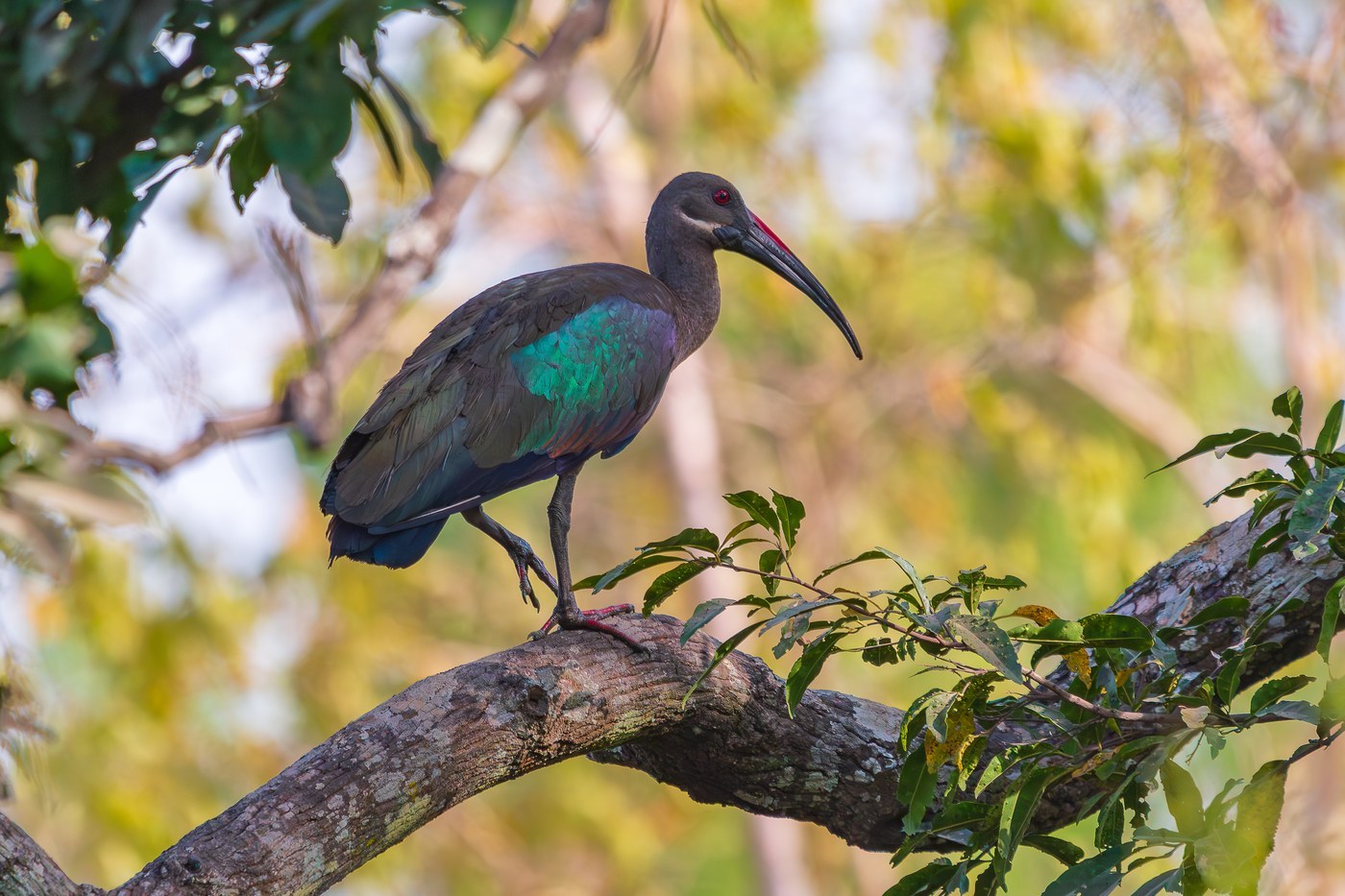
What Hadada Ibis Feathers Look Like
The Hadada Ibis is a heavy-bodied African wading bird best known for its loud "ha-ha-ha-hadada" call at dawn, but its feathers are just as distinctive once you know what to check.
- Body/contour feathers: dull olive-brown to grey-brown overall, with a soft, almost matte look in most light.
- Wing covert feathers: this is the diagnostic patch — the greater coverts carry a bold iridescent green-and-purple sheen that flashes only in direct sunlight and looks plain bronze-brown in shade.
- Flight feathers (primaries/secondaries): dark grey-brown, broad, and rounded at the tip rather than pointed — typical of a bird built for flapping flight low over gardens and lawns rather than soaring.
- Tail feathers: dark brownish-grey, short, and square-ended.
- Size: primaries run roughly 20–25 cm long, reflecting the bird's large size (over 75 cm total length).
Step-by-Step: Is This Feather From a Hadada Ibis?
- Check the base color first. If the feather is glossy white, black-and-white, or deep chestnut, stop — it isn't a Hadada. You're looking for a plain grey-brown to olive-brown feather.
- Tilt it in the light. Rotate the feather under a lamp or in sunlight. A genuine Hadada wing covert will flash iridescent green or purple; body/contour feathers usually stay dull.
- Look at the tip shape. Ibis flight feathers are broadly rounded, not narrow and pointed like a hawk's, and not stiff and squared like a woodpecker's.
- Measure it. Anything over ~18 cm in a rounded, softly barb-textured feather fits an ibis-sized bird; small (under 10 cm) grey-brown feathers are more likely a dove, thrush, or starling.
- Consider where you found it. Hadada feathers are commonly picked up on mown lawns, golf courses, and garden beds where the birds probe for worms and grubs after rain or irrigation.
Similar Species & How to Tell Them Apart
- African Sacred Ibis: mostly white body with a bare black head and neck — completely different from the Hadada's uniform brown body, so body feathers won't be confused.
- Glossy Ibis: smaller and shows an overall glossy purplish-chestnut sheen across the whole body, not just an isolated wing patch — if the iridescence covers the entire feather rather than just the wing coverts, think Glossy Ibis instead.
- Juvenile herons: some young herons show plain brown feathers too, but lack any iridescent sheen at all and tend to have more pointed flight-feather tips.
Where & When You'll Find Them
Hadada Ibis are non-migratory residents across sub-Saharan Africa, thriving in urban parks, gardens, and open grassy areas as much as natural wetlands. Because they don't undertake long migrations, their feathers turn up year-round rather than in a narrow molt window, with a modest peak in feather loss after the breeding season when adults undergo their main annual molt.
Frequently asked questions
Why do some Hadada feathers look plain brown while others look shiny green?
Only the wing covert feathers carry the iridescent green-and-purple sheen, and even those only flash color in direct light. Body and flight feathers stay a plain matte brown-grey in any light.
Are Hadada Ibis feathers a similar size to a crow's?
They're comparable or slightly larger — Hadada primaries run about 20–25 cm, similar to or a bit longer than a large crow's flight feathers, reflecting the ibis's bigger overall body size.
Could a Hadada feather be mistaken for a Glossy Ibis feather?
It's possible, but Glossy Ibis feathers show iridescence across most of the body, while Hadada iridescence is confined mainly to the wing coverts, with the rest of the body dull brown.
Is there a best time of year to find molted Hadada feathers?
They can appear year-round since the species is a non-migratory resident, but feather loss increases somewhat after the breeding season during the main annual molt.