
How to Identify Grey Wagtail Feathers
How to identify this slender songbird's long tail feathers with white outer edges, grey back, and bright yellow undertail feathers.
Read the full Grey Wagtail encyclopedia entry →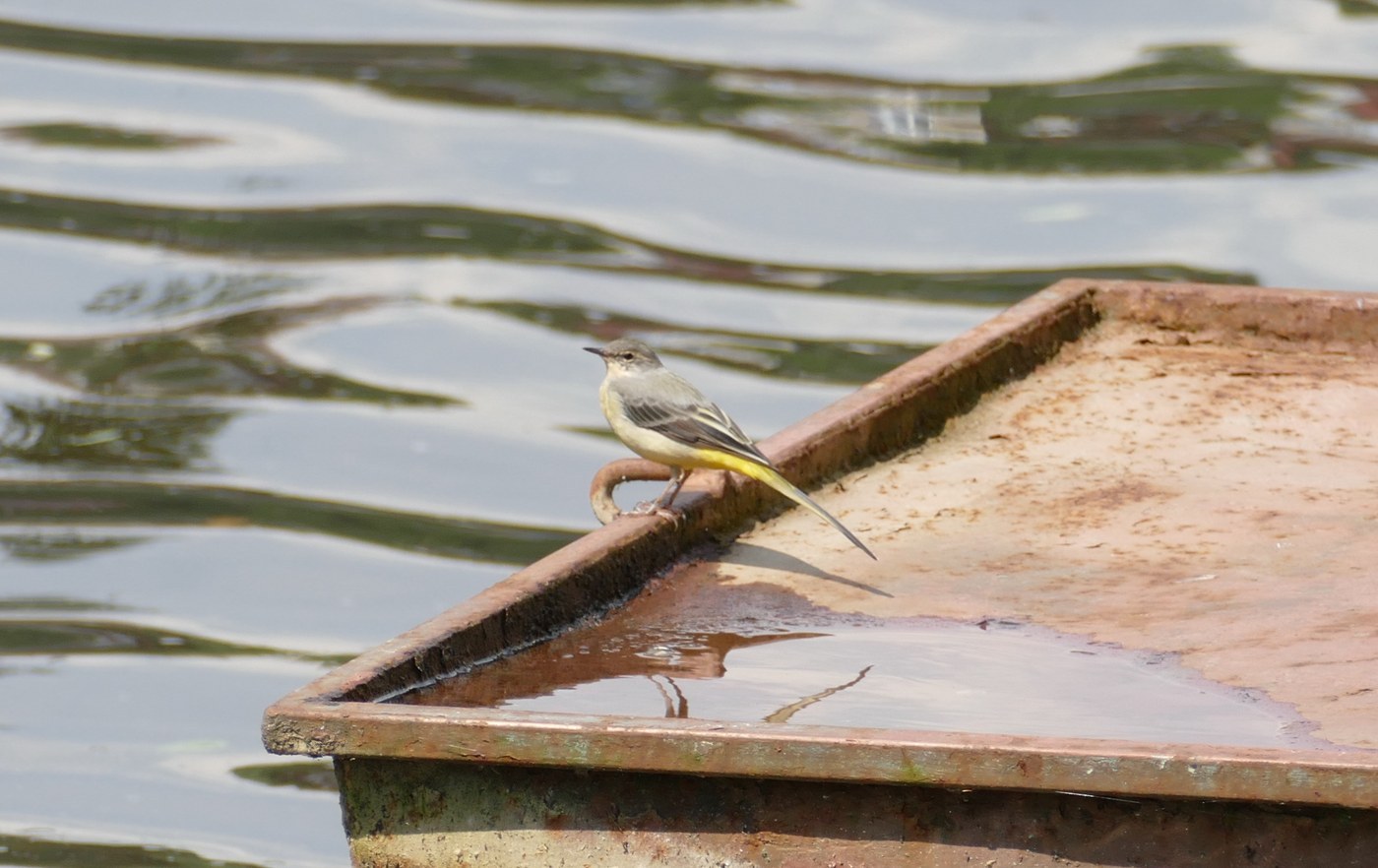
What Grey Wagtail Feathers Look Like
Grey Wagtails are named for their back color, but the brightest, most useful diagnostic feathers actually come from underneath: the vent and undertail coverts are a vivid lemon-yellow, a striking color retained year-round in both sexes, unlike some related wagtails where yellow is more seasonal or restricted. A small, bright yellow feather from the rear underparts, combined with grey body feathers, is one of the strongest clues for this species.
Back and upperwing feathers are plain bluish-grey, unmarked and fairly uniform, while the tail is unusually long relative to body size — a signature trait of this constantly tail-pumping bird. Individual tail feathers run 8-10 cm, notably long and slender for a small songbird, and the outer tail feathers show broad white edges or are largely white, creating a flashing pattern in flight. Breeding males show a black throat feather, distinct from the otherwise pale underparts, useful for confirming sex and season if found alongside the yellow vent feathers.
Step-by-Step: Is This Feather From a Grey Wagtail?
- Look for a bright yellow feather from the rear underparts. Vivid lemon-yellow vent/undertail feathers are a strong standalone clue.
- Check the tail feather length. Slender feathers around 8-10 cm are unusually long for a small songbird's tail.
- Examine outer tail feathers for white. Broad white edging or largely white outer tail feathers support this species.
- Assess back color. Plain, unmarked bluish-grey fits the expected upperparts.
- Look for a black throat feather. If present alongside yellow vent feathers, this suggests a breeding male.
Similar Species & How to Tell Them Apart
The Yellow Wagtail is the main confusion risk since both show yellow underparts, but Yellow Wagtail's yellow extends across the entire breast and belly rather than being concentrated at the vent/undertail, and its back is olive-green or yellowish rather than clean grey — a back feather comparison settles this quickly. The White Wagtail shares the grey back and long tail but lacks yellow entirely, showing black-and-white or grey-and-white feathers instead. The unusually long, slender tail feather shape helps separate wagtails generally from other small songbirds that might share a grey-and-yellow color scheme.
Where & When You'll Find Them
Look near fast-flowing streams, rivers, and rocky watercourses, including in hilly and mountainous terrain, since this species favors moving water far more than the more general habitats used by other wagtails. Feathers accumulate near favored bobbing perches on rocks and low branches beside water, and around nest sites tucked into stream-bank crevices or under bridges. Many populations move to lower elevations or milder regions in winter, so feathers may be found well away from the breeding streams during the colder months, with the freshest ones appearing after the post-breeding molt in late summer.
Frequently asked questions
What's the quickest way to confirm this is a Grey Wagtail feather?
Look for a bright lemon-yellow feather from the vent/undertail area paired with plain grey back feathers — a distinctive combination.
How do I tell it apart from a Yellow Wagtail feather?
Check how far the yellow extends — Grey Wagtail keeps yellow mainly at the rear underparts, while Yellow Wagtail shows yellow across the whole breast and belly, plus an olive-toned back rather than grey.
Why are the tail feathers unusually long?
Wagtails constantly pump their tails as a signaling behavior, and this species in particular has a notably long, slender tail relative to its body size.
Does a black throat feather mean anything specific?
Yes — it typically indicates a breeding-season male, since the black throat is a seasonal, sex-linked feature.
Where near water should I look for feathers?
Around favored bobbing perches on streamside rocks and branches, and near nest sites in bank crevices or under bridges over fast-flowing water.