
How to Identify Grey Heron Feathers
A guide to the long, drooping crest plumes, pale grey body feathers, and blackish flight feathers of one of the largest common wading birds.
Read the full Grey Heron encyclopedia entry →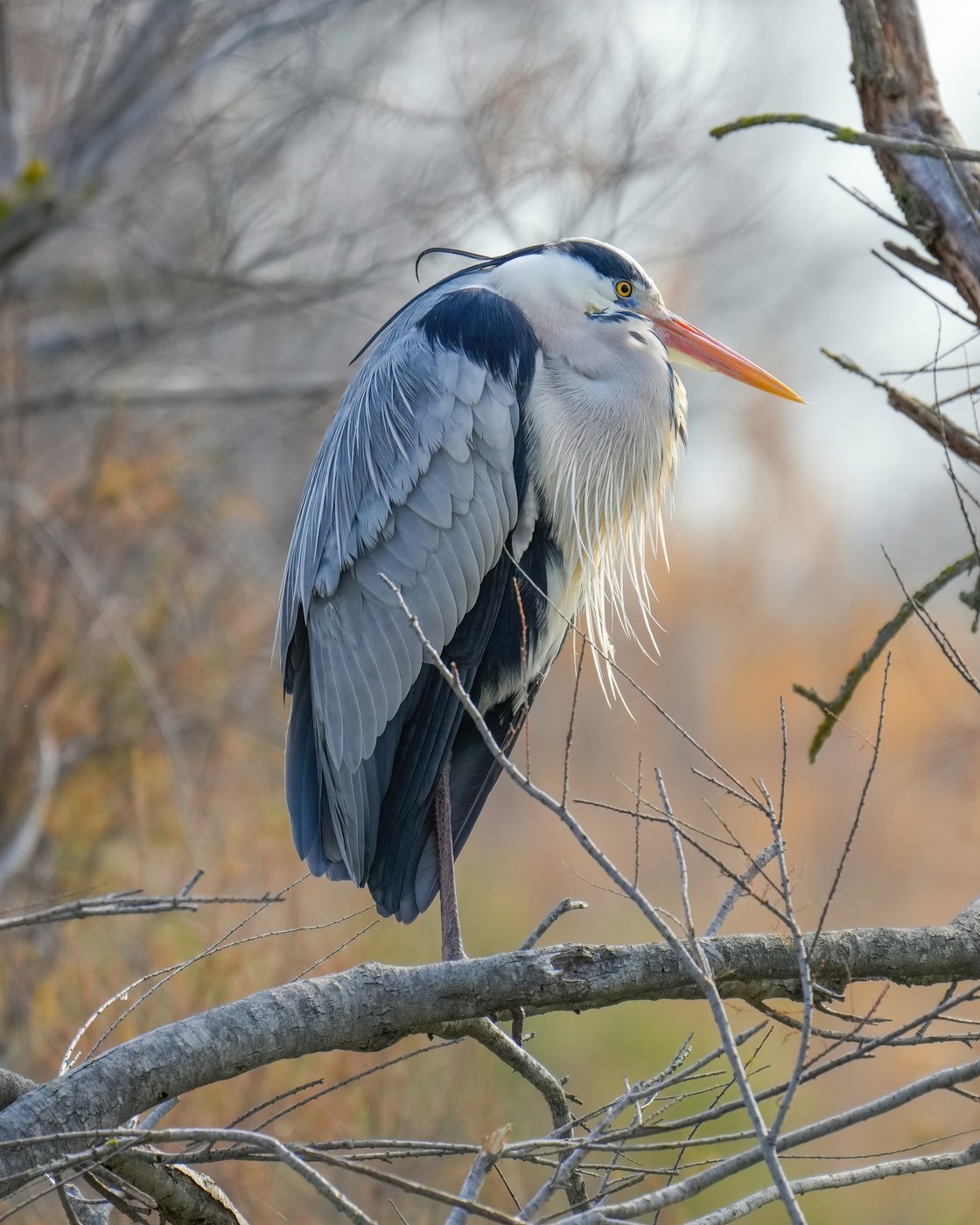
What Grey Heron Feathers Look Like
Grey Heron feathers are large and immediately suggest a substantial wading bird. Flight feathers (primaries and secondaries) are blackish-grey to nearly black, long and broad, commonly 25-35 cm, contrasting sharply with the much paler, silvery-grey feathers of the back, wing coverts, and neck. This contrast — dark flight feathers against a pale grey body — is one of the most reliable field marks even from a single detached feather, and is far more pronounced than in most smaller herons.
Adults grow elongated, wispy head plumes, thin blackish feathers trailing from the back of the crown that are unlike any body feather — narrow, somewhat frayed-looking, and much longer than they are wide. The underparts are whitish, with fine dark streaking down the front of the neck, so a slender white feather with a thin dark central streak likely comes from the throat or foreneck. Overall the feathers are large, somewhat loosely structured, and soft compared to a raptor's stiff flight feathers, reflecting a bird built for slow, deliberate flight rather than speed.
Step-by-Step: Is This Feather From a Grey Heron?
- Check the size first. Flight feathers in the 25-35 cm range point to a large heron rather than a smaller wading bird.
- Look for the pale-body, dark-wing contrast. Silvery-grey back/covert feathers alongside blackish flight feathers is a strong match.
- Search for thin crest plumes. Long, narrow, wispy blackish feathers unlike any contour feather suggest an adult's head plumes.
- Check neck feathers for fine streaking. White feathers with thin dark central streaks are consistent with the foreneck.
- Feel the structure. Large but relatively soft, loosely-webbed feathers fit a heron's slow-flight lifestyle rather than a fast-flying bird.
Similar Species & How to Tell Them Apart
The Great Blue Heron, a close relative in the Americas, is very similar but tends to run slightly larger overall with a more rufous or chestnut wash on the thighs and a somewhat darker overall grey tone — check thigh-area feathers for warm rufous tones if you're in a region where both could occur. Egrets are similarly large but typically show pure white feathers throughout, lacking the dark-flight/pale-body contrast entirely. Smaller herons and bitterns show much shorter flight feathers and lack the long, wispy crest plumes altogether.
Where & When You'll Find Them
Look near rivers, lakes, marshes, and coastal shallows where these herons stand and stalk fish, as well as around traditional heronry nest colonies, often in tall trees near water, which are used year after year and can be reliable places to find dropped feathers below nests. Molt is gradual and largely continuous, but the bulkiest, most obvious flight feathers tend to turn up in the breeding season near colonies, when adults are most active and feathers are more easily dislodged during nest-building and chick-rearing.
Frequently asked questions
What's the fastest way to confirm a large grey feather is from a heron?
Look for the sharp contrast between blackish-grey flight feathers and much paler silvery-grey body feathers, plus the sheer size of the flight feathers.
What are those unusually long, thin feathers sometimes found near heron colonies?
Those are the wispy head/crest plumes grown by adults, quite different in shape from ordinary body feathers — narrow, frayed-looking, and much longer than wide.
How do I rule out an egret?
Egret feathers are essentially pure white throughout, without the dark flight feather and pale body contrast that Grey Herons show.
Could this be a Great Blue Heron feather instead?
Check for a warm rufous or chestnut tint on thigh-area feathers, which favors Great Blue Heron over the generally cooler grey tones of Grey Heron, and consider your region.
Where's the best place to search for these feathers?
Below tall trees used as heronry nest colonies, and along the shorelines of lakes, rivers, and marshes where the birds forage.