
How to Identify Great Grey Shrike Feathers
How to identify Great Grey Shrike feathers by their gray-black-white pattern, black mask, and white wing patch on black wings.
Read the full Great Grey Shrike encyclopedia entry →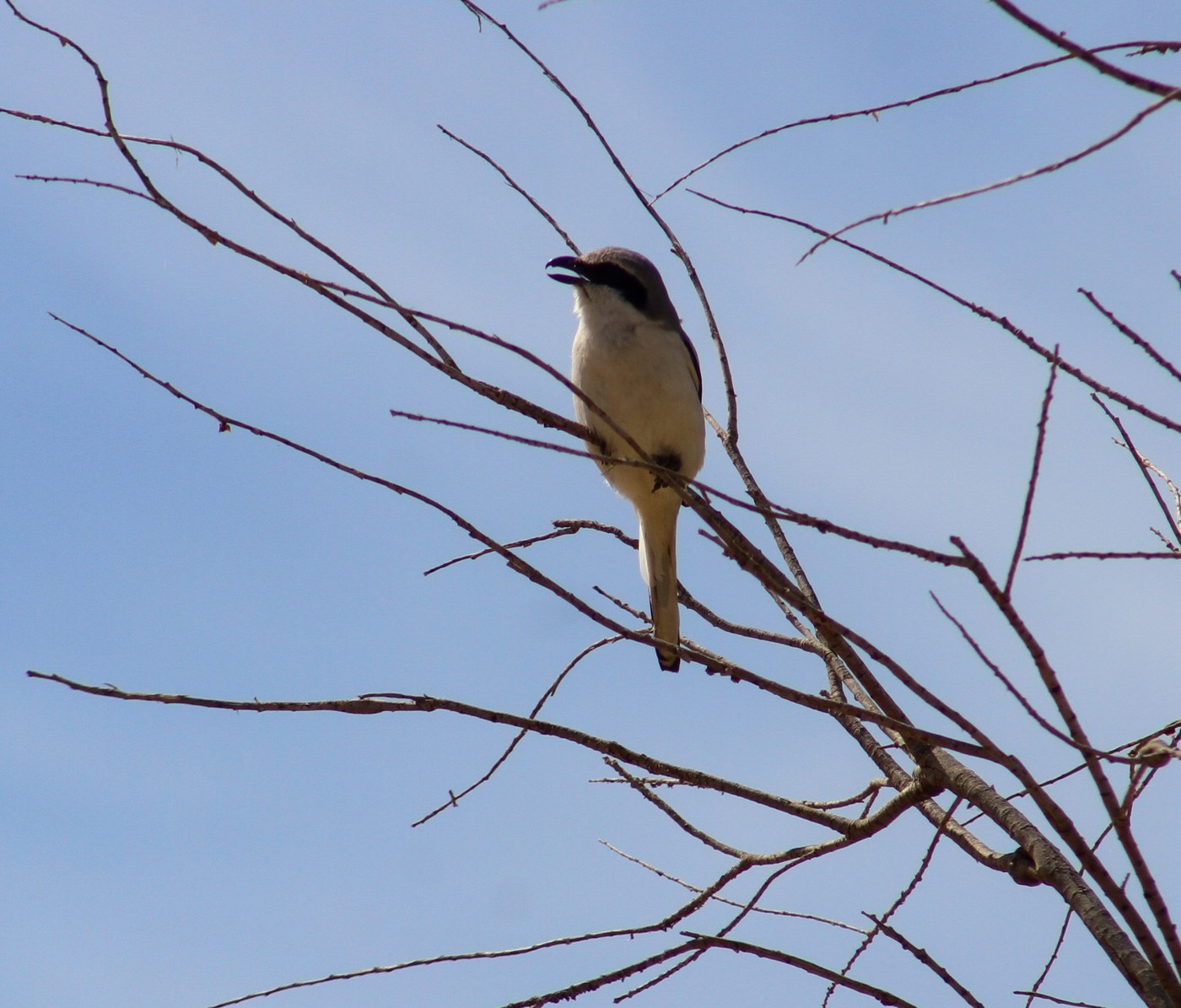
What Great Grey Shrike's Feathers Look Like
Great Grey Shrike is a predatory songbird with a bold, high-contrast pattern that makes its feathers relatively easy to place once you know the combination. Back and crown contour feathers are a clean pale gray, while a bold black mask runs through the eye — a feather or feather group from this area will show solid black against the surrounding gray/white. Underparts are white to very pale gray, unmarked. Wing feathers are mostly black, but interrupted by a crisp white patch at the base of the primaries, which flashes conspicuously in flight and is visible as a bold white base on an otherwise black flight feather. The tail is long and black, edged in white along the outer feathers, giving a two-tone look edge to edge. Overall, the combination of gray, black, and white with no intermediate brown or buff tones is the species' signature look.
Step-by-Step: Is This Feather From a Great Grey Shrike?
- Check for the three-color scheme. A feather that is cleanly gray, black, or white — with no brown, buff, or streaking — fits this species well.
- Look for a white patch on black. A flight feather that is mostly black but shows a bold white base or patch is a strong diagnostic sign.
- Examine tail edges. A long black tail feather with a white outer edge supports this ID.
- Consider the mask. A solid black feather fragment from the face/eye region, bordered by gray, is consistent with the species' mask pattern.
- Factor in size. A shrike-sized feather (larger than a typical sparrow, smaller than a jay) with this pattern fits well.
Similar Species & How to Tell Them Apart
- Loggerhead Shrike (North America) — very similar overall pattern; differences are subtle, mainly in mask width and where the mask meets across the forehead, with Loggerhead's mask typically broader and connecting more solidly above the bill.
- Lesser Grey Shrike — the black mask extends up over the forehead (rather than stopping at the eye), and adults often show a pinkish wash on the breast plus a proportionally shorter tail.
- Northern Mockingbird — also gray-black-white, but lacks a black mask entirely and shows a different wing-patch shape (more of a wing bar/flash pattern across multiple feather groups rather than a solid patch).
Where & When You'll Find Them
Great Grey Shrike inhabits open country, farmland, heathland, and hedgerow-lined fields across much of Europe and temperate Asia, hunting from prominent perches and famously impaling prey on thorns or barbed wire to create a "larder." Because of this behavior, feathers can sometimes be found near these impaling sites in addition to typical roosting and nesting cover. Molt occurs after the breeding season in late summer, and in many parts of its range the species disperses more widely in winter, when individuals — including inexperienced juveniles — are more likely to be found (and to leave feathers) in open countryside away from breeding territories.
Frequently asked questions
What is the clearest sign of a Great Grey Shrike feather?
A black flight feather with a bold white patch at its base, combined with an overall clean gray-black-white color scheme with no brown or streaking.
How do I tell this apart from Loggerhead Shrike?
The two are very similar; Loggerhead Shrike typically has a broader black mask that connects more solidly across the forehead, though subtle plumage differences make range often the more reliable clue.
Does Great Grey Shrike have any brown or buff coloring?
No, its plumage is a clean combination of gray, black, and white with no brown or buff tones, unlike many other songbirds of similar size.
Where might I find feathers near a shrike's hunting territory?
Near thorny shrubs, barbed wire fences, or other spots the birds use as a "larder" to impale prey, in addition to typical perching and roosting areas.
When is molt season for this species?
After breeding in late summer, with wider winter dispersal often bringing individuals — and their feathers — into new areas away from breeding territories.