
How to Identify Great Cormorant Feathers
How to identify Great Cormorant feathers by their glossy black sheen, white face and flank patches, and less water-repellent structure.
Read the full Great Cormorant encyclopedia entry →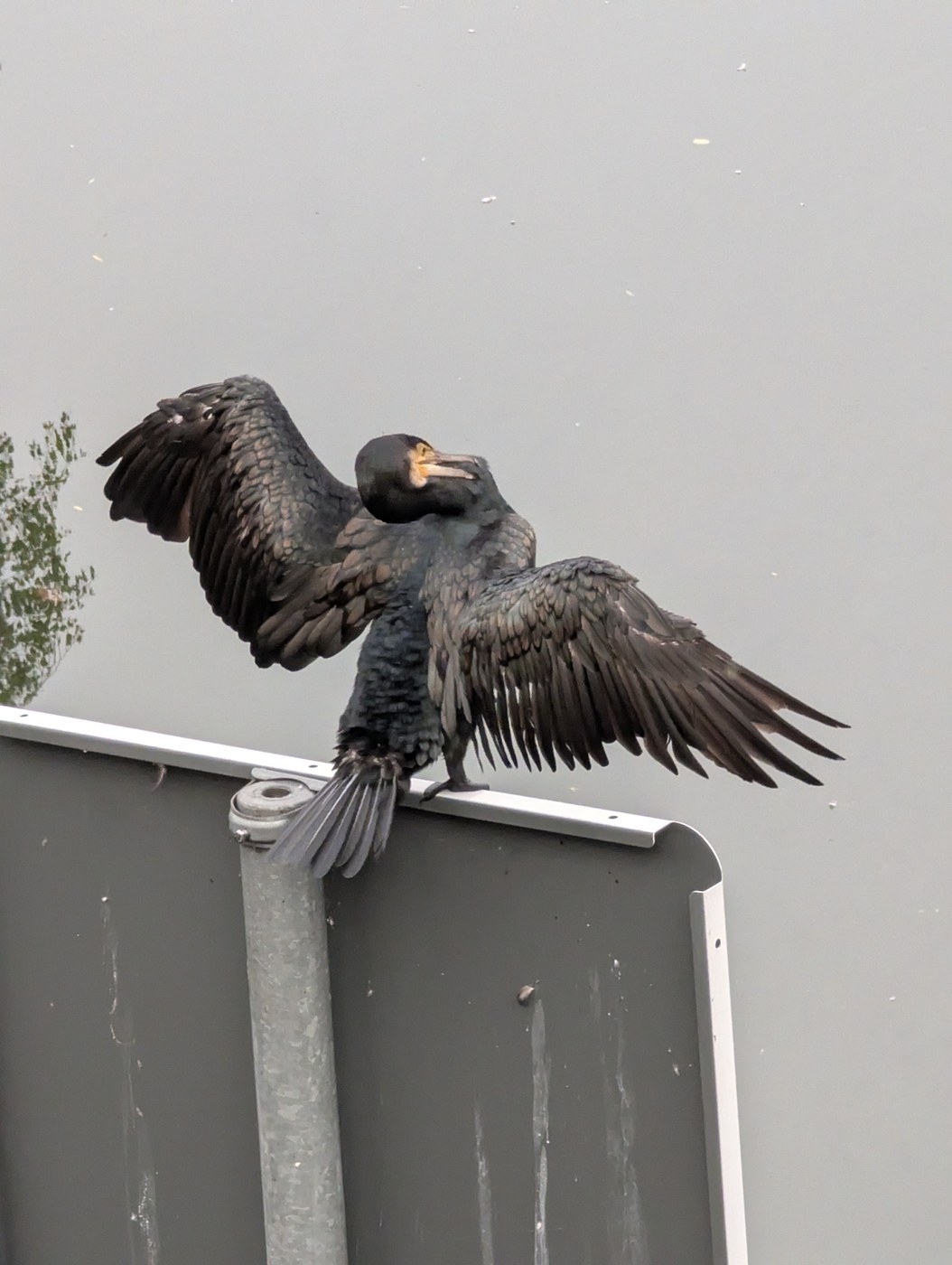
What Great Cormorant's Feathers Look Like
Great Cormorant is a large, heavily built waterbird, and its feathers show a glossy, almost metallic quality. Body contour feathers are mostly black with a bronze-green iridescent sheen, and the back and scapular feathers have narrow dark edging that gives the plumage a subtly scaled appearance when seen up close. The most useful confirming feature is around the face: adults show a patch of white feathering on the chin and upper throat, bordering bare yellow-orange skin, and during the breeding season a white patch also appears on the flanks/thighs, both useful clues if you find a feather with white mixed among the black. One structural quirk worth knowing: cormorants have less oil-gland waterproofing than ducks, so their feathers are less water-repellent and can feel heavier or more waterlogged even when fully dry, a helpful tactile clue alongside the visual pattern.
Step-by-Step: Is This Feather From a Great Cormorant?
- Check for gloss. A black feather with a bronze-green iridescent sheen (rather than flat black) fits this species' body plumage.
- Look for white patches. White feathers found mixed with black, especially near the face/throat or flank region, support breeding-plumage Great Cormorant.
- Feel the texture. A feather that seems less water-repellent or slightly heavier for its size is consistent with the cormorant family's reduced waterproofing.
- Check scapular edging. Feathers with fine, dark scale-like edges along an otherwise black back feather support this species.
- Consider size and location. A large black waterbird feather found on a coastal cliff, breakwater, or estuary in Europe, Asia, or Atlantic Canada supports this ID.
Similar Species & How to Tell Them Apart
- Double-crested Cormorant — smaller overall, with an orange throat pouch but no white face patch, and found more broadly across North American lakes and coasts.
- European Shag — smaller, more uniformly glossy dark green-black without the white face/flank patches, and a thinner bill.
- Neotropic Cormorant / other regional cormorants — generally smaller with a thinner build and different, more restricted white markings if any.
Where & When You'll Find Them
Great Cormorants breed along rocky coastlines, cliffs, and estuaries across Europe, Asia, and eastern North America (notably Atlantic Canada), often nesting in dense colonies on offshore rocks and islands. Feathers are most commonly found around these coastal breeding colonies and communal roosts, where birds gather to dry their wings in a characteristic spread-wing posture — a behavior tied directly to their less waterproof feathers. Molt occurs after the breeding season, generally in late summer, so feather finds are most frequent from midsummer into fall near roosting and nesting sites, though the birds can be found near open water year-round outside the far northern parts of their range.
Frequently asked questions
What makes a Great Cormorant feather different from a duck feather?
Cormorant feathers are less water-repellent due to reduced oil-gland waterproofing, so they can feel heavier or more waterlogged even when dry — a key tactile difference from typical waterfowl feathers.
How do I distinguish it from Double-crested Cormorant?
Double-crested Cormorant lacks the white face patch of Great Cormorant and instead shows an orange throat pouch without white bordering feathers, and it's noticeably smaller overall.
Why does Great Cormorant show white feathers at all?
Breeding adults grow a white patch on the chin/throat area and often a white patch on the flanks/thighs, both of which fade or are absent outside the breeding season.
Where should I look for these feathers?
Around coastal cliffs, breakwaters, and estuary roosts where the birds gather in colonies and commonly perform their spread-wing drying posture.
When does Great Cormorant molt?
Mainly in late summer after breeding, making midsummer through fall the best window to find feathers near nesting and roosting sites.