
How to Identify Gray Hawk Feathers
How to identify Gray Hawk feathers by their pale gray barring and bold black-and-white banded tail.
Read the full Gray Hawk encyclopedia entry →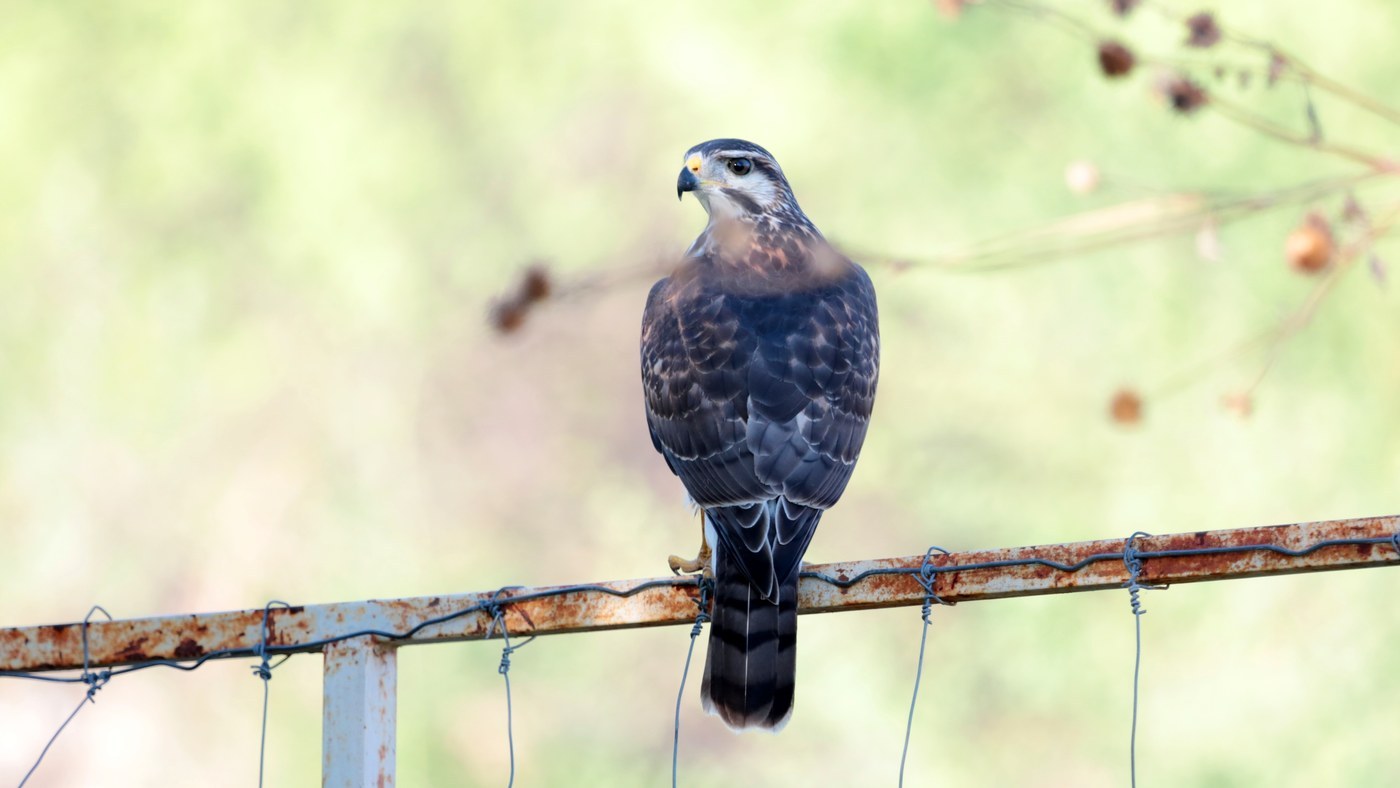
What Gray Hawk's Feathers Look Like
Gray Hawk is a small, compact buteo, and its feathers show a clean, understated pattern well suited to hunting in riparian woodland. Back and upperwing contour feathers are pale gray, finely vermiculated, giving a soft, silvery look overall. Underparts feathers are whitish, but marked with fine, even gray barring, a much daintier pattern than the coarse markings of larger hawks. The most diagnostic feathers, however, come from the tail: they show bold black bands alternating with white to pale gray bands, typically three to four black bands, ending in a clean white terminal band at the tip. Flight feathers (primaries and secondaries) are gray above and whitish below with fine dark barring, and the outer primaries often show blackish tips. Overall feather size is modest — this is one of the smaller buteos — so any feathers found will be noticeably smaller than those of a Red-tailed Hawk.
Step-by-Step: Is This Feather From a Gray Hawk?
- Look at tail banding first. Bold, well-defined black bands alternating with white/pale bands, ending in a white tip, is the strongest single clue.
- Check the base tone. Pale gray upperparts (not rufous-brown or dark brown) fit this species rather than most other North American buteos.
- Examine underside barring. Fine, tight gray barring on a whitish background on body/flank feathers supports this ID over coarser-patterned hawks.
- Measure size. Feathers noticeably smaller than a Red-tailed Hawk's but larger than a songbird's fit this compact buteo.
- Factor in location. A hawk feather found near a river, stream, or wooded wash in the desert Southwest, Mexico, or Central America strongly favors Gray Hawk over range-restricted alternatives.
Similar Species & How to Tell Them Apart
- Broad-winged Hawk — browner overall with different tail banding (typically fewer, broader bands) and a more limited overlap in range.
- Cooper's Hawk — has a long tail too, but shows rufous barring on the underparts and a different overall body shape (accipiter, not buteo).
- Roadside Hawk — found further south into Mexico/Central America, shows rufous in the wings and a browner tone rather than Gray Hawk's clean pale gray.
- Zone-tailed Hawk — much darker overall (blackish), with only a single or few pale tail bands, unlike Gray Hawk's multiple crisp bands.
Where & When You'll Find Them
Gray Hawks are tied closely to riparian corridors — cottonwood, mesquite, and willow woodlands along rivers and washes — in the extreme southwestern U.S. (southeastern Arizona, southern Texas), Mexico, and Central America. Because they nest and hunt within these narrow wooded strips, feathers are most often found directly beneath tall cottonwoods or in dense streamside thickets rather than in open desert. Molt occurs primarily during and after the breeding season in summer, so worn or dropped feathers are most likely to be found from late spring through early fall, particularly near nest sites and regular perches used for hunting lizards and small birds.
Frequently asked questions
What's the most distinctive feather to look for?
A tail feather with bold black bands alternating with white bands and a clean white tip is the clearest diagnostic sign of Gray Hawk.
How do Gray Hawk feathers differ from Cooper's Hawk feathers?
Gray Hawk shows fine, even gray barring on a whitish background, while Cooper's Hawk typically shows rufous barring below and a different tail pattern.
Where should I look for Gray Hawk feathers?
Focus on riparian woodland — cottonwood and mesquite stands along rivers and washes in the desert Southwest, Mexico, and Central America — since this hawk rarely strays from wooded water corridors.
When is molt season for Gray Hawk?
Primarily during and after the summer breeding season, so feathers are most likely to be found from late spring through early fall.
Are Gray Hawk feathers rufous anywhere?
No — unlike Roadside Hawk or Broad-winged Hawk, Gray Hawk's plumage is pale gray and white with black barring, without rufous tones.