
How to Identify Florida Scrub-Jay Feathers
A field guide to recognizing the crestless, blue-and-gray plumage of the endemic Florida Scrub-Jay and separating its feathers from Blue Jays and other jays.
Read the full Florida Scrub-Jay encyclopedia entry →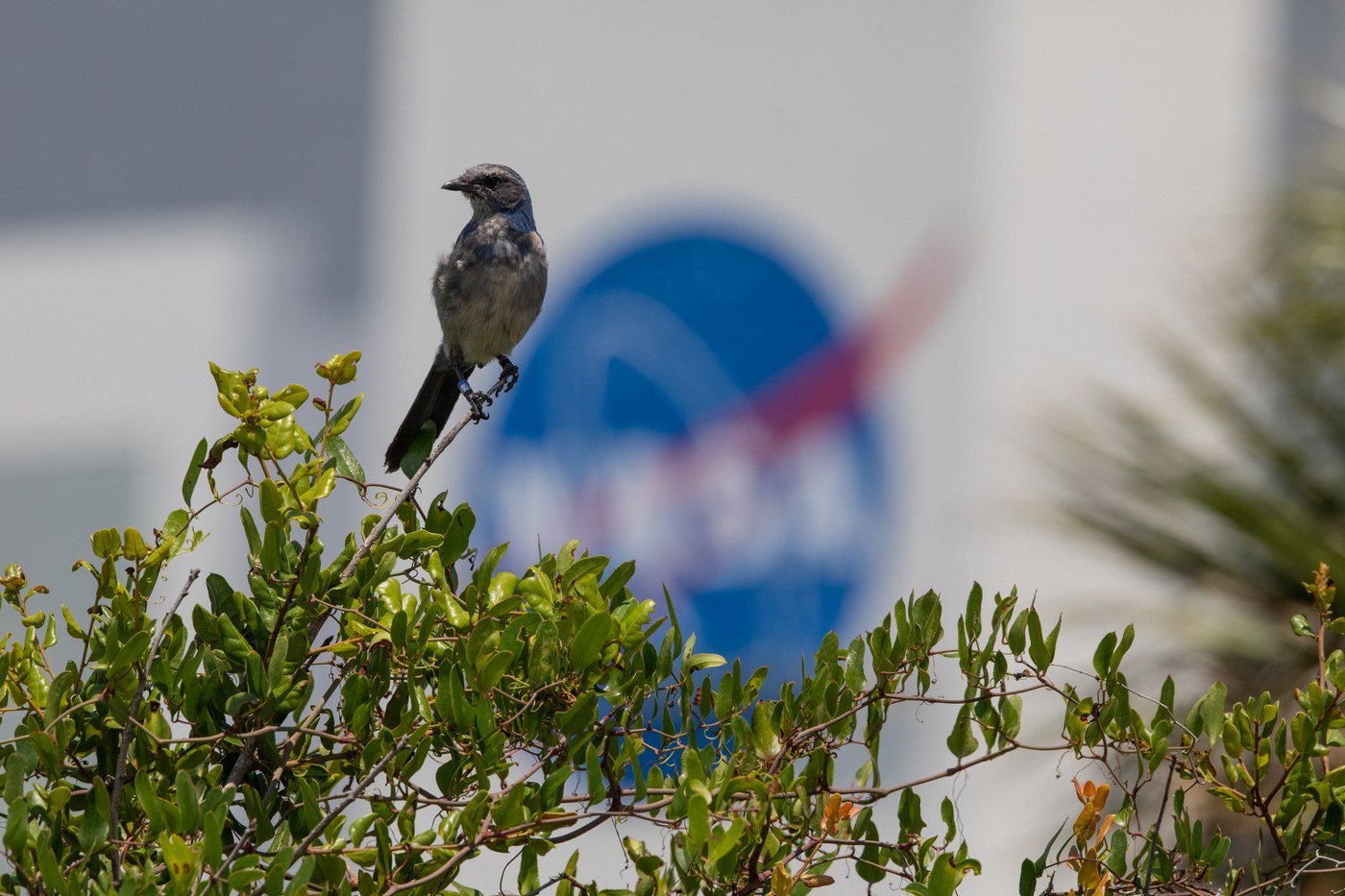
What Florida Scrub-Jay Feathers Look Like
The Florida Scrub-Jay is a medium-sized, crestless jay found only in Florida's scrub habitat, and its feathers reflect that stripped-down look. Flight feathers (primaries and secondaries) are a rich, matte sky-to-cobalt blue on the outer webs with darker blue-gray inner webs, but unlike a Blue Jay's wing feathers they carry no white wing bars or black barring — the blue is fairly plain and unbroken. The long, graduated tail feathers (roughly 120-150mm on the central pair) are the same clean blue with a slightly darker tip, again lacking the white corners seen in Blue Jays.
Body (contour) feathers tell the rest of the story: the back and mantle feathers are a soft grayish-brown, not blue, creating a two-toned bird — blue head/wings/tail against a drab brown back. Throat and breast feathers are pale grayish-white with fine dusky streaking that forms a faint, smudgy "necklace" across the upper chest — much less crisp than a true collar. Feather shafts are dark gray to blackish on all major feather tracts.
Step-by-Step: Is This Feather From a Florida Scrub-Jay?
- Measure it. Primaries run 90-110mm; tail feathers 120-150mm. Anything larger likely belongs to a crow or raven-sized bird; anything much smaller points to a smaller songbird.
- Check for a crest. This species has no crest at all, so a jay-blue feather with a pointed, crested head feather is not a Florida Scrub-Jay — that points to a Blue Jay.
- Look for white markings. Absence of white wing bars, white tail corners, and a black necklace is the single best clue. Florida Scrub-Jay flight and tail feathers are essentially unmarked blue.
- Note the back color. If you have a body feather, plain gray-brown (not blue, not black) supports this species.
- Confirm location. This bird is a Florida endemic restricted to sandy scrub-oak habitat in the center of the state — a "scrub-jay" feather found outside peninsular Florida almost certainly belongs to a different species (Woodhouse's or California Scrub-Jay in the West).
Similar Species & How to Tell Them Apart
The Blue Jay overlaps in range and is the most likely confusion: its feathers show bold white wing bars, white tail corners, and a black necklace/barring on the blue areas, plus it has a pointed crest — none of which appear on Florida Scrub-Jay feathers. Western scrub-jays (Woodhouse's and California Scrub-Jay) look nearly identical in hand but do not occur in Florida, so range alone separates them. Mexican Jay feathers are a duller, more uniform blue without the contrasting brown back and are found only in the Southwest.
Where & When You'll Find Them
Florida Scrub-Jays are non-migratory, cooperative-breeding residents found exclusively in fire-maintained oak scrub of peninsular Florida, often near the ground where they forage and bury acorns. Because the species doesn't migrate, feathers can turn up year-round, but the heaviest feather drop follows the post-breeding molt from June through September, when adults replace worn plumage after the nesting season. Look for feathers caught in low scrub oak branches or on sandy open ground within scrub reserves.
Frequently asked questions
Does the Florida Scrub-Jay have any white in its wings or tail?
No. Unlike the Blue Jay, its flight and tail feathers are plain blue without white wing bars or white tail corners.
How can I tell a Florida Scrub-Jay feather from a Blue Jay feather?
Blue Jay feathers show bold white markings and black barring plus a crest; Florida Scrub-Jay feathers are unmarked blue with a plain gray-brown back and no crest.
Are Florida Scrub-Jay feathers found outside Florida?
No — this species is a Florida endemic restricted to peninsular scrub habitat, so a matching feather found elsewhere likely belongs to a related western scrub-jay.
When is the best time to find molted feathers?
Most feathers drop during the post-breeding molt from June through September, though residents shed feathers year-round since they don't migrate.
What color are the body feathers versus the wing feathers?
The back and mantle feathers are grayish-brown, while the head, wings, and tail feathers are blue — a two-toned combination unique among Florida jays.