
How to Identify Eurasian Tree Sparrow Feathers
A guide to the chestnut-capped, black-cheeked feathers of this small sparrow, and how to separate them from House Sparrow feathers at a glance.
Read the full Eurasian Tree Sparrow encyclopedia entry →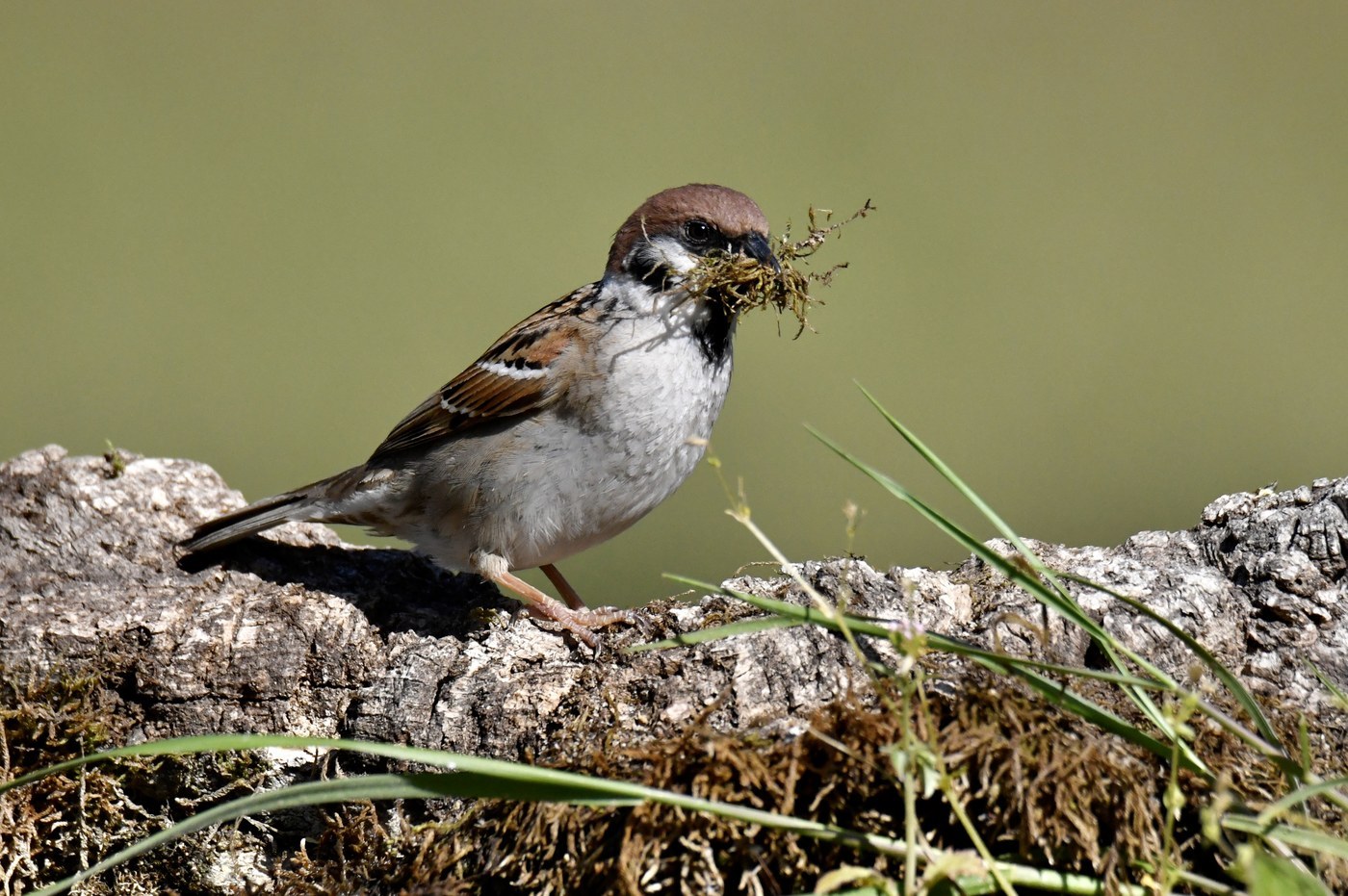
What Eurasian Tree Sparrow Feathers Look Like
Eurasian Tree Sparrow feathers are small (body feathers 2-4 cm, primaries around 6-7 cm) and, unlike many sparrows, look essentially the same in males and females — a useful simplifying fact when identifying a loose feather. The crown feathers are a rich, solid chestnut-brown, not gray, running from forehead to nape. A key diagnostic patch is the black cheek spot on an otherwise white/pale gray cheek feather — a small, neat black patch rather than a larger black bib. The throat shows a smaller, neater black bib feather than House Sparrow's. Body feathers on the back are warm brown streaked with black, wing feathers show a double white wingbar (two thin pale bars rather than one), and underparts feathers are plain pale gray-buff, unstreaked. Overall the feathers read as a slightly smaller, neater, more uniformly marked version of the familiar House Sparrow.
Step-by-Step: Is This Feather From a Eurasian Tree Sparrow?
- Check the crown color. Solid chestnut-brown (not gray) is the single fastest clue, since this holds true regardless of sex.
- Look for a black cheek spot. A discrete black patch on an otherwise pale cheek feather, distinct from a larger all-black head/bib pattern, supports Tree Sparrow.
- Count wingbars if a wing covert feather is present. Two thin white bars rather than one broader bar fits this species.
- Assess bib size. A smaller, neater black throat feather patch (versus a larger bib) supports Tree Sparrow over male House Sparrow.
- Consider size. Slightly smaller and daintier overall than House Sparrow feathers of the same feather type.
Similar Species & How to Tell Them Apart
- House Sparrow males show a gray crown (not chestnut) with a larger black bib and no distinct black cheek spot, while females are plain grayish-brown without any chestnut cap or cheek spot at all — either sex is a clear contrast to Tree Sparrow's chestnut-and-cheek-spot combination.
- Dunnock feathers show a gray head and breast with streaked brown upperparts, lacking any chestnut cap or black cheek spot, and Dunnock has a thin, warbler-like bill reflected in more delicate head feathering overall.
- Eurasian Reed Bunting males show a black head (not chestnut) with a white collar, quite different from Tree Sparrow's chestnut cap and localized cheek spot.
- Rock Sparrow feathers show a streaked crown rather than solid chestnut and a small yellow throat spot instead of a black cheek spot, plus a notably plainer face pattern overall.
Where & When You'll Find Them
Eurasian Tree Sparrows favor farmland hedgerows, orchards, woodland edge, and villages across Europe and Asia, often nesting in tree cavities, old woodpecker holes, or nest boxes, and are mostly non-migratory in their core range with some northern/eastern populations moving short distances in winter. Feathers can be found year-round near nest cavities and communal winter roosts in dense hedges or reedbeds, but look for a modest increase in late summer, following the breeding season's second or third broods and subsequent post-breeding molt, and again in winter, when large mixed flocks with House Sparrows and buntings gather at farmyard grain stores and stubble fields, concentrating feather loss from both molt and predation in one spot.
Frequently asked questions
What's the quickest way to separate Tree Sparrow from House Sparrow feathers?
Crown color: Tree Sparrow shows a solid chestnut-brown crown in both sexes, while House Sparrow crowns are gray (male) or plain brown (female) without any chestnut.
Does the black cheek spot appear on both male and female Tree Sparrows?
Yes — unlike many sparrows, male and female Eurasian Tree Sparrows look alike, so the black cheek spot and chestnut cap are reliable regardless of sex.
How many wingbars should I look for?
Two thin white wingbars on the wing covert feathers, versus a single broader wingbar typical of House Sparrow.
Where are Tree Sparrow feathers most likely to be found?
Near tree cavities, nest boxes, farmyard hedgerows, and orchard edges, with extra concentrations at winter grain-store flocks shared with House Sparrows and buntings.
Can bib size alone confirm the species?
Not alone — bib size is a supporting clue best used together with crown color and the presence of a black cheek spot, since bib size can be hard to judge on a single loose feather.