
How to Identify Eurasian Bullfinch Feathers
How the black cap, bold white wing bar, and white rump patch identify this stocky pink or buff-bellied European finch in either sex.
Read the full Eurasian Bullfinch encyclopedia entry →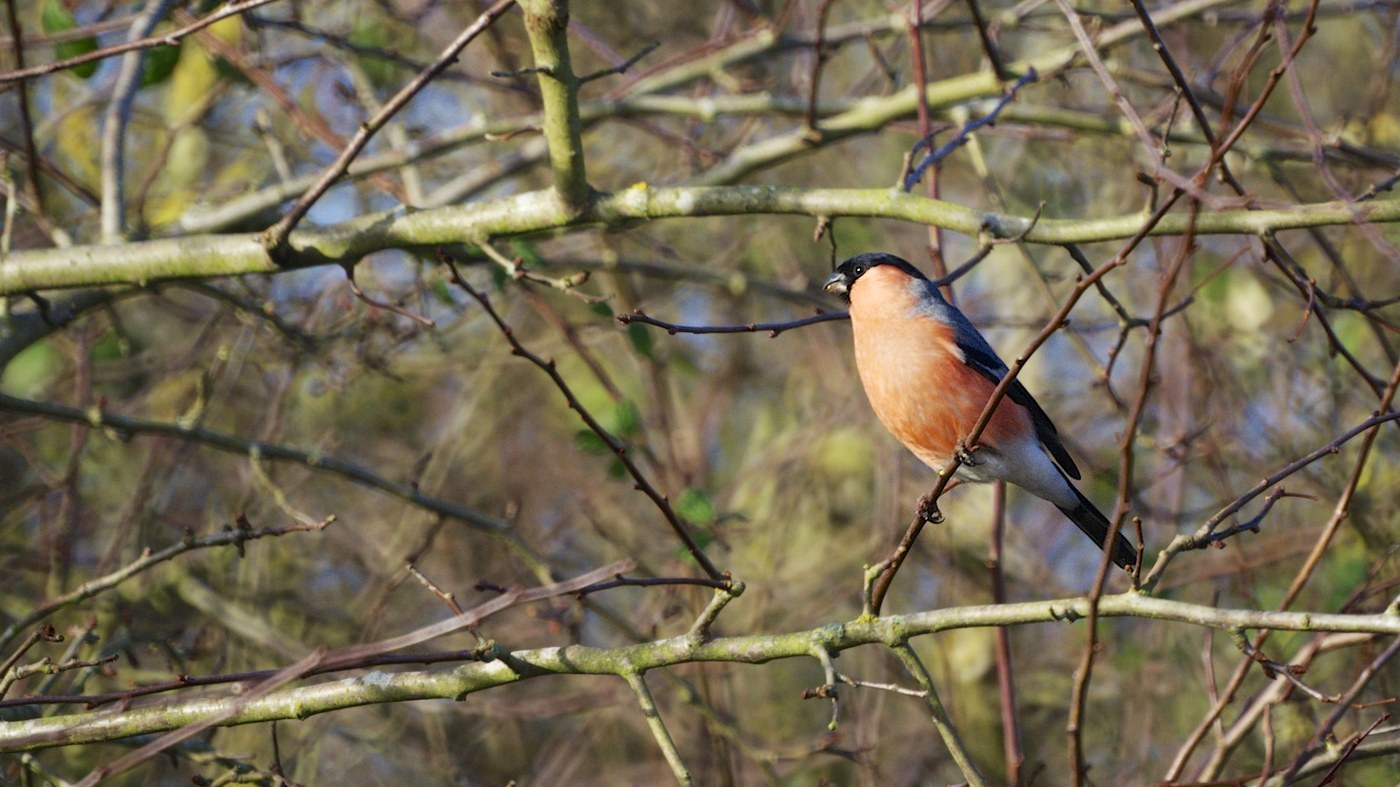
What Eurasian Bullfinch Feathers Look Like
The Bullfinch is a stocky, quiet finch of woodland edges, and its feathers show a striking, consistent pattern regardless of sex.
- Cap: solid glossy black, present in both males and females, covering the crown and extending around the base of the bill.
- Male underparts: bright rosy-pink to red, covering the cheeks, breast, and belly.
- Female underparts: same pattern and position as the male's, but colored buff-pink/pinkish-brown rather than red.
- Back: soft gray in both sexes.
- Wings: black with a broad, bold white wing bar crossing the greater coverts — one of the most conspicuous features on any Bullfinch feather.
- Rump: a bright white patch, very obvious in flight and equally useful on a single detached rump feather.
- Tail: black, unmarked.
Step-by-Step: Is This Feather From a Eurasian Bullfinch?
- Look for a black cap feather. Solid black, without streaking, from the crown region is a strong starting clue for either sex.
- Check for a bold white wing bar on black. This bright, broad bar is one of the most reliable single features for this species.
- Look for a plain white rump feather. A clean, unmarked white feather from the lower back/rump area supports Bullfinch, especially paired with black wing or cap feathers.
- Assess underparts color. Red/pink suggests a male, buff-pink a female — but either fits Bullfinch as long as the cap and wing bar are present.
- Rule out streaking. True Bullfinch feathers are all solid-colored blocks (black, gray, pink/buff, white) without any streaks — streaking suggests a different finch.
Similar Species & How to Tell Them Apart
House Finch and Purple Finch (found in different regions but sometimes considered by comparison) show a diffuse, streaky red wash rather than a solid pink/red block, and neither has a black cap or white wing bar, making them easy to separate. Common Chaffinch does show white wing bars, but its body is pinkish-brown without a black cap and without the bold white rump patch — the rump in particular is a fast way to distinguish the two. The specific trio of black cap + white wing bar + white rump is essentially unique to the Bullfinch among common European finches.
Where & When You'll Find Them
Bullfinches favor woodland edges, hedgerows, and orchards across much of Europe and temperate Asia, often staying hidden in dense cover and revealing themselves mainly by a soft, piping call rather than by sight. Most populations are resident or only short-distance migrants. They undergo a complete molt from July through September, so feathers — particularly the distinctive white rump and black-and-white wing feathers — are most likely to be found in hedgerow and orchard leaf litter in late summer and early autumn.
Frequently asked questions
Do male and female Bullfinches share the same wing pattern?
Yes, the black wings with a bold white wing bar and the white rump patch are essentially identical in both sexes; only the underpart color (red-pink in males, buff-pink in females) differs.
Why is the white rump patch such a reliable clue?
Very few common European finches combine a bold, clean white rump with a black cap and white wing bar, so finding all three features together strongly narrows the identification to Bullfinch.
How can I be sure a pink feather isn't from a Chaffinch instead?
Check for a black cap and a white rump — Chaffinch lacks both, showing a plain pinkish-brown head and back with a greenish rump instead of white.
Are juvenile Bullfinch feathers different from adults?
Juveniles lack the black cap entirely until their first molt, showing a plain brownish head instead, so a Bullfinch-patterned wing without a black cap feather nearby may indicate a young bird.
Is orchard habitat a meaningful clue for finding these feathers?
Yes, Bullfinches are frequently associated with orchards, where they feed on buds, so hedgerows bordering orchards are a good place to look for their feathers in late summer.