
How to Identify Corn Bunting Feathers
How to identify the plain, heavily streaked brown feathers of the Corn Bunting, Europe's largest bunting, and separate them from Yellowhammer and Skylark feathers.
Read the full Corn Bunting encyclopedia entry →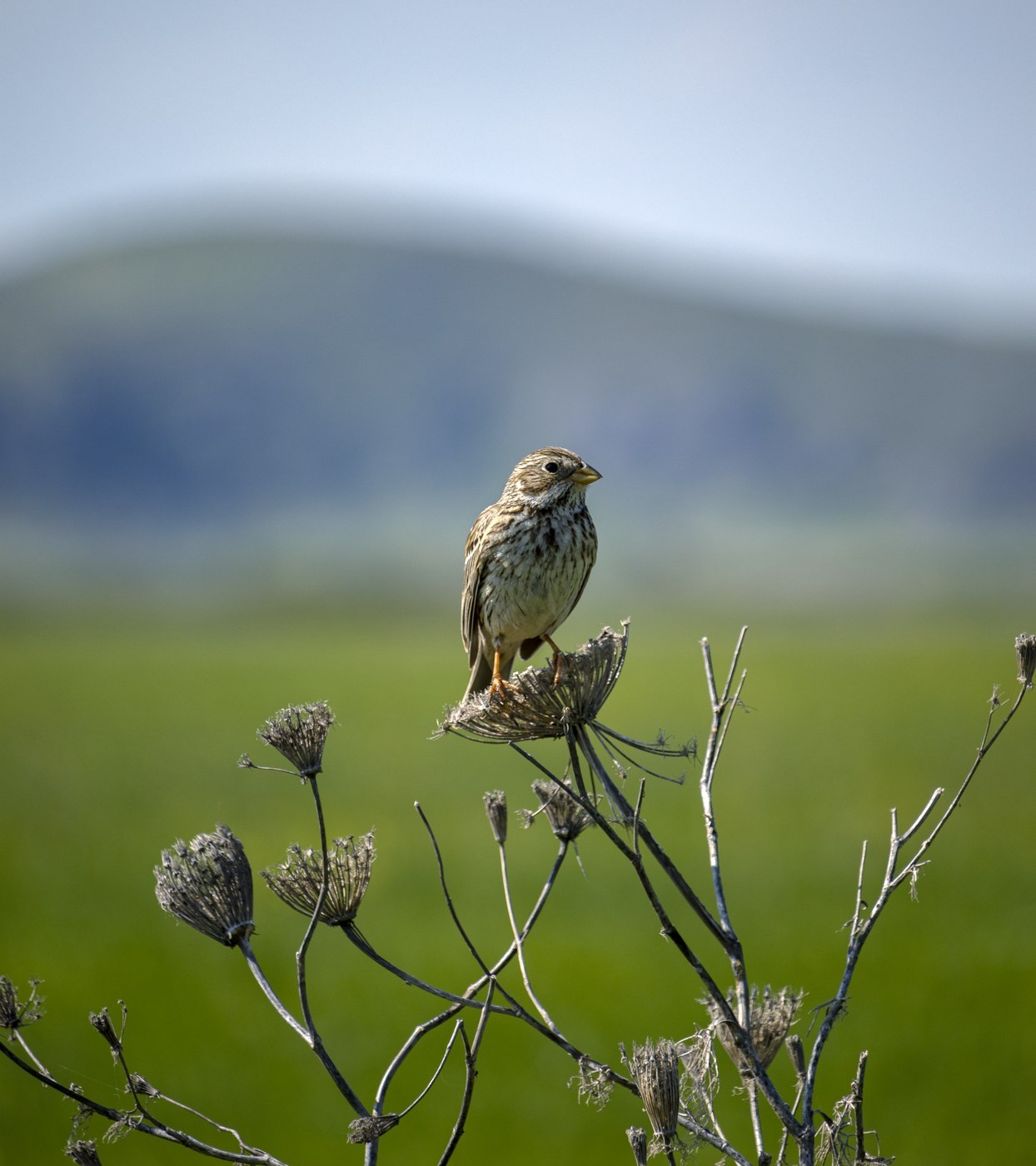
What Corn Bunting Feathers Look Like
The Corn Bunting is a deliberately plain bird, and its feathers reflect that: there is no bright color anywhere in the plumage. Upperparts are warm brown, heavily marked with bold blackish streaks running down the back, and the underparts are pale buff to whitish, also streaked with dark brown down the breast and flanks. As the largest of the Old World buntings, its feathers run somewhat larger and heavier than most streaked sparrow-like birds sharing its farmland habitat.
The face is notably plain — no strong eyebrow stripe, no facial mask, no yellow tones — just a subtly patterned brown-and-buff face that lacks the crisp markings seen in many sparrows and buntings. Tail feathers are plain brown with only faint, dull pale edges on the outer feathers, never crisp white flashes. Wing feathers are brown with narrow pale fringes, unremarkable and without wingbars.
Step-by-Step: Is This Feather From a Corn Bunting?
- Check for streaking — bold blackish streaks on a brown-and-buff background across both the back and underparts.
- Confirm the absence of bright color — no yellow, no chestnut cap, no black mask; if you see any of these, look elsewhere.
- Assess size — larger and heavier-shafted than a typical sparrow feather, reflecting this bunting's bulky build.
- Look at the face pattern — plain and subtly marked, without a bold facial stripe.
- Check tail edges — only faintly paler, not sharply white.
- Factor habitat — found in open farmland, grassland, and cereal fields across Europe, the Mediterranean, and parts of Asia.
Similar Species & How to Tell Them Apart
Yellowhammer shares farmland habitat but shows a much brighter yellow head and underparts along with crisp white outer tail feather edges that flash in flight — a Corn Bunting feather will never show that yellow tone or sharp white tail edge. Skylark feathers are similarly streaked brown above, but Skylark has a small pointed crest and its outer tail feathers show more contrasting white, plus its overall feather structure is slimmer and more lark-like. Female and juvenile House Sparrows can look superficially similar in a scattered streaked brown feather, but sparrows typically show a more contrasting pale wingbar and a shorter, stubbier feel to the plumage overall compared to the Corn Bunting's plainer, bulkier feathers.
Where & When You'll Find Them
Corn Buntings live in open farmland, grassland, and cereal-growing areas across Europe, North Africa, and parts of the Middle East and Central Asia, with northern populations often resident and some more northerly or high-altitude birds making short-distance movements in winter. Feathers are most likely to be found in stubble fields and hedgerows after the harvest, roughly July through September, when the post-breeding molt coincides with birds gathering in loose flocks in cut fields, making shed feathers easier to come across along field margins and fence lines.
Frequently asked questions
What makes Corn Bunting feathers so hard to spot at first glance?
They're deliberately plain — brown and buff with dark streaking and no bright color, wingbars, or facial pattern, so they can look like many other streaked farmland birds' feathers at a glance.
How do I rule out Yellowhammer when I find a streaked brown feather?
Yellowhammer shows yellow tones on the head and underparts and crisp white outer tail feather edges; if either is present, it's Yellowhammer, not Corn Bunting, which lacks any yellow or bright white tail flash.
Are Corn Bunting feathers bigger than sparrow feathers?
Yes, generally — Corn Bunting is the largest Old World bunting, so its feathers tend to be a bit larger and heavier-shafted than a typical House Sparrow's.
When is the best time to find Corn Bunting feathers?
After harvest, roughly July to September, when post-breeding molt coincides with birds flocking in stubble fields and hedgerows across their farmland range.