
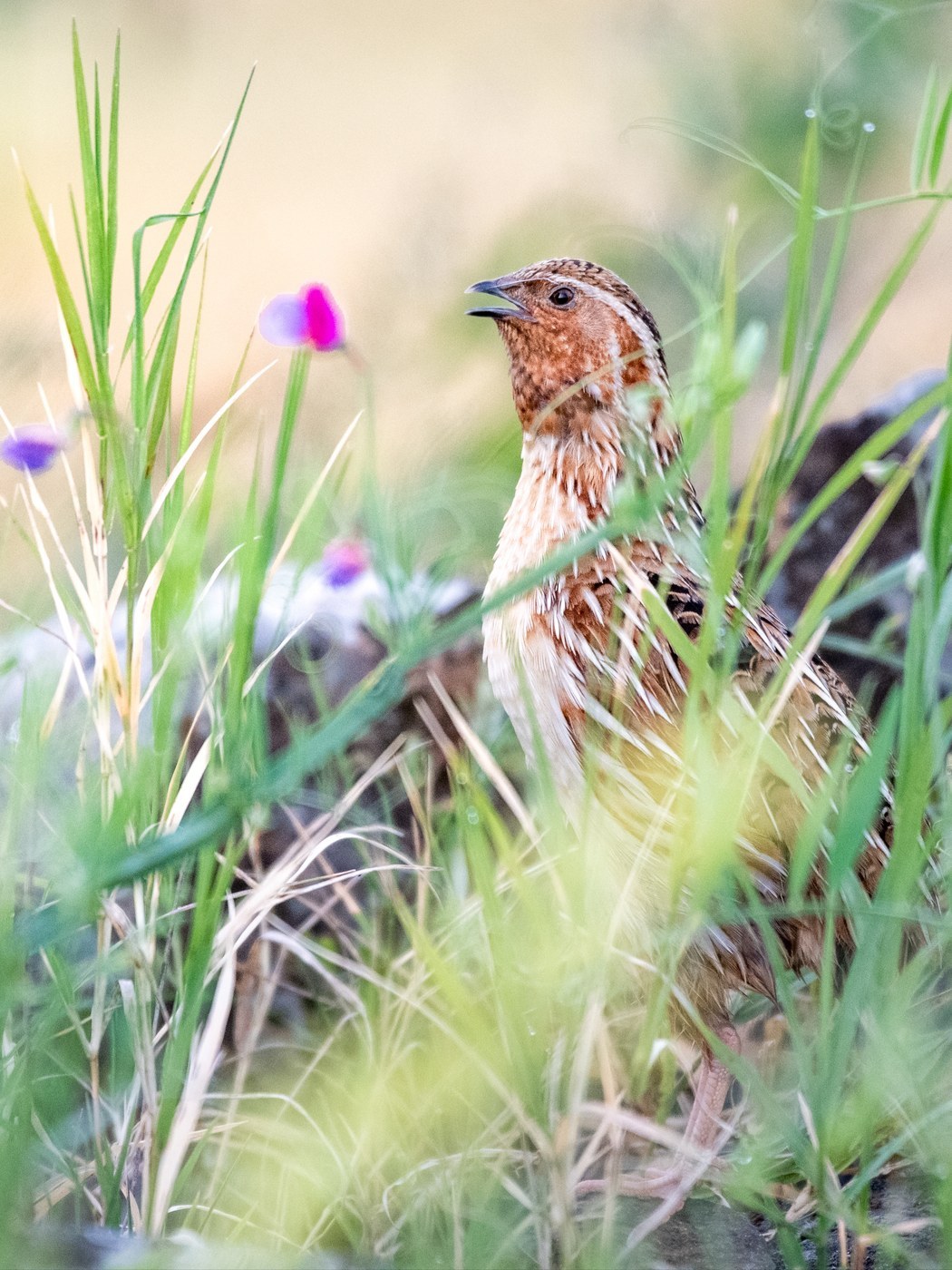
Common Quail
Coturnix coturnix
A tiny, secretive migratory quail of Old World farmland, cloaked in streaked brown plumage that renders it almost invisible in tall grass.
- Feather type
- Fine, streaked cryptic contour feathers
- Colours
- Buff, brown, and blackish-brown with pale streaking
- Bird size
- Small, sparrow-to-dove-sized, ~18 cm
Found a feather like this?
Identify any feather from a photo, free.
Overview
The Common Quail is a diminutive, well-camouflaged gamebird breeding across much of Europe, Asia, and parts of Africa, and undertaking long migrations between breeding grasslands and African wintering grounds. Its plumage is a fine mosaic of buff and blackish-brown streaks, evolved for concealment in cereal fields and open grass rather than for display. It is far more often heard, via its distinctive three-note call, than seen.
Identifying the Feather
- Overall pattern: finely streaked buff-and-dark-brown contour feathers across the back, crown, and flanks, giving a 'dead-grass' camouflage effect.
- Male throat: dark anchor- or Y-shaped stripe marking on a paler throat, a useful identification feature not found on females.
- Female underparts: paler and more evenly spotted on the breast, lacking the male's throat marking.
- Wings: short, pointed, and strong for a small quail, reflecting its long migratory flights, unlike the rounder wings of sedentary quail.
- Tail: very short and inconspicuous, mostly hidden by long covert feathers.
Plumage & Molt
Males show the diagnostic dark throat marking and slightly warmer buff tones, while females have plainer, spotted underparts and lack strong throat markings. Juveniles resemble adult females. A single complete molt occurs after breeding, with additional partial feather wear and replacement possible before spring migration.
Habitat & Range
Common Quail breed in open grassland, cereal fields, and steppe across Europe, western Asia, and North Africa, then migrate south to spend the non-breeding season in sub-Saharan Africa. Unlike most quail on this list, it is a genuinely long-distance migrant, crossing the Mediterranean and Sahara twice yearly.
Behavior & Field Notes
This species is extremely secretive, running through dense vegetation rather than flying and flushing only at the last moment. Diet consists of seeds and small invertebrates picked from the ground. Nests are shallow ground scrapes hidden in grass or crop cover. The male's call, a rhythmic 'wet-my-lips' triplet, carries far across open fields and is often the only sign of the bird's presence.
Frequently asked questions
How do you tell a male from a female Common Quail by its feathers?
Males show a dark anchor-shaped stripe on the throat, while females have plainer throats and more spotted underparts.
Why is Common Quail plumage so plain compared to other gamebirds?
Its fine streaked pattern is camouflage for hiding in grass and cereal fields, since the species relies on concealment rather than display.
Is the Common Quail migratory?
Yes, unlike many quail it makes long seasonal migrations between Eurasian breeding grounds and African wintering areas.
Where is the Common Quail most likely to be found?
In open grassland, steppe, and farmland across Europe, Asia, and parts of Africa, though it stays hidden in dense cover.
Common Quail guides
In-depth guides for identifying and understanding Common Quail.
Other feathers you may enjoy

Ring-necked Pheasant
Body (contour), tail, and wing feathers

Bornean Peacock-pheasant
Contour and tail feathers with iridescent ocelli

Crested Argus
Extremely elongated, ocellated (eyespot-patterned) tail feathers among the longest of any bird; tall, erectile crest

Grey Partridge
Body and flank feathers

Willow Ptarmigan
Larger, stockier body feathers with warmer rufous tones in summer; tail feathers black year-round

Wild Turkey
Broad, iridescent body feathers and large flight and tail feathers

Bulwer's Pheasant
Contour feathers and elongated white tail feathers
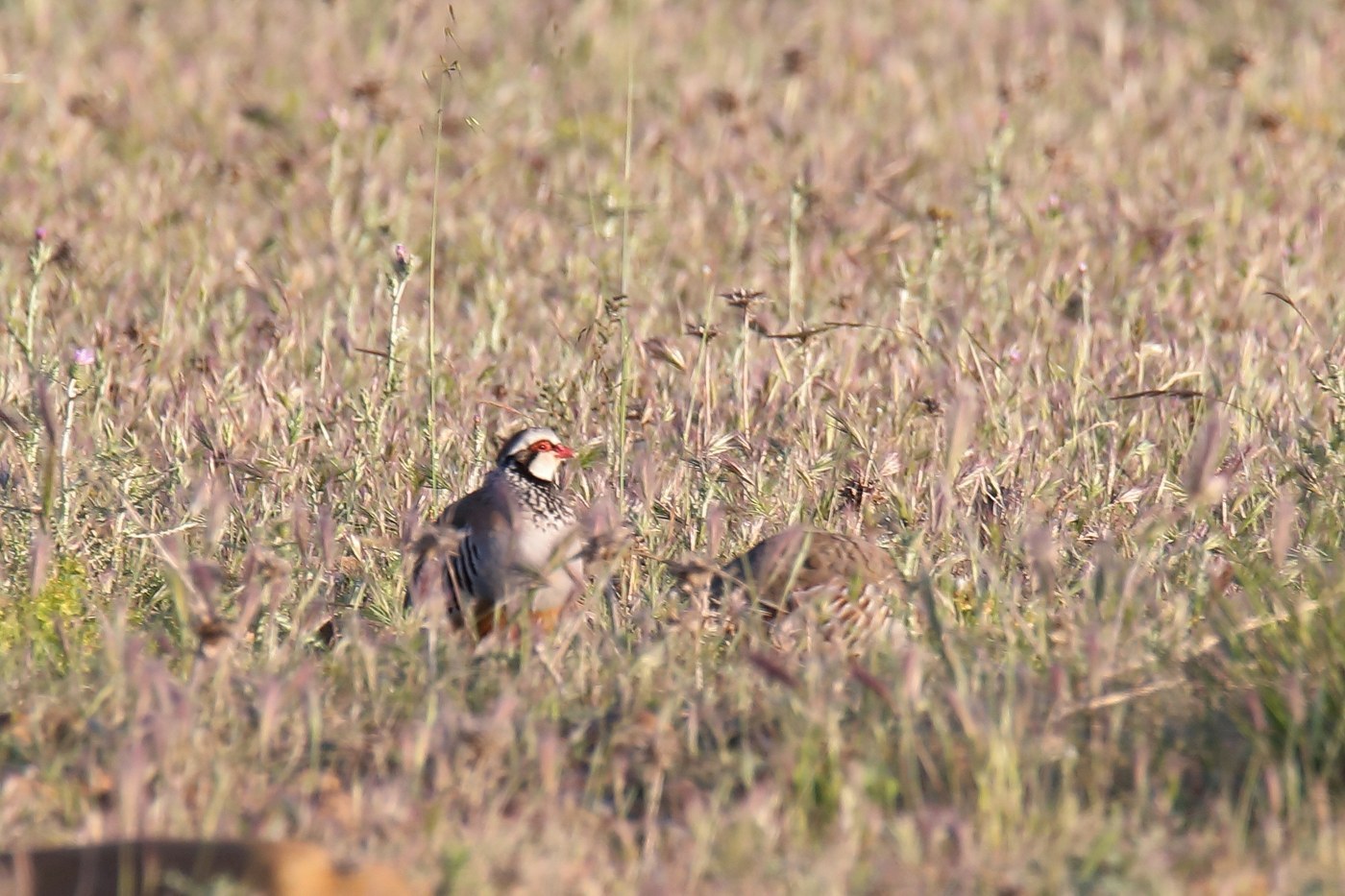
Red-legged Partridge
Flank, body, and flight feathers

White-tailed Ptarmigan
Small body feathers with a tail that stays pure white year-round, unlike other ptarmigan

Edwards's Pheasant
Contour and tail feathers

Sooty Grouse
Dense, plain contour feathers with a pale-tipped, fanned tail

Snow Partridge
Finely vermiculated barred contour feathers