
How to Identify Common Kestrel Feathers
A guide to recognizing the rufous, black-spotted back feathers and blue-grey tail of this widespread Eurasian falcon.
Read the full Common Kestrel encyclopedia entry →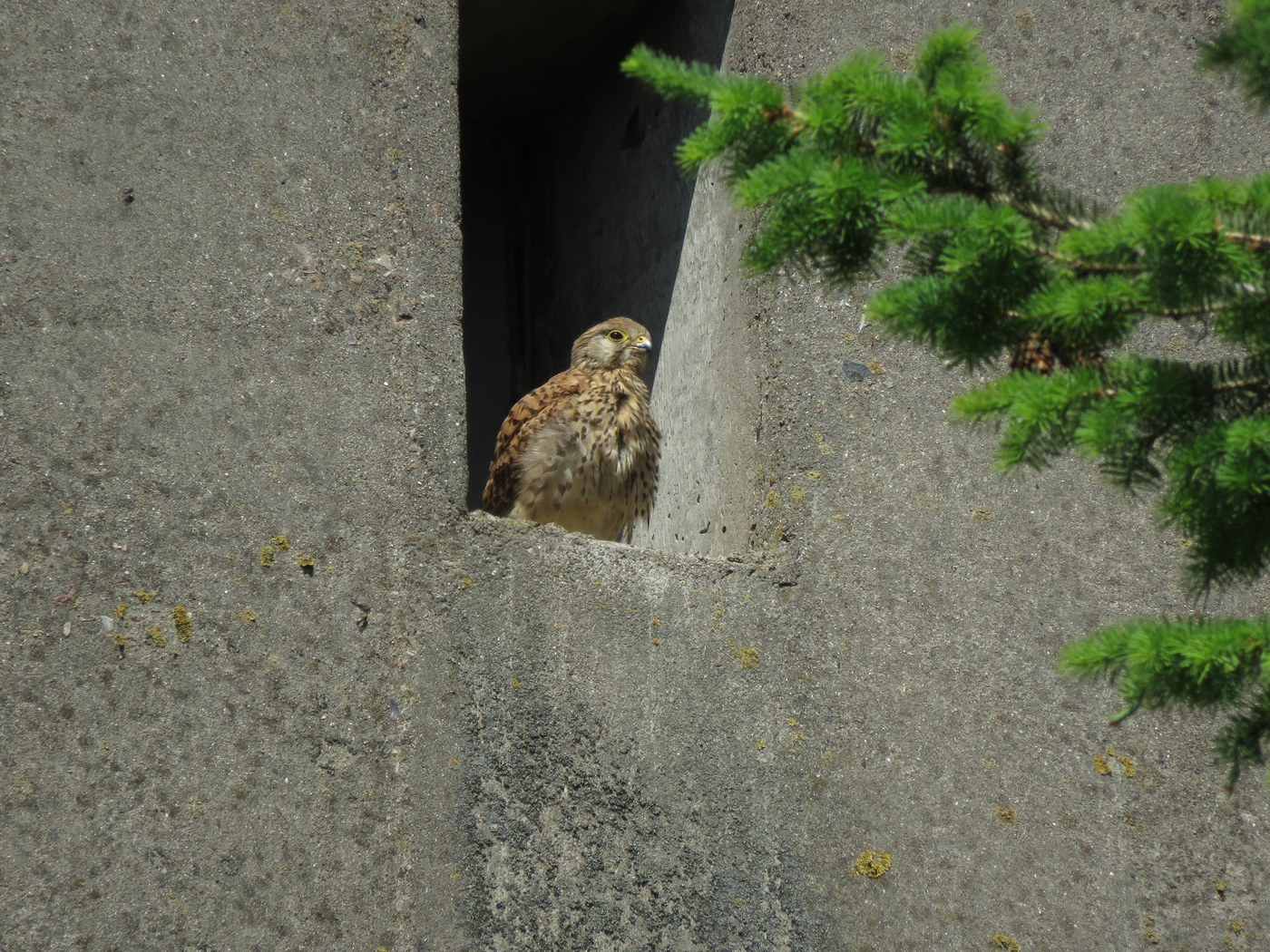
What Common Kestrel's Feathers Look Like
The Common Kestrel is a small, familiar falcon found hovering over roadsides and farmland across Europe, Asia, and Africa, and its feathers show a clear split between the sexes. Males have a rich rufous-chestnut back and covert feathers marked with neat black spots, paired with a distinctive blue-grey head, nape, and tail — a tail feather from a male is essentially plain blue-grey with a single bold black subterminal band near the tip and a narrow white edge, which is one of the most reliable single feathers to identify. Females and juveniles lack the blue-grey tones entirely, showing a rufous-brown tail with multiple narrow dark bars instead of the male's solid grey-with-one-band pattern, and their back feathers show heavier, more extensive dark barring rather than neat isolated spots.
Flight feathers (primaries) are dark brown-grey with paler barring on the inner webs, and wings are notably long and pointed, reflected in slender, tapered flight feathers built for hovering flight rather than quick turns. Underparts in both sexes are pale buff to creamy with fine dark streaking or spotting, and feather texture overall is fairly firm and smooth, typical of a small falcon.
Step-by-Step: Is This Feather From a Common Kestrel?
- Check tail feather color and banding first. Plain blue-grey with one broad black band near the tip indicates a male; rufous-brown with several narrow dark bars indicates a female or juvenile — both patterns support this species.
- Measure it. Flight feathers run about 15–20 cm and tail feathers 15–18 cm, consistent with a small falcon, larger than a shrike but smaller than a Peregrine.
- Look at back/covert spotting. Rufous feathers with neat, well-separated black spots (rather than continuous barring) fit a male's back; more extensive barring fits females.
- Assess wing shape. A long, tapered, pointed flight feather supports a falcon rather than a broader-winged hawk.
- Check underparts. Pale buff with fine streaking or spotting (not bold blotches) is consistent with this species.
- Consider the setting. A feather found along a roadside verge, farmland, or open grassland across the species' broad Old World range fits this common, adaptable falcon.
Similar Species & How to Tell Them Apart
The Lesser Kestrel, found in more southern parts of the range, is very similar but males show unspotted rufous back feathers rather than the Common Kestrel's neatly black-spotted back — a genuinely useful distinguishing detail if the feather is well preserved. Female and juvenile kestrels of both species are very hard to separate by feather alone. The Merlin, a small falcon of similar size in parts of the shared range, is more uniformly dark blue-grey (male) or brown (female) without the kestrel's rufous, spotted back. American Kestrel, a different species confined to the New World, has more blue-grey in the wings of males and bold facial markings, but is not expected to overlap geographically with Common Kestrel.
Where & When You'll Find Them
Common Kestrels are widespread across Europe, Asia, and Africa, favoring open country, farmland, grassland, and even urban areas, hunting by hovering over open ground for small mammals and insects. Many northern populations migrate south for winter, while southern and many resident populations stay put year-round. Molt is gradual and mostly occurs from late spring through late summer during and after breeding, so feathers are most likely to be found near favored hunting perches, hovering grounds, and nest sites (often ledges, cavities, or old crow nests) from spring through autumn.
Frequently asked questions
What's the fastest way to tell male from female Common Kestrel feathers?
A plain blue-grey tail feather with one bold black band near the tip indicates a male; a rufous-brown tail feather with several narrower dark bars indicates a female or juvenile.
How do I tell this from a Lesser Kestrel feather?
Male Lesser Kestrels have unspotted rufous back feathers, while male Common Kestrels show distinct black spotting on the rufous back — a useful difference if the feather is well preserved.
Why are the wings so long and pointed?
Common Kestrels hunt by hovering in place over open ground, a flight style that favors long, tapered, pointed wings and correspondingly slender flight feathers.
Could this be a Merlin feather instead?
Merlin lacks the rufous, spotted back pattern, appearing more uniformly dark blue-grey (males) or brown (females) without the kestrel's distinctive rufous tones.
When are Common Kestrel feathers most likely to be found?
Spring through autumn near hunting perches, hovering grounds, and nest sites, corresponding with the gradual molt period during and after the breeding season.
Common Kestrel identified by the community
Recent Common Kestrel feathers identified with Feather Identifier.


